
Oat mosaic
Bymovirus avenae
Oat mosaic is caused by the Oat mosaic virus (OMV), a member of the Bymovirus genus. This virus is a soil-borne pathogen with a unique biological transmission mechanism.
What the section contains
Oat mosaic
The virus is exclusively transmitted by the obligate soil-borne parasite fungus Polymyxa graminis, which infects the root system of various cereal crops.
The viral particles persist inside the resting spores (cystosori) of the fungus, which can remain viable in the soil for a decade or longer, even in the absence of a host crop.
Infection is triggered when the fungal zoospores penetrate the root hairs of the oat plant, releasing the virus into the vascular system.
Because the virus is vector-dependent, its incidence is directly correlated with the presence and activity of the fungal vector in the field soil.
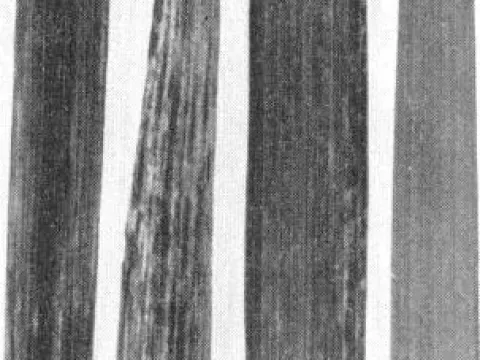
Symptoms typically appear in early spring, characterized by light green to yellow mottling, streaks, or elongated dashes on the leaves.
The discoloration often follows the leaf veins, creating a mosaic pattern that is particularly visible on the younger leaves of infected plants.
Affected oat plants exhibit significant stunting and reduced vigor compared to healthy counterparts, resulting in an uneven canopy appearance.
In severe cases, plants may appear bushy due to excessive tiller production, although these tillers are usually non-productive or severely underdeveloped.
As the season progresses and temperatures rise, leaf symptoms may fade, but the overall reduction in biomass and yield potential remains permanent.
The development of the disease is highly dependent on environmental conditions that favor the activity of Polymyxa graminis, specifically cool and moist soil.
The most favorable window for infection is during the autumn seeding period when soil temperatures range between 10 and 15 degrees Celsius.
Fields with poor drainage, high organic matter, and acidic soil conditions are significantly more prone to high disease pressure.
Continuous cropping of susceptible oat varieties on the same land facilitates the buildup of large quantities of virus-carrying resting spores in the soil.
Heavy rainfall periods during the early vegetative stage enhance the movement of fungal zoospores, thereby increasing the rate of infection across the field.
The primary economic impact of oat mosaic is the significant reduction in grain yield and biomass production caused by systemic plant stress.
Infected plants suffer from a reduced root system, making them more susceptible to drought, winterkill, and other environmental stressors.
The quality of the harvested grain is often poor, characterized by low test weight, reduced kernel size, and lower nutritional density.
Widespread infection disrupts field uniformity, which can complicate harvesting logistics and lead to increased losses during the collection process.
Because the virus is persistent in the soil, infected fields may remain unsuitable for susceptible oat production for several years, leading to long-term land utility issues.
The most effective strategy for managing oat mosaic is the deployment of resistant or tolerant oat cultivars specifically bred for this virus.
Implementing long-term crop rotation cycles, avoiding host crops for 3-5 years, helps to gradually decline the population of viable resting spores in the soil.
Site selection is critical; farmers should avoid planting oats in low-lying, poorly drained areas where moisture levels remain high for extended periods.
Sanitation practices, such as cleaning farm machinery to remove soil before moving between fields, are essential to prevent the spread of the fungal vector.
- Utilize high-quality, certified seeds.
- Improve field drainage systems to reduce soil saturation levels.
- Monitor neighboring fields for early signs of infection to adjust management plans.