
Solanaceous mosaic
Begomovirus solanummusivi
The causative agent of the disease are viruses of the genus Begomovirus, which are transmitted mainly by insect vectors such as the whitefly Bemisia tabaci. This virus belongs to the group of geminiviruses that possess a single-stranded circular DNA genome.
What the section contains
Solanaceous mosaic
The disease is classified as a systemic viral infection that affects the plant's vascular system and disrupts photosynthesis processes. The virus is not seed-transmitted, which is an important feature of the epidemiology of this pathogen.
The infection spreads rapidly in crops as virions persist in the salivary glands of insect vectors throughout their entire lifespan. Within the plant itself, the virus moves through the phloem, invading all new organs of the crop.
The development of the disease is closely linked to the migration of whiteflies, which are the main vector of infection in agroecosystems. Outbreaks are most often recorded in regions with warm climates where the vector can overwinter on weeds.
The biological specificity of the pathogen complicates its detection at early stages, as the latent period can last up to two weeks after the initial infection of the plant by the insect.
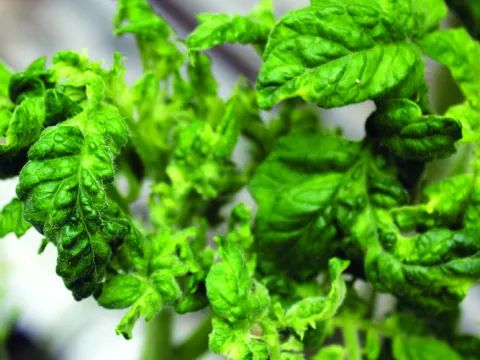
Initial signs manifest as a characteristic mosaic coloration of the leaves, alternating light green and dark green patches. Pronounced deformation of the leaf blade is observed, often expressed as curling and a reduction in the size of the leaves.
Plants infected with the virus significantly lag behind in growth, acquiring a stunted appearance compared to healthy specimens in the row. Internodes become shortened, which creates a rosette effect on the tips of the shoots.
As the disease progresses, chlorosis of the leaf edges and the appearance of necrotic spots, which can merge over time, are observed. Flowers are often deformed, leading to partial or complete sterility and fruit drop.
Fruits on infected bushes develop unevenly, have irregular shapes, and are often covered with spots or stripes. The quality of the harvest drops to critical values, making the produce unsuitable for sale.
- Yellowing of leaf veins
- Curling of terminal leaves
- Overall stunted growth
- Fruit malformation
- Flower and fruit drop
The main factor for development is the presence of an active population of whiteflies, which is the only effective way for the virus to be transmitted under field conditions. Favorable conditions are air temperatures above 25 degrees Celsius and moderate humidity.
The spread of the virus occurs in leaps during the migration of insects from primary infection foci (weeds or infested greenhouse facilities) to young vegetable crops.
The lack of crop rotation and the cultivation of Solanaceous crops in monoculture create a "green bridge" that allows the virus and its vector to survive throughout the entire growing season.
Violation of sanitary regimes in greenhouses, including poor cleaning of structures and the presence of weeds, significantly increases the risk of massive epiphytotic development of the disease.
Unbalanced nitrogen nutrition, which encourages active vegetative growth, makes plants more attractive to insect vectors, indirectly facilitating infection.
The harmfulness of the virus lies in a sharp decrease in the marketability of produce and a reduction in total yield, which can drop by 50–80% in cases of early crop infection.
Systemic damage to metabolic processes leads to the accumulation of waste products and chlorophyll degradation, causing the plant to lose the ability to effectively store sugars and vitamins in the fruits.
Economic losses consist not only of harvest loss but also of the costs of protective measures, which often prove ineffective against viral diseases.
Infection of plantations leads to the need to discard large areas, as no treatments for already infected plants have been developed to date.
In large-scale farming, the virus is capable of destroying a significant part of the crop's market potential in a short time, making it an extremely dangerous quarantine object.
The main method of control remains strict sanitary monitoring aimed at eliminating insect vectors using systemic and contact insecticides.
Using virus-resistant or tolerant varieties and hybrids is the most effective preventive method, reducing the risk of epiphytotics over large areas.
It is mandatory to destroy weeds around fields and inside greenhouses, as weeds serve as reservoirs for both the virus and whiteflies during the off-season.
The use of protective nets on greenhouse ventilation openings prevents the entry of vectors from outside, which is critical for areas with high levels of infection.
If initial foci of infection are detected, immediate removal and disposal of diseased plants (burning or deep burial) are necessary to prevent the further spread of the pathogen.