
Solanum burkina faso leaf curl virus
Begomovirus solanumburkinafasoense
Description
Symptoms
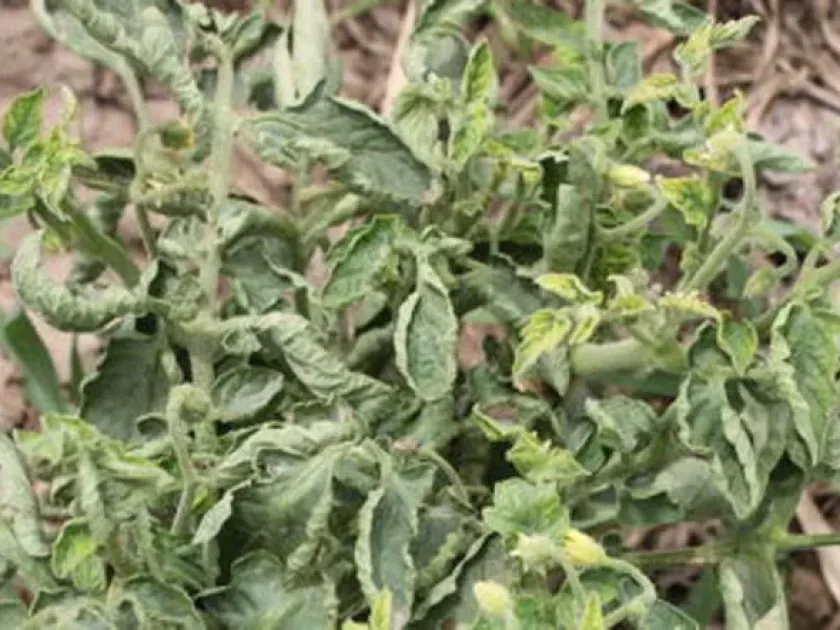
Symptoms typically manifest as an upward curling of leaf margins, which is a classic response to systemic begomovirus infections in solanaceous crops.
Affected plants exhibit severe stunting and reduced internode length, resulting in a bushy, dwarf-like appearance that significantly hinders normal vegetative growth.
Leaves may show yellowing (chlorosis) in the interveinal areas and acquire a leathery, thickened texture, indicating severe metabolic disruption.
The reproductive development is heavily impacted, leading to flower abscission, failure of fruit set, and the production of deformed or unmarketable produce.
- Severe upward leaf curling
- Interveinal chlorosis and yellowing
- Extreme plant dwarfing and stunting
- Floral drop and poor fruit set
- Deformed and underdeveloped fruits
Pathogen
The causal agent is the Begomovirus solanumburkinafasoense, a member of the Geminiviridae family characterized by its single-stranded DNA genome.
Transmission occurs primarily through the silverleaf whitefly (Bemisia tabaci), which acts as a persistent vector, acquiring the virus during feeding.
Once the whitefly ingests the virus, the pathogen circulates within the insect, allowing it to remain infectious for the remainder of its lifespan.
The virus establishes a systemic infection in the host plant, interfering with cellular processes and causing the characteristic developmental abnormalities observed in nightshades.
No seed transmission is currently associated with this specific begomovirus, emphasizing the importance of vector control as the primary defense strategy.
Conditions for development
The incidence of this disease is highly dependent on environmental factors that favor the population dynamics of the whitefly vector.
Hot and dry weather conditions optimize the breeding cycle of whiteflies, facilitating rapid spread across commercial fields and greenhouse structures.
Weedy species surrounding cultivated areas often serve as reservoirs, harboring both the virus and its vector during the off-season period.
Greenhouse environments often provide a stable climate that allows for continuous whitefly reproduction, exacerbating the risk of viral outbreaks.
Lack of proper field sanitation and failure to rotate crops allow for the accumulation of viral loads in the local ecosystem, increasing infection pressure each season.
Why it matters
The economic impact of the virus is severe, as it causes massive yield losses and a significant decline in the overall quality of vegetable production.
Plants infected early in their developmental stage rarely reach maturity or produce viable crops, leading to complete field abandonment in severe cases.
The virus degrades the commercial value of crops, making them unsuitable for fresh market sale and disrupting regional supply chains.
Secondary infections are common, as the stressed and weakened plants become more susceptible to opportunistic fungal and bacterial pathogens.
Managing the virus requires high investment in labor and pest control measures, which significantly increases the production costs for affected farmers.
Protection
Management centers on aggressive whitefly control using a rotating schedule of insecticides to prevent the development of resistance in pest populations.
Physical barriers such as insect-proof netting in greenhouses are highly recommended to prevent the entry of whitefly vectors into the production zone.
Rigorous monitoring and the immediate removal of symptomatic plants are essential to reduce the viral inoculum and prevent further spread.
Implementing a strict weed control program minimizes the availability of host plants for the vector and the virus in the surrounding environment.
Where available, the adoption of resistant or tolerant cultivars remains the most sustainable approach to mitigating the damage caused by this begomovirus.
Discussion
No discussions yet — be the first.