
Solanum araguense golden mosaic virus
Begomovirus solanumaraguaense
Description
Symptoms
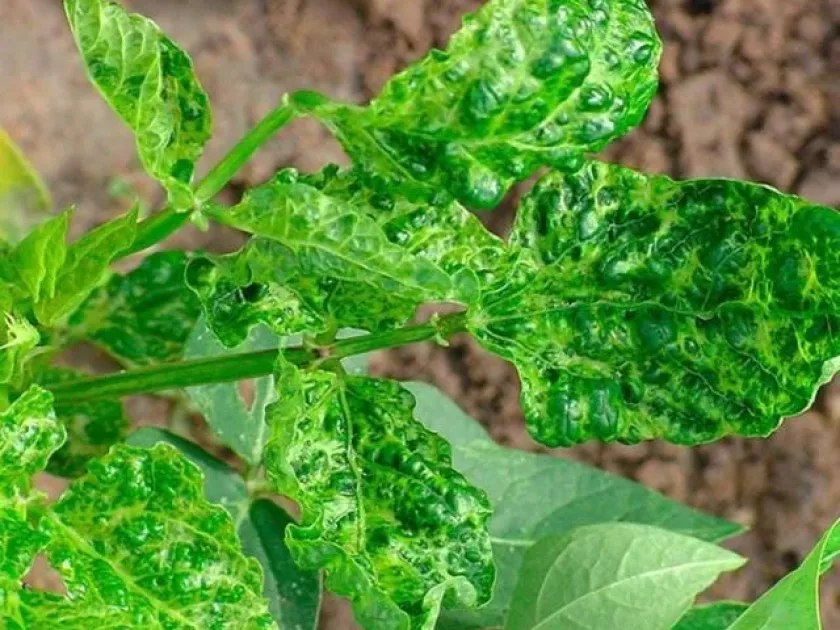
The most prominent symptom is the development of a brilliant yellow or golden mosaic pattern on the leaves, which often involves significant chlorosis of the leaf veins.
Infected plants display stunted growth and a bushy appearance due to the shortening of internodes and abnormal development of new leaves.
Leaf curling and deformation are common, with leaves often showing inward rolling or crinkled margins that severely reduce the photosynthetic surface area.
Flower production is frequently suppressed, and fruit that does manage to set is typically undersized, deformed, and of poor commercial quality.
- Golden yellow vein clearing.
- Severe leaf crinkling and curling.
- General stunting of the plant canopy.
Pathogen
The causal agent of this disease is Begomovirus solanumaraguaense, a member of the Geminiviridae family. It is a virus characterized by a single-stranded circular DNA genome.
This virus is transmitted in a persistent, circulative manner by the whitefly Bemisia tabaci, which remains capable of transmitting the virus for a long duration after feeding on an infected plant.
The virus replicates within the host plant cells and disrupts essential metabolic pathways, leading to the characteristic mosaic symptoms observed in susceptible solanaceous crops.
Since the virus is not mechanically transmissible in most cases, its spread is entirely dependent on the movement and feeding habits of its insect vector.
Genomic analysis of this virus has shown high adaptability, necessitating continuous monitoring of plant populations to detect new emerging strains.
Conditions for development
The spread of the virus is directly correlated with the population density of the whitefly vector, which thrives in warm and humid or arid conditions.
Optimum temperature ranges between +25°C and +32°C accelerate both the life cycle of the whitefly and the replication rate of the virus within the plant tissue.
Agricultural environments that host diverse weed species provide year-round reservoirs for the virus, ensuring that vectors can pick up the pathogen even when crops are not present.
Intensive cropping practices in greenhouses, which maintain stable temperatures throughout the year, create favorable conditions for constant virus transmission.
High nitrogen levels in soil can sometimes indirectly influence virus spread by promoting excessive vegetative growth, which attracts higher numbers of insect vectors.
Why it matters
The economic impact of this virus is severe, as infection at the seedling stage often leads to total crop failure and the loss of the entire harvest.
The visual symptoms render the produce unattractive to consumers, causing significant post-harvest losses and reduced market value for any surviving fruit.
Plants weakened by the virus become highly susceptible to opportunistic secondary infections, further accelerating the decline and eventual death of the crop.
The cost of managing the whitefly vector significantly increases production expenses, often making the cultivation of highly susceptible varieties unprofitable.
Widespread outbreaks can devastate local agricultural economies, as the virus can rapidly move through fields due to the mobility of the whitefly vector.
Protection
Management strategies should focus primarily on the exclusion of the whitefly vector through the use of insect-proof netting and greenhouse sanitation.
The integration of biological control agents, such as parasitoids of whiteflies, can help in maintaining vector populations below the economic injury threshold.
Regular monitoring using sticky yellow traps is essential for early detection of whitefly migration, allowing for timely insecticide applications.
Cultivation of resistant or tolerant cultivars is the most sustainable approach to minimize losses in areas where the virus is known to be endemic.
Aggressive weed control both inside and outside the greenhouse or field is necessary to eliminate alternative hosts for both the virus and the whitefly vector.
Discussion
No discussions yet — be the first.