
Curtovirus
Curtovirus
The Curtovirus genus belongs to the Geminiviridae family and consists of viruses with circular, single-stranded DNA genomes. These pathogens are known for their distinct mode of transmission.
What the section contains
Curtovirus
The beet leafhopper (Circulifer tenellus) serves as the primary vector for these viruses. The virus circulates within the insect's body before being transmitted to a healthy plant.
Once inside the plant, the virus exclusively inhabits the phloem tissue, where it replicates and interferes with the translocation of sugars and nutrients.
Curtoviruses are not mechanically transmissible, meaning that pruning tools or simple physical contact will not spread the virus between plants.
The virus relies entirely on its insect vector to survive and migrate across agricultural landscapes, making the biology of the leafhopper central to the disease cycle.
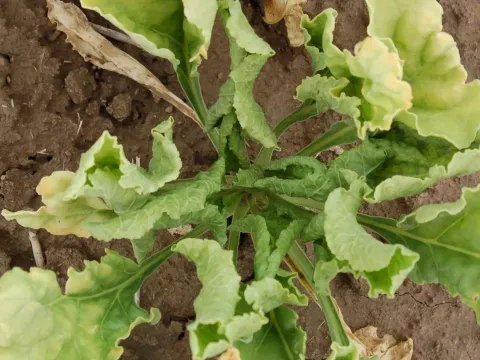
Symptoms of Curtovirus infection often start with the inward curling of leaf edges and a general stunting of the entire plant structure.
Leaves become thickened, crisp, and develop a characteristic yellow or purple discoloration, signaling a failure in the plant's metabolic processes.
Shortened internodes cause the plant to take on a dwarfed, bushy appearance, often described as a "rosette" or "curly top" growth pattern.
Root development is severely inhibited, and in many cases, the plant stops producing flowers and fruits entirely after becoming infected.
Diagnostic indicators also include the presence of necrotic areas in the phloem and the overall lack of vigor in plants infected at a young stage.
The spread of Curtovirus is dictated by the environmental conditions that influence the population dynamics and migration of the beet leafhopper.
Hot, dry weather encourages leafhoppers to move from drying native vegetation to lush, irrigated crops, which facilitates the transmission of the virus.
Areas adjacent to uncultivated land or regions with high weed pressure are at a significantly higher risk of experiencing outbreaks of the disease.
Irrigation management plays a role; while necessary for crop survival, high-moisture environments can sometimes support larger populations of vectors.
The disease incidence usually peaks when the seasonal migration of leafhoppers coincides with the most susceptible developmental stage of the host crop.
Curtovirus is highly destructive because it systemic infects the host, rendering the plant unproductive and preventing any recovery.
Key crops at risk include sugar beets, tomatoes, beans, peppers, and various cucurbits, which often face total loss in severe infection scenarios.
The economic impact is massive, as infected fields require total replacement or suffer from drastically reduced yields and poor quality produce.
Because there is no cure for an infected plant, growers face continuous pressure to monitor fields and remove symptomatic plants to prevent further spread.
The cumulative costs include crop loss, the expense of intensive insecticide programs, and the loss of land utility for the duration of the season.
Management strategies focus heavily on vector control using systemic insecticides to lower the population of leafhoppers before they can feed on crops.
Sanitation is paramount; clearing weeds from field borders and irrigation ditches eliminates the reservoirs where the virus and vectors persist.
Choosing resistant or tolerant crop varieties is the most reliable long-term solution for farmers operating in regions prone to Curtovirus outbreaks.
Implementing physical barriers, such as floating row covers for high-value vegetable crops, provides an effective mechanical shield against insect vectors.
Proper scheduling of planting times to avoid peak migration windows of leafhoppers can significantly reduce the probability of widespread field infection.