
Jujube mosaic
Badnavirus tesselloziziphi
Description
Symptoms
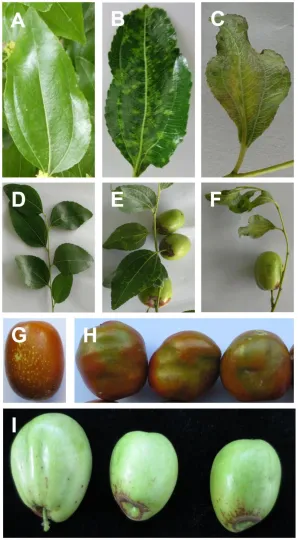
The primary symptom is a distinct mosaic pattern on the leaves, characterized by alternating patches of light green, yellowish, and dark green colors. This disruption of chlorophyll distribution is a hallmark of the infection.
Infected leaves often show signs of deformation, such as wrinkling, curling, or significant size reduction. These structural changes are typical for severe cases of the disease.
Affected trees may exhibit shortened internodes, leading to a stunted growth habit and a bushy, irregular appearance of the canopy.
Symptoms are most visible on new shoots during the active growing season. During periods of heat stress, signs may appear to fade, only to return when growing conditions stabilize.
Over time, the tree experiences overall physiological decline, showing reduced vigor, sparse foliage, and lower resistance to external stress factors.
Pathogen
The causative agent of this disease is the virus Badnavirus tesselloziziphi, a member of the Caulimoviridae family. It is a highly specialized phytopathogen that targets trees of the genus Ziziphus, including the common jujube.
The virus consists of bacilliform particles containing double-stranded DNA. Its biological nature allows it to integrate into the host plant's genome, making complete eradication from an infected tree impossible.
This disease is classified as a systemic viral mosaic. The infection spreads throughout the vascular system of the host, disrupting nutrient transport and general metabolism.
Scientific research indicates that the virus can remain latent in plant tissues for long periods, which complicates detection during the early stages of infection.
As a specialized pathogen, it relies entirely on its host for survival and propagation, lacking any environmental phase in its life cycle outside of plant tissues.
Conditions for development
The primary mode of transmission in agricultural settings is the use of contaminated tools during grafting, pruning, or other maintenance operations.
The virus is easily spread via plant sap that adheres to cutting blades. If a tool is not sterilized between trees, it acts as a mechanical vector for the virus.
Sucking insects, such as aphids, are suspected to be natural vectors that spread the virus by feeding on the sap of infected trees and then moving to healthy ones.
The use of infected propagating material (cuttings or rootstock) is the most significant cause of long-distance spread and the introduction of the disease into new orchards.
High-density planting, where tree canopies frequently rub against each other, can facilitate mechanical transmission through contact between damaged plant surfaces.
Why it matters
Jujube mosaic significantly reduces crop yields by impairing the tree's photosynthetic capacity. Fruits on infected trees are often small, misshapen, and possess inferior taste and quality.
The progressive nature of the disease leads to a gradual reduction in the tree's lifespan and economic productivity, ultimately rendering the orchard unprofitable.
Infected trees serve as permanent reservoirs of the virus, posing a continuous threat to the health of surrounding trees within the plantation.
Fruit quality deterioration makes the harvest unsuitable for commercial sale in fresh produce markets, resulting in substantial financial losses for growers.
Since there are no curative treatments for viral diseases in trees, the presence of the mosaic virus often necessitates the removal and destruction of entire affected blocks.
Protection
The cornerstone of management is strict phytosanitary practice. Always source planting material exclusively from certified nurseries that practice rigorous virus-indexing.
Mandatory disinfection of pruning tools is essential. Use 70% alcohol or an effective disinfectant solution to sanitize blades between every single tree to prevent mechanical transmission.
Early identification and culling of infected trees are critical. Once a tree is confirmed to have the mosaic virus, it should be uprooted and burned to prevent further spread.
Manage insect populations, particularly aphids and other sap-sucking pests, through integrated pest management (IPM) to reduce the risk of natural viral transmission.
Maintain optimal tree vigor through balanced fertilization and appropriate irrigation. While this does not cure the virus, it helps the tree better withstand symptoms and maintain higher productivity for longer.
Discussion
No discussions yet — be the first.