
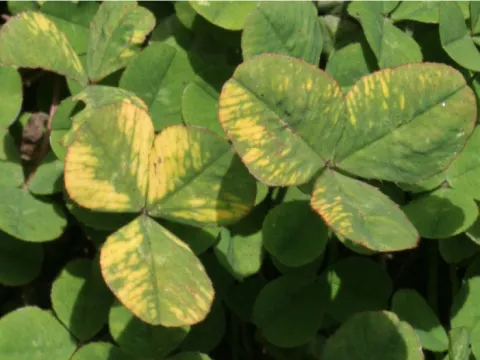
White clover necrotic mosaic virus
Alphanecrovirus tessellati
The causal agent of this disease is the Alphanecrovirus tessellati, which belongs to the Alphanecrovirus genus within the Tombusviridae family. It consists of small, stable, icosahedral particles containing single-stranded RNA.
What the section contains
White clover necrotic mosaic virus
The virus is known for its high stability in the environment. It can persist in soil and infected plant debris for extended periods, making it a challenging pathogen for standard crop rotation practices.
Unlike many other plant viruses, this pathogen does not require a specific insect vector for primary infection. It is primarily transmitted through mechanical contact and contaminated soil particles.
The virus infects through the root system. Micro-injuries caused by soil cultivation or root-feeding organisms facilitate the entry of the virus into the plant host tissues.
It is classified as a soil-borne virus, which implies that once a field is contaminated, the risk of infection remains high for subsequent sensitive crops planted in that area.
The primary symptoms include chlorotic and necrotic spots that often form a mosaic pattern on the leaves. Infected foliage may show significant deformation, crinkling, and mosaic-like chlorosis.
Initial signs may be subtle, but as the disease progresses, necrotic lesions expand, eventually leading to tissue collapse and premature senescence of the affected leaves.
Overall plant growth is significantly stunted. Infected clover stands show reduced vigor, decreased branching, and sparse foliage density compared to healthy populations.
In severe cases, the necrosis can spread to the crown of the plant, leading to the yellowing and wilting of the entire clover stand, which significantly impacts biomass production.
Under specific environmental conditions, symptoms may be masked by the plant's natural growth cycles, but the presence of the virus consistently impairs the physiological performance of the clover.
Disease development is favored by moderate soil moisture and temperatures ranging from 15 to 22 degrees Celsius, which are optimal for the viral replication process.
The spread of the virus within a field typically occurs during agricultural operations. Soil transported by machinery is a major factor in moving the virus from one patch of the field to another.
High plant density encourages rapid virus transmission through root-to-root contact in the rhizosphere and mechanical contact between leaves during windy or wet conditions.
Moisture availability, particularly in low-lying areas of a field, promotes the movement of viral particles within the soil solution, increasing the likelihood of infection for susceptible plants.
Crop debris left in the soil serves as a primary reservoir for the virus, ensuring the pathogen survives from one growing season to the next.
The main economic impact is a substantial reduction in green biomass yield, which directly affects the feed supply for livestock and farm profitability.
Infection suppresses the nitrogen-fixing ability of clover, leading to reduced soil fertility benefits and compromised symbiotic relationships with beneficial bacteria.
Affected plants exhibit lower winter hardiness, which often leads to total crop failure or a significant decrease in stand longevity, necessitating expensive field reseeding.
The nutritional quality of the fodder is degraded by the viral infection, making the remaining biomass less suitable for high-quality livestock feed production.
Economic losses are compounded by the need for increased management efforts and the potential loss of long-term productivity in established clover fields.
Strict adherence to a multi-year crop rotation is the most effective management strategy. Avoid planting clover in the same field for at least 4–5 years to allow the soil virus population to decline.
The use of certified, disease-free seed is essential to prevent the introduction of the virus into new, clean fields.
Sanitation of farm machinery is crucial. Thoroughly cleaning soil and debris from equipment before moving it from a potentially infested field to a healthy one significantly limits viral spread.
Controlling leguminous weeds is important, as these plants often serve as asymptomatic reservoirs, maintaining the virus in the environment between growing seasons.
Early identification of infection patches followed by localized destruction of the infected stand can prevent the virus from spreading throughout the rest of the field.