
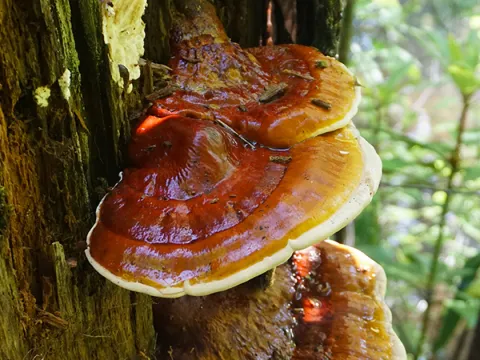
Ganoderma rot
Ganodermatales
Ganoderma rot is caused by fungi belonging to the genus Ganoderma, which are known as wood-decaying basidiomycetes. These fungi are capable of breaking down lignin and cellulose, causing a type of decay known as white rot.
What the section contains
Ganoderma rot
The pathogen enters the tree through wounds, such as pruning cuts, frost cracks, or root injuries. Once established, the mycelium colonizes the heartwood and sapwood, gradually weakening the internal structure of the tree.
The most recognizable feature is the formation of large, woody, bracket-like or shelf-like fruiting bodies. These sporocarps release millions of spores that disperse via wind to infect other susceptible hosts.
These fungi are highly persistent and can survive for years as saprotrophs on stumps, logs, and decaying organic matter in the soil, acting as a permanent reservoir for infection in the area.
The biological activity of the fungus fundamentally alters the wood structure, leaving it soft, fibrous, and discolored, often marked by distinctive dark zone lines that indicate the fungus's boundaries within the tissue.
The most obvious sign of infection is the emergence of hard, woody brackets near the base of the trunk or on the major roots. These fruiting bodies can be perennial and may appear once a year.
The foliage of infected trees often shows signs of stress, such as yellowing, thinning of the canopy, and premature leaf drop. This occurs because the fungal activity disrupts the vascular system.
Internally, the wood undergoes significant decay, often leading to the formation of cavities or hollows. In advanced cases, the bark may peel away, revealing the crumbling, decayed wood underneath.
Affected trees often exhibit dieback, starting from the tips of branches and progressing downwards. This reflects the tree's decreasing ability to transport water and minerals to the upper parts of the crown.
- Bracket-like fruiting bodies on the trunk or roots.
- Canopy dieback and yellowing leaves.
- Internal wood decay with white, fibrous texture.
- Increased brittleness of the tree structure.
The development of Ganoderma rot is favored by high humidity and poor site drainage, which can lead to weakened tree health and stress, making the tree more susceptible to fungal colonization.
Mechanical damage is a primary trigger for infection. Any wound, whether caused by landscaping equipment, storms, or improper pruning, provides an open door for spores to enter the sapwood.
Fungal spread is more prevalent in environments with high concentrations of decaying organic material, such as rotting stumps or dead woody debris left in the vicinity of healthy trees.
Environmental stress, including drought followed by heavy rainfall, can compromise the tree's defense systems, allowing the latent infection to progress much faster within the tree tissues.
Warm temperatures during the growing season optimize the physiological processes of the fungus, leading to more frequent production of sporocarps and increased sporulation.
Ganoderma rot is highly dangerous because it compromises the structural integrity of the tree. This significantly increases the risk of sudden structural failure or windthrow, posing a hazard to property and people.
The disease is progressive and generally irreversible once the rot has advanced throughout the root system and trunk. The tree gradually loses its ability to sustain itself and eventually dies.
Economic damage is substantial, particularly in parks, orchards, and urban settings, where infected trees must be removed to ensure safety. This involves costly arboricultural services and potential loss of landscape value.
The fungus can spread to neighboring healthy trees, especially if their root systems are interconnected, creating localized pockets of infection that can wipe out groups of trees.
Because the decay is often internal and hidden, an infected tree may appear healthy on the outside until it is already structurally compromised, creating a deceptive and hazardous situation.
Effective control starts with strict hygiene and cultural practices. Avoid wounding trees during maintenance and ensure that all pruning cuts are clean and properly treated to prevent spore entry.
Regular inspections of the base of trees and root flares can help identify the disease early. Any detected fruiting bodies should be removed, though this is only a palliative measure for appearance.
If a tree is found to have significant Ganoderma infection, it should be professionally assessed for risk. Often, complete removal, including the root stump, is necessary to minimize the risk of failure.
When working with infected material, tools must be disinfected with alcohol or bleach solutions to avoid spreading the fungal spores to healthy plants during pruning or soil cultivation.
Promoting tree vitality through proper fertilization, adequate watering, and mulch management helps the tree maintain strong defense mechanisms, which can slow down or prevent the colonization of the fungus.