
Gloeocercospora
Gloeocercospora
Description
Symptoms
The primary symptoms of Gloeocercospora infection include the appearance of small, water-soaked spots on leaves. Over time, these spots elongate, forming irregular elliptical shapes, often with purple or red margins depending on the host cultivar.
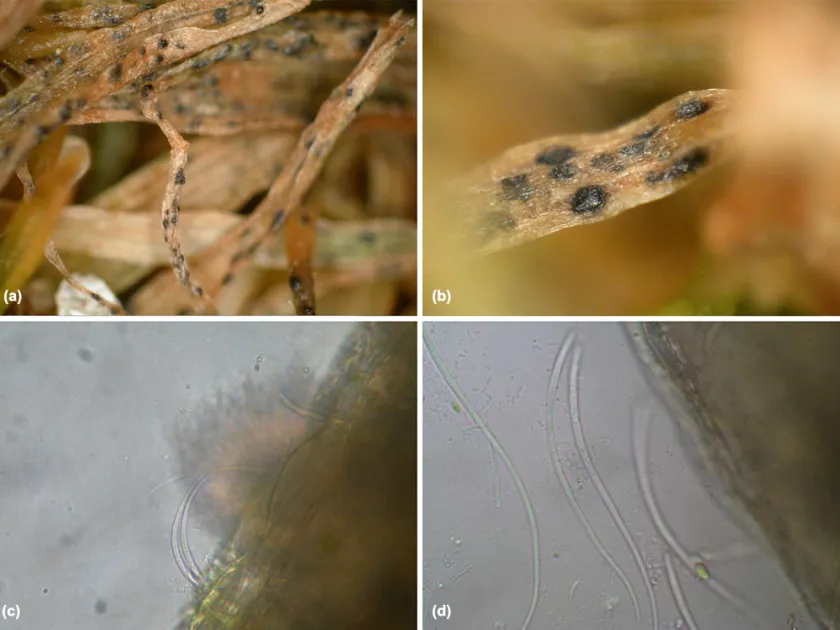
A distinctive diagnostic feature is the presence of small, black, pinhead-sized spots inside the necrotic lesions. These are the fruiting bodies (sporodochia) of the fungus and are clearly visible under moderate magnification.
Under high humidity and dew conditions, a pinkish or whitish mycelial mass can often be observed on the surface of the lesions. This mass contains a high concentration of spores ready for secondary spread to surrounding plants.
In cases of severe infection, lesions may coalesce, covering significant portions of the leaf blade. This eventually leads to the premature drying and death of the leaf, which drastically impacts the plant's physiological efficiency.
While stem infection is less common, it manifests as dark, elongated streaks. Such damage can weaken the plant structurally and interfere with nutrient translocation, potentially leading to lodging or stunted growth.
Pathogen
The disease is caused by the fungus Gloeocercospora sorghi, a well-known pathogen that primarily affects sorghum and other related grass species. The fungus is known for its ability to produce sclerotia, which are survival structures allowing it to persist in crop residues and soil.
The fungal life cycle involves the formation of conidia within slimy acervuli, known as sporodochia, which are found on the surface of infected plant tissues. These spores are easily disseminated by wind and splash of rain onto healthy foliage.
The pathogen is highly aggressive, capable of penetrating the plant through natural openings such as stomata. Once inside, it colonizes the intercellular spaces, secreting enzymes that lead to cellular breakdown and tissue necrosis.
Infected seeds can act as a primary inoculum source, potentially carrying the fungus from one season to another. Therefore, seed health and treatment are paramount to preventing early-stage infections in the field.
Scientific studies on the fungus demonstrate that its biological efficiency in infecting hosts is closely linked to its ability to survive in diverse environmental conditions, making long-term agricultural management essential.
Conditions for development
The disease thrives under conditions of high humidity and moderate to warm temperatures, typically ranging from +22 to +28 degrees Celsius. Prolonged periods of leaf wetness are essential for spore germination and successful host penetration.
Frequent rainfall, heavy morning dews, and foggy weather provide the necessary environmental trigger for rapid disease progression. These conditions allow the fungus to spread exponentially throughout a field.
Dense planting configurations limit airflow and sunlight penetration into the crop canopy. This lack of ventilation keeps leaves damp for longer durations, thereby creating an ideal microclimate for the disease to flourish.
Plant damage from mechanical equipment or insect feeding provides entry points for the fungus, exacerbating the rate of infection. Maintaining overall crop health through good management helps reduce vulnerability.
Field history is a major factor, as the pathogen persists in debris. If fields are not properly managed to destroy previous-season residues, the probability of infection in the new crop is significantly higher.
Why it matters
The economic impact of this disease stems from the significant reduction in photosynthetic leaf area. As the plant loses healthy leaf tissue, its capacity to produce carbohydrates decreases, leading to lower yields.
Yield losses are primarily attributed to reduced grain size and quality. In severely affected crops, grains may be underdeveloped and shriveled, which makes them less valuable for trade and feed purposes.
Beyond quantity, the quality of the fodder produced can be compromised. Infected plant tissues are often unpalatable and may lose nutritional value, causing indirect financial losses for livestock farmers.
The stress caused by the infection often makes the plant more susceptible to opportunistic pathogens and unfavorable environmental stressors, leading to a synergistic negative effect on overall farm productivity.
Controlling an epidemic requires expensive fungicide applications and additional labor. Consequently, failure to address the disease early on leads to a substantial increase in production costs and decreased net profit margins.
Protection
The most effective long-term management strategy is the use of resistant crop varieties. Breeding programs focus on genetic traits that inhibit the pathogen's ability to colonize or develop within the host tissue.
Crop rotation is critical to breaking the pathogen’s life cycle. By avoiding the planting of susceptible crops in the same field for several consecutive years, the level of initial inoculum in the soil is significantly diminished.
- Deep plowing to bury crop residues and accelerate decomposition.
- Using high-quality, fungicide-treated seeds for planting.
- Ensuring adequate spacing to optimize ventilation and air movement.
- Implementing balanced fertilization to enhance natural plant immunity.
Chemical control involving systemic fungicides is necessary when disease symptoms appear early in the season. These applications help protect the crop during the most vulnerable vegetative stages.
Ongoing scouting and monitoring of the field are essential for early detection. By identifying and treating localized outbreaks immediately, farmers can prevent the infection from spreading across larger areas.
Discussion
No discussions yet — be the first.