
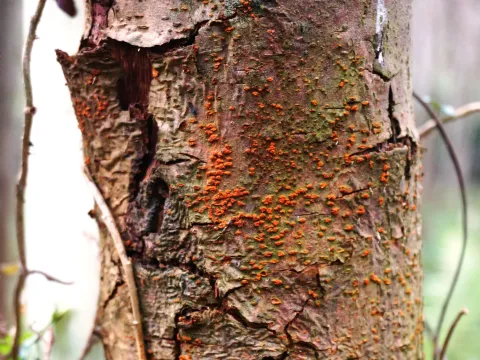
Chestnut leaf spot
Coryneum castaneicola
The primary symptom of this disease is the appearance of distinct lesions on the chestnut leaves. These spots are typically brownish or dark-colored, often with an irregular shape and surrounded by a lighter halo.
What the section contains
Chestnut leaf spot
Within the necrotic areas of the leaves, the pathogen develops its fruiting bodies, known as pycnidia. These appear as minute black dots visible to the naked eye, signaling active spore production.
Infected leaves often turn yellow prematurely and drop from the tree well before the normal autumn season. This premature defoliation significantly reduces the tree's photosynthetic capacity.
Severe infections may spread to young twigs, causing the development of small cankers or sunken necrotic areas. This can lead to stunted growth and distortion of the affected branches.
Affected trees typically exhibit a thinning canopy and an overall unhealthy appearance, which makes them stand out from healthy chestnut specimens in the forest or garden.
The causative agent of this disease is the fungus Coryneum castaneicola, which belongs to the Ascomycota phylum. It is a specialized pathogen that primarily targets species of the Castanea genus.
The fungus propagates through conidia, which are efficiently dispersed by wind, splashing rain droplets, and insects. This facilitates the rapid spread of the fungus throughout the host tree and between adjacent trees.
Upon landing on a leaf, the fungal spores germinate and penetrate the plant tissues, either through stomata or small physical injuries. The mycelium grows intercellularly, secreting enzymes that cause cell death.
The pathogen overwinters primarily in fallen leaves on the ground. It can also survive in the cracks of the bark on infected twigs, waiting for favorable spring conditions to resume growth.
The life cycle of Coryneum castaneicola is heavily dependent on moisture. High humidity and cool-to-warm temperatures are essential for the production and germination of its spores.
Development of the disease is highly favored by damp, humid weather during the spring and summer months. Prolonged rainfall ensures the necessary leaf wetness for spore germination.
Dense, overcrowded planting sites often hinder air circulation, allowing foliage to stay wet for longer periods. This microclimate significantly accelerates the spread of the infection.
Trees that are already under stress, whether due to nutrient deficiencies, pest infestation, or drought, are significantly more susceptible to Coryneum castaneicola infection.
Excessive nitrogen fertilization promotes rapid, succulent growth that lacks robust cell walls. These soft tissues are much easier for the fungal mycelium to penetrate and colonize.
Lack of proper horticultural management, such as failing to remove infected plant debris, creates a persistent reservoir of inoculum that fuels the disease cycle every year.
The most immediate harm caused by this disease is the reduction of the active growing season. Premature leaf drop prevents the tree from storing sufficient energy for winter dormancy.
Chronic infection leads to the progressive weakening of the tree, resulting in dieback of branches and reduced vigor. Over time, this can lead to the slow decline of the entire specimen.
In nursery settings, chestnut leaf spot causes major economic losses. The infected seedlings often lose their aesthetic value and become stunted, rendering them unsuitable for sale.
The disease can significantly impact the productivity of nut-bearing chestnuts by depriving the tree of the energy reserves needed for fruit development and maturation.
Increased susceptibility to secondary pathogens is another common consequence of heavy Coryneum castaneicola infestation, often leading to irreversible damage to the tree's vascular system.
The most critical control measure is the sanitation of the growing area. Collecting and destroying fallen leaves during autumn is essential to eliminate the primary overwintering source of the fungus.
Pruning should be performed to remove dead or infected twigs. All pruning tools should be sterilized after each cut to prevent the mechanical transmission of the pathogen.
Preventative application of copper-based fungicides is highly effective. Applications should be timed to coincide with the budding phase and during periods of wet, disease-favorable weather.
Enhancing tree health through balanced fertilization (specifically potassium and phosphorus) and proper irrigation helps bolster the plant's natural resistance to fungal invasion.
- Selection of resistant chestnut cultivars
- Ensuring proper spacing to improve ventilation
- Regular monitoring for early signs of lesions
- Quarantine of newly acquired nursery stock