
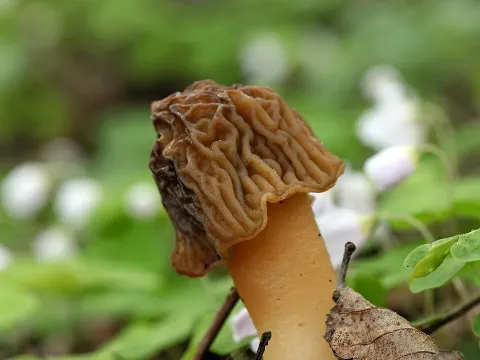
Verpa
Verpa
The fungal genus Verpa (early morel) is primarily recognized in agronomy as a soil-inhabiting organism that can occasionally act as a facultative pathogen under specific environmental stresses.
What the section contains
Verpa
The causative agent belongs to the Morchellaceae family, characterized by its saprotrophic nature, but it can negatively impact plant roots when the soil environment is unbalanced.
The infection is classified as a mycological disease where the fungal mycelium colonizes the rhizosphere, directly competing with the plant for nutrients and hindering root absorption.
The pathogen reproduces via spores that reside in the soil profile, waiting for the right humidity and temperature triggers to initiate the germination process.
Biological studies indicate that the fungus interacts with plant roots by secreting enzymes that break down organic matter and, in extreme cases, soft root tissue.
Initial symptoms are often masked by the subterranean nature of the disease, manifesting as reduced vigor and stunted growth of the above-ground biomass.
Chlorosis and leaf wilting in the absence of obvious pests or drought often indicate that the root system is being compromised by fungal activity.
Inspection of the root zone typically reveals a white, spider-web-like mycelial mat wrapping around the root hairs, effectively starving the plant of moisture.
Advanced stages of the disease lead to dark lesions on the roots, which eventually become soft and prone to secondary rot caused by bacteria or other fungi.
The appearance of fruiting bodies of the fungus near the base of the plant during moist spring weather is a definitive sign of severe soil infestation.
High soil moisture levels, combined with inadequate aeration, provide the necessary environment for Verpa species to thrive and spread throughout the root zone.
Excessive accumulation of fresh organic matter, such as heavy mulching with uncomposted wood chips or straw, serves as a nutrient source that fuels fungal expansion.
Acidic soil conditions are particularly conducive to the growth of this fungus, making it a recurring problem in fields with low pH levels.
Temperatures ranging between 10 and 18 degrees Celsius are critical for the metabolic activation of the fungus, aligning with the prime growing season of many horticultural crops.
Poorly drained fields that retain standing water for extended periods allow spores to germinate and migrate rapidly along the soil channels to new host roots.
The primary damage caused by Verpa is the systemic inhibition of nutrient uptake, which forces the plant into a state of chronic physiological stress and weakness.
Yield loss is the most significant economic concern, as infected crops often fail to produce marketable fruits or seeds due to the redirection of plant energy.
In nurseries, the presence of this fungus can lead to the widespread mortality of seedlings, requiring costly removal and soil replacement measures.
The infection weakens the plant's natural defense mechanisms, making it highly susceptible to further opportunistic pathogens that can kill the crop in a short timeframe.
Degraded root systems cannot support the plant under environmental stress, leading to premature leaf drop and failure to survive winter dormancy.
Effective management begins with soil preparation techniques that enhance oxygenation, such as regular deep cultivation and the use of raised beds to improve drainage.
Correcting soil pH by adding lime or wood ash is an essential preventative measure to alter the soil chemistry to a level where the pathogen struggles to develop.
Integrating biological controls, such as beneficial fungal antagonists (e.g., Trichoderma species), is highly effective in suppressing the growth of Verpa.
Crop rotation remains a fundamental practice, as it prevents the buildup of fungal spore loads in the soil that occurs when the same crop is planted repeatedly.
Sanitation measures, including the removal of infected plants and surrounding soil, are necessary to eliminate the inoculum source and prevent further field infection.