
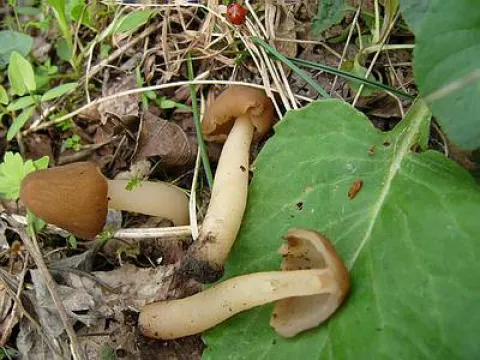
Verpa digitaliformis
Verpa digitaliformis
Verpa digitaliformis, commonly known as the thimble cap, is a species of fungus in the family Morchellaceae. It is not a plant pathogen or a disease, but rather a saprobic fungus found in woodlands.
What the section contains
Verpa digitaliformis
This fungus plays a significant role in forest ecosystems by breaking down organic matter. It derives its nutrition from dead plant material, acting as a natural decomposer.
The fungus is characterized by its distinct, thimble-shaped cap, which sits atop a hollow stem. It is an edible species, though it is often confused with other morel-like fungi.
In terms of agriculture, this species holds no importance as a disease agent. It does not infect crops, ornamental plants, or fruit trees.
Biological studies suggest that Verpa digitaliformis maintains a commensal or neutral relationship with the root systems of forest trees, contributing to nutrient cycling.
The fruit body typically features a cap that is bell-shaped or thimble-like, measuring 2 to 4 centimeters in height, with a wrinkled or pitted surface.
The color of the cap varies from tan to dark brown, while the stem remains consistently white to pale cream, often appearing somewhat brittle.
Unlike parasitic fungi, its presence does not cause chlorosis, wilting, or necrotic lesions on the nearby host plants or forest floor vegetation.
The fungus develops spores within asci, which are released into the air as the fruit body matures and the ambient humidity reaches optimal levels.
Microscopic examination shows long, elliptical, and smooth spores, which differentiate it from the closely related true morels (Morchella spp.).
The development of Verpa digitaliformis is triggered by the arrival of spring, usually occurring shortly after the ground thaws in March or April.
It prefers well-drained, moist soils that are rich in leaf litter, particularly in areas with deciduous tree cover such as aspen and cherry.
High humidity levels and moderate temperatures are essential for the rapid expansion of the fruit bodies following the dormant winter period.
The presence of a thick layer of decomposing plant material is a key environmental requirement for the sustained health of the underground mycelium.
Ecological studies indicate that this fungus is highly sensitive to soil compaction and major changes in the forest floor microclimate.
As a saprobic organism, Verpa digitaliformis is not considered harmful to cultivated plants or forest health.
There are no recorded instances of this fungus causing economic loss in agricultural sectors, making control measures unnecessary.
The species does not produce toxins that could adversely affect the surrounding root zones or soil health in a negative capacity.
Its existence is fundamentally beneficial as it assists in the carbon cycle by decomposing woody and herbaceous debris.
Consequently, no protective or preventative actions are required to manage or eradicate this fungus from agricultural environments.