
Pear scab
Venturia pyrina
Pear scab is a fungal disease caused by the pathogen Venturia pyrina, an ascomycete fungus that specifically targets pear trees.
What the section contains
Pear scab
The fungus overwinters primarily in infected fallen leaves and in the bark of young shoots, where it develops its reproductive structures.
During early spring, when environmental conditions are favorable, the fungus releases ascospores that trigger the primary infection of the season.
Secondary infections occur throughout the growing season, spread by conidia transported by wind, rain splashes, and insects to healthy plant tissues.
The mycelium of the pathogen penetrates the cuticle, colonizing the plant tissues and establishing a permanent source of inoculum within the orchard.
The first symptoms typically appear on the undersides of young leaves as small, olive-green, velvet-like spots that eventually turn darker.
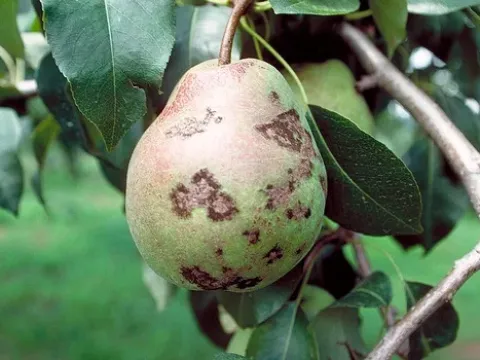
On the fruit, the disease manifests as distinct, round, dark-brown or black lesions that may become scabby and sunken as the fruit matures.
Severe infection on young fruit leads to deformity, cracking of the skin, and uneven development, making the fruit visually unappealing.
Young shoots may develop pustules or blisters that rupture to form lesions; these are crucial for the fungus to survive through the winter.
Premature leaf drop often occurs if the disease is left uncontrolled, which significantly stresses the tree and reduces overall vigor.
High humidity, frequent rainfall, and mild temperatures are the primary factors that facilitate the rapid germination of fungal spores.
The infection process is most successful when foliage remains wet for extended periods, providing the necessary moisture for spores to colonize the surface.
Poor orchard sanitation, characterized by the accumulation of infected debris, creates a favorable environment for the pathogen to thrive.
Overcrowded tree canopies restrict airflow, keeping leaves moist for longer periods and preventing the rapid drying needed to limit spore germination.
Weather patterns characterized by persistent spring showers are highly correlated with outbreaks of pear scab in commercial orchards.
The primary damage caused by pear scab is the direct loss of market value due to the disfigurement and reduced quality of the harvested fruit.
Prolonged infection weakens the tree, resulting in lower carbohydrate storage and negatively affecting the tree's winter hardiness and bud quality.
Scab-infected fruit is highly susceptible to secondary storage rots, causing significant post-harvest losses and waste for producers.
Repeated yearly infections can lead to the stunting of young twigs and the eventual death of branches, impacting the tree's structural integrity.
Managing the disease requires significant financial investment in fungicides, labor for sanitation, and expertise in integrated pest management.
Effective management begins with strict sanitation, including raking and disposing of all fallen leaves at the end of the growing season.
Pruning is essential to remove infected branches and open the canopy, which improves air circulation and reduces the time leaves remain wet.
Applying preventative fungicide treatments, particularly at the green-tip and pink-bud stages, is crucial to block initial infection cycles.
Selecting scab-resistant pear varieties is the most sustainable approach to long-term orchard management and disease reduction.
Maintaining optimal tree nutrition ensures vigorous growth, allowing the tree to better withstand the stress caused by minor infections.