
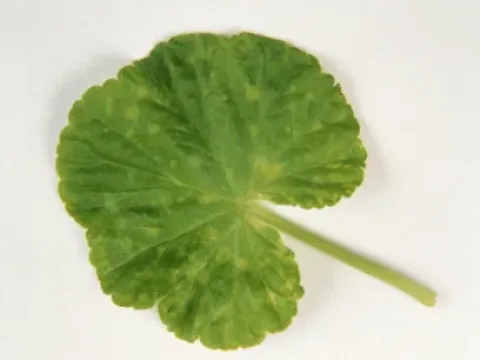
Pelargonium line pattern
Pelargonium line
The causal agent of this disease is the Pelargonium line pattern virus (PLPV). It is a systemic pathogen that affects the plant's vascular system, causing structural changes in the leaves.
What the section contains
Pelargonium line pattern
This virus is primarily transmitted through mechanical means. The most common vector is contaminated gardening tools, such as knives or shears used during propagation or pruning.
The pathogen is highly stable in plant sap, allowing it to survive on tools and work surfaces, which makes it a persistent threat in greenhouse environments.
Once infected, the virus integrates into the plant's cellular processes. It hijacks the host's machinery to replicate its own genetic material, depleting the plant's energy resources.
Detection of the virus typically requires laboratory diagnostic techniques like ELISA or PCR, as symptoms can sometimes be masked by environmental factors.
The signature symptom is the development of chlorotic lines, streaks, or concentric rings on the foliage. These patterns often appear as irregular zig-zag designs.
Over time, the affected leaf tissue may undergo necrosis, leading to brown spots and holes. This results in the deformation of leaves and can cause premature leaf drop.
The virus affects several species, including Pelargonium graveolens (scented geranium) and Pelargonium peltatum (ivy-leaved geranium), among others.
In many cases, the symptoms are localized to specific branches initially before spreading throughout the entire plant system.
Care must be taken to distinguish these viral markings from natural variegation or genetic color patterns. Viral lines are usually irregular and lack the symmetry of healthy plant patterns.
Development and symptom expression of the virus are frequently triggered by environmental stress. Fluctuating temperatures and poor lighting can make the plants more susceptible.
Greenhouse propagation is the most common time for the virus to spread. Using the same tool for multiple plants without sterilization creates ideal conditions for transmission.
The virus thrives during the plant's active growth phase. While cool temperatures may temporarily mask symptoms, the viral presence remains active within the plant tissues.
Plants weakened by poor fertilization or improper irrigation are more prone to severe symptom expression compared to vigorous, well-maintained specimens.
Presence of plant-sucking insects in the growing area can facilitate the spread of the sap-borne virus through accidental injuries to the plant tissues.
The primary economic harm is the total loss of aesthetic value, rendering the plants unsuitable for sale or ornamental use.
Infection results in metabolic disruption, leading to stunted growth and poor floral development. Plants often produce fewer, smaller, or malformed flowers.
The virus impacts the root system indirectly, leading to general plant decline. Infected specimens become highly sensitive to environmental stressors like heat or water stress.
Because the virus is systemic, it is carried through every cutting taken from an infected mother plant, leading to the contamination of entire stock collections.
There is no chemical or biological cure for the virus, meaning that removal and destruction are the only ways to manage the disease and prevent further spread.
Management is centered entirely on rigorous sanitation and prevention. Tools must be disinfected with alcohol or a strong bleach solution between every single plant.
The most effective strategy is the use of virus-indexed, certified disease-free starting material. Only purchase from reputable nurseries with strict quality control.
Any plant showing suspicious patterns should be immediately removed from the growing area and destroyed to protect the remaining collection.
Routine inspection of the collection is vital, especially during the propagation season when the virus is most likely to be moved from one plant to another.
- Sterilize all tools using 70% isopropyl alcohol.
- Maintain a strict quarantine period for new acquisitions.
- Destroy all symptomatic plants immediately.
- Practice consistent insect and pest management to prevent sap-transmission.