
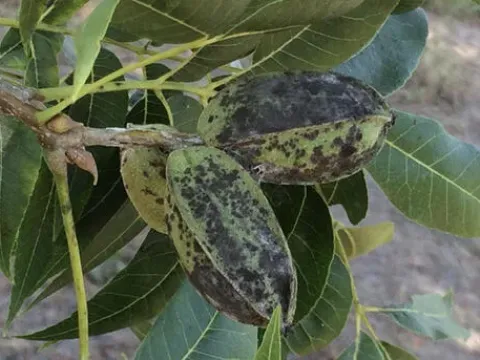
Pecan scab
Venturia effusa
The causal agent of this disease is the fungus Venturia effusa, an ascomycete that represents the most significant biological threat to pecan production globally. This pathogen targets the green tissues of the plant, including leaves, stems, and developing nuts.
What the section contains
Pecan scab
The fungus survives the winter primarily in infected bark, mummified nuts (shucks), and leaf debris left on the orchard floor. When spring temperatures rise, the pathogen produces spores that are disseminated via wind and rain splashes.
The lifecycle of Venturia effusa is closely synchronized with the growth phases of the pecan tree. Rapidly expanding, young, succulent tissues are the most susceptible to infection, making early spring a critical period for monitoring.
Venturia effusa exhibits high genetic diversity, which allows it to overcome host resistance mechanisms effectively. This plasticity makes breeding resistant cultivars a continuous, long-term challenge for researchers.
Once the spores land on a susceptible surface, they germinate and penetrate the host epidermis. The fungus then establishes a feeding relationship with the plant cells, leading to the characteristic lesions associated with the disease.
Initial symptoms of pecan scab appear as small, circular, dark-colored spots on leaves and shucks. As the infection progresses, these lesions turn olive-black and often develop a velvety, sporulating surface.
On developing nuts, the spots may coalesce, forming larger, sunken necrotic areas. Severe early-season infection typically leads to fruit abortion, causing the nuts to wither and drop prematurely.
Lesions on young shoots appear as elongated, dark streaks or cankers. These can eventually girdle the twig, disrupting the transport of water and nutrients and leading to the dieback of terminal branches.
The presence of mass sporulation on the lesions under humid conditions creates a visible, dark dust-like coating. This serves as a continuous inoculum source for secondary infections throughout the growing season.
Persistent infection results in significant premature leaf drop, which weakens the tree, reduces its ability to accumulate stored energy, and diminishes its overall cold hardiness for the upcoming winter.
The development of pecan scab is heavily dependent on moisture. Prolonged periods of leaf wetness, high humidity, and frequent rainfall are the primary drivers of disease spread in orchards.
The pathogen thrives at temperatures between 20°C and 25°C (68°F–77°F). While it can infect at a wider range of temperatures, this optimal window coincides with the most active growth period of the tree.
Orchard layout plays a significant role; dense canopy foliage and poor air circulation maintain high humidity around the leaves and fruit, creating a microclimate that favors fungal colonization.
Rainy seasons, especially during the stages of flowering and nut set, significantly increase the risk of severe outbreaks. Splash dispersal during rain events is a major factor in the upward movement of spores within the canopy.
Poor orchard sanitation, characterized by the failure to remove or destroy infested plant debris, ensures a high inoculum pressure every spring, making the disease harder to control.
The economic impact of pecan scab is profound, as untreated orchards can experience total yield loss in high-pressure years. The marketable quality of harvested nuts is severely degraded by shuck lesions.
Chronic infection results in tree vigor loss. Repeated leaf loss and twig dieback impair the tree's photosynthetic capacity, leading to decreased yields and lower nut quality over several seasons.
Increased production costs are a major concern, as growers must implement intensive fungicide spray programs. These costs can represent a large portion of the overall budget in commercial pecan operations.
The disease also increases the vulnerability of trees to other pests and opportunistic diseases by weakening their physiological defense systems and overall tree health.
In cases of severe, long-term neglect, the commercial viability of an orchard can be compromised, leading to the necessity of total tree replacement or the abandonment of the orchard site.
The cornerstone of pecan scab management is a strategic, preventative fungicide program. Applications should begin at bud break and continue based on weather conditions and the disease susceptibility of the cultivar.
Orchard sanitation is critical. Removing mummified nuts and pruning out infected twigs during dormancy reduces the initial inoculum load in the orchard, making primary infection easier to manage.
Pruning for canopy management improves airflow and light penetration. By reducing the time leaves stay wet after rainfall, growers can create a less favorable environment for the fungus.
Selecting scab-resistant cultivars is the most sustainable approach to long-term control. While no cultivar is immune, many modern selections exhibit high levels of resistance that drastically reduce spray needs.
- Utilize drip irrigation to avoid wetting the foliage.
- Rotate fungicide modes of action to prevent the development of resistance.
- Monitor trees closely during humid weather cycles for early signs of infection.
- Maintain optimal tree health through proper fertilization and irrigation.