
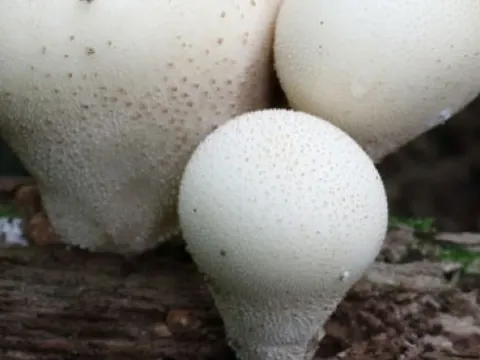
Pear-shaped puffball
Lycoperdon pyriforme
The pear-shaped puffball (Lycoperdon pyriforme) is a common saprophytic fungus belonging to the Agaricaceae family. It primarily feeds on decaying wood, playing a crucial role in nutrient cycling.
What the section contains
Pear-shaped puffball
Unlike parasitic pathogens that attack living plant cells, this fungus is a decomposer. It breaks down complex wood structures like lignin and cellulose, turning them into simpler organic compounds.
The mycelium of the fungus can spread extensively within rotting logs, stumps, and fallen branches. This network of white threads is what drives the decomposition process.
While not a primary disease agent, its presence indicates an accumulation of dead organic matter. In some cases, it can colonize weakened trees if there is sufficient deadwood present.
The biological life cycle involves the production of distinct pear-shaped fruit bodies that release spores, allowing the fungus to colonize new substrates rapidly under favorable conditions.
The most visible signs are clustered, pear-shaped or spherical fruit bodies appearing on stumps or base of trees. Initially, they are white or pale, turning tan or brown as they mature.
The surface of the fungus is often covered in small granular scales or spines. As the fungus ages, these features may weather away, leaving a smoother texture.
A diagnostic sign is the release of a cloud of brownish-olive spores from the apical pore when the mature fungus is squeezed or struck by raindrops.
The fungi often appear in dense, crowded groups, sometimes covering large areas of the affected substrate. This makes them highly conspicuous in damp environments.
The interior of a young specimen is white and fleshy. As it matures, this flesh dries out and is converted into a powdery mass of spores mixed with capillitium threads.
Development is heavily dependent on moisture and the availability of decaying wood. The fungus thrives in shaded, humid garden areas where organic debris is allowed to accumulate.
High levels of humidity, especially following rainfall in late summer and autumn, trigger the formation of fruit bodies and the mass release of spores.
The fungus prefers woody substrates that are already in the process of decay. Stumps of deciduous trees provide an ideal environment for the mycelium to establish itself.
Poor ventilation and constant soil dampness exacerbate the conditions for growth. Lack of sunlight in thickets or untended corners of the garden supports its proliferation.
A lack of regular garden maintenance, including the presence of unremoved tree remnants, creates a stable ecological niche for this fungus to persist over several seasons.
Although primarily a decomposer, the pear-shaped puffball can be problematic if it colonizes the root collar or wounded areas of living trees, accelerating the decay process.
By breaking down the structural integrity of the wood, the fungus can weaken a tree's base, potentially leading to increased susceptibility to wind damage or structural failure.
The presence of a dense mycelium network can be a sign that a tree is already declining due to other factors, as the fungus often exploits pre-existing damage or environmental stress.
Constant spore production creates an environment that may not be desirable in a manicured landscape, potentially affecting the overall aesthetics and perceived health of the garden.
Persistent fungal activity can lead to a gradual reduction of useful organic material if valuable wood elements are involved, although this is usually limited to dead or dying timber.
Effective control relies on good sanitation practices. Removing stumps and clearing deadwood from the garden is the most efficient way to limit the fungal population.
Protecting trees from mechanical wounds is essential. Any damage to the bark or root collar should be promptly treated with protective compounds to prevent fungal entry.
Pruning should be done carefully, and all waste material must be removed from the site to prevent the creation of new colonization areas for the fungus.
Improving air circulation and drainage in the garden helps maintain a less humid environment, which naturally inhibits the growth and spread of saprophytic fungi.
If colonization is detected on valuable trees, manual removal of the fruit bodies before spore release, followed by an application of fungicides to the affected area, can help manage the infestation.