
Pecan cercospora leaf spot
Cercospora fusca
Description
Symptoms
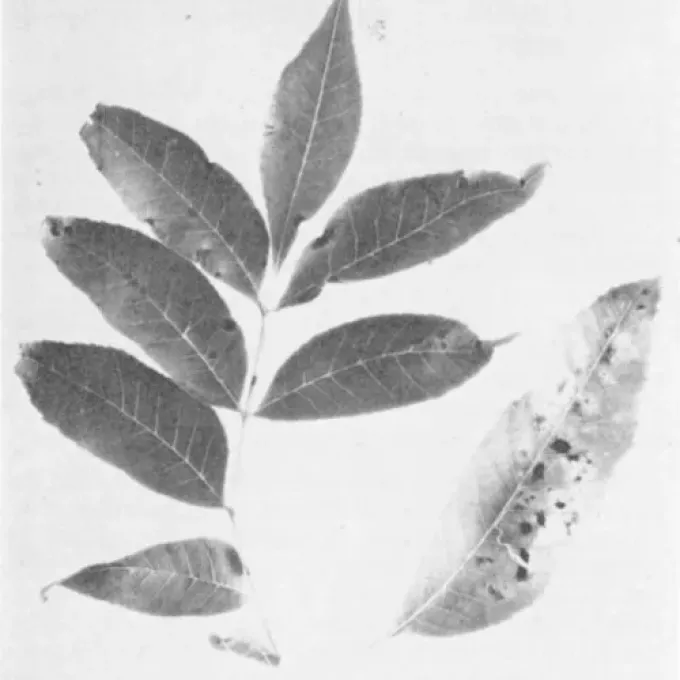
The first symptoms appear as small, indistinct spots that quickly turn dark brown to black, often having an irregular or angular shape depending on the leaf veins.
A distinctive feature of this disease is the presence of an olive-black fuzzy layer on the underside of the leaves, which corresponds to the conidiophores and spores of the fungus.
As the infection progresses, the spots expand and may coalesce, leading to significant chlorosis and necrosis of the surrounding leaf tissue.
Severe infestations cause premature leaf yellowing and shedding, often occurring in mid-to-late summer, significantly earlier than normal senescence.
In some instances, the fungal infection can manifest as lesions on the shucks (husks) of the nuts, though leaf infection is the most common and damaging observation.
Pathogen
The disease is caused by the fungus Cercospora fusca, a member of the class Deuteromycetes. This pathogen is a host-specific fungus that primarily infects the foliage of pecan trees (Carya illinoinensis).
It manifests as a leaf spot disease, characterized by the development of necrotic lesions on the leaves during the summer months when environmental conditions favor fungal growth.
The fungus overwinters primarily in the leaf litter left on the orchard floor, producing spores in the spring that initiate the primary infection cycle of the new season.
Dissemination of conidia (spores) occurs mainly through wind and water splashes, allowing the pathogen to move effectively within the canopy and across the orchard.
The life cycle is closely linked to the availability of moisture on the leaf surface, which is required for spore germination and successful fungal colonization.
Conditions for development
High relative humidity and frequent rainfall are the primary drivers of Cercospora outbreaks, as moisture is essential for the fungal infection process.
Trees with dense, unpruned canopies are at higher risk because the lack of airflow keeps the foliage wet for longer periods after rainfall or morning dew.
Warm summer temperatures accelerate the production and maturation of conidia, creating a rapid cycle of secondary infections that can quickly spread across the entire tree.
Poor orchard sanitation, specifically the failure to remove infected leaf debris from the previous season, provides a massive reservoir of inoculum for spring infection.
Orchards located in areas with limited air movement or poor drainage often exhibit more severe disease pressure compared to well-managed, open plantings.
Why it matters
The primary impact of the disease is the reduction of the tree's photosynthetic capacity, which directly limits the energy available for nut development and maturation.
Premature defoliation weakens the tree's overall vigor and limits the storage of carbohydrates necessary for surviving the winter and initiating growth in the following spring.
Nut quality can be severely compromised, resulting in smaller kernels, poor oil content, and overall reduced yield and marketability of the harvest.
Chronic annual infections significantly stress the trees, making them more susceptible to other pests, environmental stressors, and wood-rotting diseases over time.
In young trees, repeated loss of foliage can severely retard growth and delay the time to reaching full fruit-bearing potential.
Protection
Sanitation is the most critical control strategy; raking and destroying or tilling under the infected leaf litter reduces the amount of overwintering inoculum.
Proper pruning and orchard design to ensure optimal canopy ventilation and light penetration are essential to discourage the damp microclimate that fungi prefer.
Chemical control using registered fungicides, applied according to local agricultural guidelines, is often necessary during wet seasons to protect new growth.
- Maintaining tree vigor through proper irrigation and balanced fertilization programs.
- Choosing resistant cultivars if available in your growing region.
- Regular scouting of the orchard canopy for early detection of spot formation.
Integrating cultural practices with timely fungicide applications is the most effective approach for managing Cercospora leaf spot in commercial pecan orchards.
Discussion
No discussions yet — be the first.