
Pelargonium ring spot
Pelargonium ring
Description
Symptoms
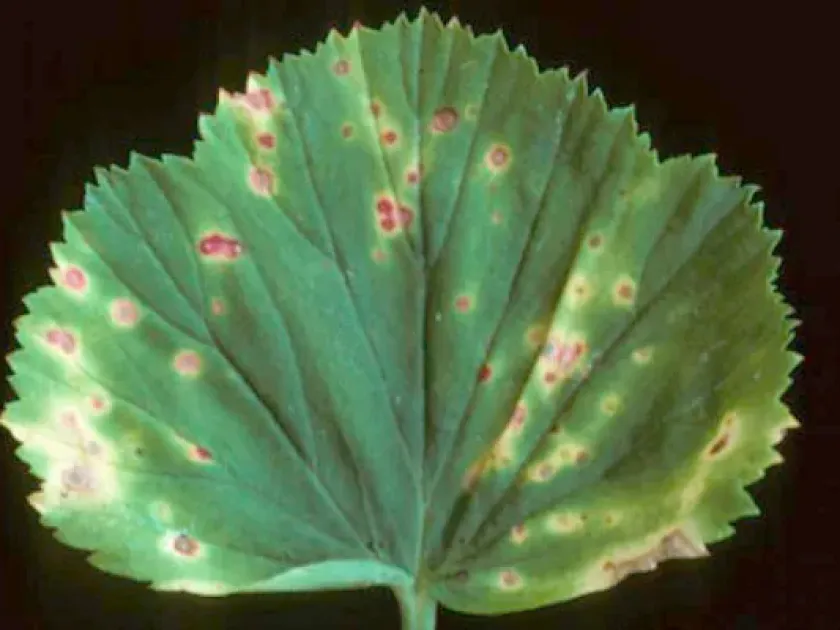
Symptoms of the Pelargonium ring spot virus are characterized by the appearance of light-colored chlorotic spots on the leaf surfaces.
These spots often develop into distinct concentric ring patterns that resemble targets, significantly affecting the aesthetic appearance of the foliage.
In addition to spotting, infected plants may show signs of stunted growth, leaf deformation, and a general decline in vigor over time.
On sensitive species like Pelargonium peltatum (ivy-leaved geranium), the spots can become necrotic, leading to brown or dark gray dead tissue.
Advanced infections often result in significant yellowing of the leaves, followed by premature leaf drop, which can eventually lead to plant death.
Pathogen
The disease is caused by the Pelargonium ring spot virus (PelRSV), which belongs to the Nepovirus or related groups of plant viruses.
This pathogen has a wide host range including various types of geraniums, scented-leaf pelargoniums, and ivy-leaved pelargonium species.
The virus is primarily transmitted through mechanical means, such as contact with contaminated tools during pruning or propagation processes.
It remains systemic within the host plant, meaning it colonizes the entire plant vascular system, making it impossible to cure once established.
Although it is not typically soil-borne, it can survive for long periods in the roots and living tissues of infected perennial host plants.
Conditions for development
The development of the virus is favored by high humidity and poor air circulation within greenhouse or home environments.
Warm temperatures within the optimal growing range for geraniums support the rapid replication of the virus within the plant tissues.
Overcrowded planting conditions increase the risk of cross-contamination, as plant leaves often touch each other and facilitate virus transmission.
Insects like aphids and thrips can act as vectors, spreading the virus between healthy and infected plants while feeding on plant sap.
Poor sanitation practices, such as failing to disinfect pruning shears between plants, are a major driver of outbreaks in professional nurseries.
Why it matters
The virus severely damages the ornamental value of pelargoniums, rendering the plants unsellable and unsuitable for decorative use.
Infection leads to a chronic weakening of the plant's immune system, making it more susceptible to secondary fungal and bacterial infestations.
Commercial producers face significant economic losses due to the need to discard entire batches of infected mother plants and cuttings.
The inability to treat the virus with fungicides or antibiotics makes it a high-risk pathogen that can wipe out entire plant collections if unchecked.
Persistent infection in mother stock ensures the continued spread of the virus to new generations of plants through propagation.
Protection
Rigorous sanitation, including the regular disinfection of all pruning tools with alcohol or appropriate chemical solutions, is mandatory.
Any plant showing characteristic symptoms of ring spot should be immediately removed and destroyed to prevent the spread of the pathogen.
A strict quarantine period for all new plant material introduced into a collection is essential for early detection and disease prevention.
Effective pest management programs must be implemented to control insect vectors like aphids and thrips that facilitate virus transmission.
Use only certified disease-free stock for propagation and ensure that all working areas are kept clean and free of decaying plant debris.
Pathogens and affected parts
Affects crops · 3
Discussion
No discussions yet — be the first.