
Veluticeps
Veluticeps
Description
Symptoms
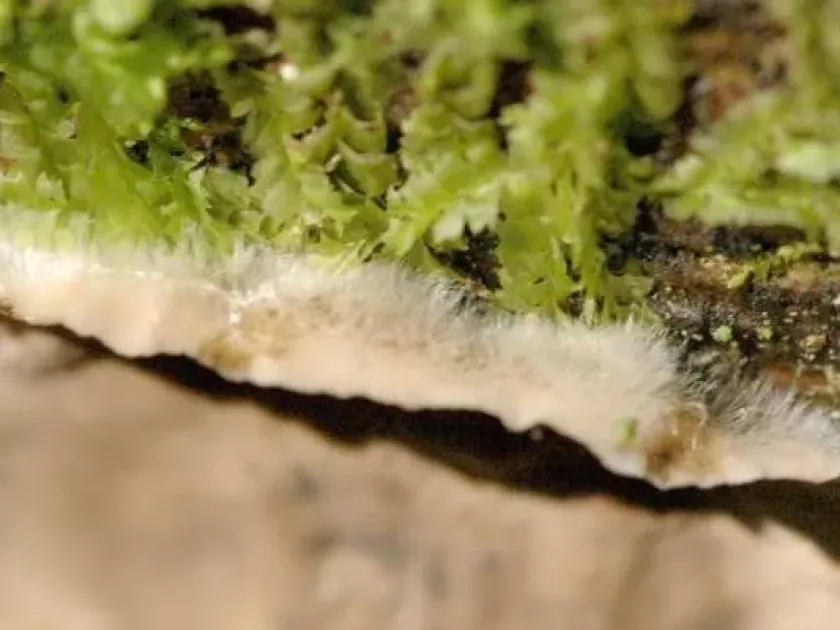
The main sign of infection is the appearance of characteristic fungal fruiting bodies on trunks or branches. They often have a leathery or corky texture and a specific color typical of members of this genus.
Externally, the affected wood gradually shows signs of decay, which can range from discoloration to deep structural degradation. In areas of active mycelial development, peeling of the bark and necrosis of the cambial layer are often observed.
On cross-sections of the affected areas, zones of infection are clearly visible, possessing a distinct hue different from healthy wood. As the disease progresses, the heartwood of the trunk becomes brittle and loses its mechanical properties.
In advanced cases of infection, trees show clear signs of stress, manifesting as premature yellowing and dropping of needles or leaves. The canopy gradually thins, and lateral shoots begin to dry out.
When examining the trunk surface, one can find areas with an unnatural sheen or, conversely, a matte coating, which is the fungal mycelial mat. Thin dark lines, representing accumulations of fungal hyphae, may be visible in the bark cracks.
Pathogen
The causative agent of this disease is a fungus from the genus Veluticeps, belonging to the group of wood-decaying basidiomycetes. The primary form of the pathogen is mycelium, which develops directly within the tissues of the affected plant.
This fungus possesses a pronounced ability for saprotrophic and parasitic nutrition, actively secreting enzymes to decompose lignin and cellulose. Systematically, the genus is closely related to fungi that cause destructive changes in the structure of wood fibers.
Biologically active spores of the fungus are dispersed by air currents, and upon landing on damaged areas of the bark, they initiate the colonization process. The infection can occur year-round, provided that suitable temperature conditions are met.
The life cycle of the pathogen includes an active fruiting phase, during which specific sporocarps form on the surface of the affected wood. These serve as the primary source for the further spread of the infection within the forest stand or orchard.
The fungus exhibits high resistance to adverse environmental factors, which complicates its complete eradication from the site of infection. The biological characteristics of the mycelium allow it to remain viable for a long time within dead wood.
Conditions for development
The development of Veluticeps depends directly on the wood moisture level, as the pathogen prefers zones with high humidity. Optimal conditions are created in dense stands with poor ventilation.
The temperature regime plays a key role, with moderately warm seasons promoting the most intense growth of the mycelium. Sudden fluctuations in temperature and humidity can trigger the release of spores into the environment.
The presence of mechanical bark damage, such as frost cracks, sunburns, or traces of pest activity, serves as an entry point for infection. A healthy tree with intact bark is significantly less prone to infection.
Prolonged periods of water stagnation in the soil or in the tree canopy create a favorable microenvironment for spore germination. Waterlogging of areas significantly increases the risk of widespread disease transmission.
The age of the stand is significant, as old and weakened trees have a reduced immune response. In such stands, the infection develops faster, covering large areas in a short time.
Why it matters
The main danger lies in the destruction of the structural integrity of the trunk, leading to reduced wood strength. This creates a high risk of windthrow and breakage of trees during strong gusts of wind.
The disease leads to substantial economic losses, as the affected wood becomes unsuitable for use in construction or the timber industry. The quality of wood products drops to the level of firewood.
Prolonged infection by the pathogen gradually exhausts the tree, making it highly vulnerable to secondary pests such as bark beetles and wood borers. This triggers the rapid death of the stands in the infection centers.
Veluticeps can spread from tree to tree through root system contacts or branch entanglement, facilitating the formation of large clusters of infected trees. Infection centers can persist for decades, hindering natural forest regeneration.
Disruption of physiological processes within the tree leads to a sharp decline in biomass accumulation and wood density. In horticulture, this manifests as reduced yield and accelerated death of fruit-bearing branches.
Protection
The primary protection measure is the sanitary logging of affected trees and their timely disposal. It is necessary to completely remove infected trunks and logging residues to prevent spore spread.
Prevention includes maintaining optimal stand density and conducting regular inspections to detect early signs of the disease. Healthy trees should be supported with proper maintenance and fertilization.
It is important to protect the bark surface from mechanical damage by using special sealants or horticultural wound dressings during pruning. Minimizing tree injury reduces the probability of infection through wounds.
Chemical protection in forest stands is rarely applied; however, in park areas, trunk treatment with broad-spectrum fungicides may be possible. It is important to follow dosage and application frequency guidelines.
Biological control methods aimed at suppressing mycelial growth using natural antagonists are showing promising results in experimental conditions. Improving soil health and drainage are fundamental methods of long-term protection.
Discussion
No discussions yet — be the first.