
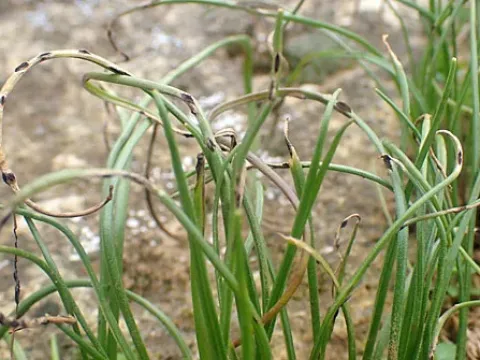
Ornithogalum smut
Vankya ornithogali
The causative agent of this disease is a specialized microscopic fungus known as Vankya ornithogali, which belongs to the order Ustilaginales (smut fungi). This pathogen is an obligate parasite, meaning it relies entirely on the nutrients and metabolic processes of the host plant for its survival and reproduction.
What the section contains
Ornithogalum smut
The life cycle of the fungus is strictly synchronized with the growth stages of bulbous plants. The pathogen produces teliospores, which are highly resilient structures capable of surviving in the soil or on the surface of dormant bulbs for extended periods, waiting for the right environmental triggers to germinate.
Infection typically occurs at the early seedling stage when the fungus penetrates the developing tissues. Once inside, the fungal mycelium spreads systemically, colonizing various plant organs as they develop throughout the growing season.
Vankya ornithogali demonstrates high host specificity, primarily targeting plants within the Ornithogalum genus. By interfering with the plant's physiological processes, the fungus disrupts the normal flow of nutrients, leading to structural damage and systemic stress within the host.
Laboratory identification of this pathogen involves the microscopic observation of characteristic dark teliospores formed within localized tissues or pustules, which serves as the definitive diagnostic standard for this specific smut species.
The most visible symptom of the disease is the emergence of characteristic swellings, bumps, or pustules on leaves, stems, and flower stalks. These lesions are actually dense aggregations of fungal spores that eventually rupture the plant's epidermis.
As the infection progresses and the spores mature, the pustules burst, releasing a dusty, black mass of teliospores. This "sooty" appearance is the hallmark of smut diseases and makes the affected parts of the plant look like they have been dusted with coal or soot.
Infected plants often show signs of general stunted growth, yellowing leaves, and significant deformation of the flower stalks. In many cases, the plants fail to bloom entirely, which is a major concern for those growing these flowers for their decorative beauty.
The infection is systemic, meaning that once the plant is colonized, the symptoms may appear gradually across all aerial parts of the specimen. Severely affected plants look drastically different from their healthy counterparts and usually lose all aesthetic value in a garden setting.
Gardeners should be vigilant for early signs, such as chlorotic (yellowish) spots on young leaves, which often precede the development of the more obvious spore-filled pustules. Early intervention is key to stopping the spread of the fungus across the garden.
High humidity and moderate temperatures are the most favorable conditions for the development of Ornithogalum smut. These environmental factors promote the rapid germination of spores and facilitate the easy infection of young, vulnerable plant tissues.
Planting bulbs too densely creates an environment with poor air circulation, which is a significant risk factor. In such crowded conditions, moisture lingers on the leaf surfaces, creating a perfect pathway for fungal spores to move from one plant to another.
Soil composition and drainage also play a crucial role. Heavy, waterlogged soils are ideal reservoirs for the fungus, helping the teliospores maintain their viability for several years and increasing the overall infection pressure in the garden.
The optimal temperature range for the fungus to thrive is between +12°C and +18°C. A wet, cool spring often acts as the perfect trigger for an outbreak, leading to widespread infection across patches of susceptible plants.
Poor agricultural practices, such as excessive nitrogen fertilization, result in succulent, lush growth that is significantly more susceptible to fungal penetration. Maintaining proper plant nutrition is essential for supporting the natural immunity of the Ornithogalum plants.
The primary harm caused by this disease is the complete loss of decorative quality, rendering the plants unsuitable for landscaping or collections. Infected specimens become primary sources of inoculum that can quickly jeopardize the health of nearby plants.
Because the disease interferes with photosynthesis, the plants cannot store sufficient energy in their bulbs. This exhaustion causes the bulbs to shrink and often leads to the death of the specimen or a total failure to produce flowers in the following season.
Once the soil is contaminated with fungal spores, it can remain infectious for several years. This creates a long-term problem for gardeners, as they may be unable to plant sensitive species in the same spot without prior soil remediation or sterilization.
In commercial plant production, an outbreak of smut leads to high rates of stock rejection, significant financial losses, and increased costs associated with repeated fungicide applications and plant disposal.
- Complete loss of aesthetic/decorative value.
- Weakening and potential death of the bulb.
- Long-term soil contamination with fungal spores.
- Reduced bulb multiplication rates.
- Increased management costs for containment and control.
The first line of defense is the rigorous inspection of bulbs prior to planting. Only healthy, firm bulbs without any visible blemishes, rot, or spots should be selected for the garden to ensure that the disease is not introduced to the site.
Chemical control methods include treating the bulbs with systemic fungicides before planting. This helps eradicate any external inoculum present on the bulb scales and provides a protective barrier during the early stages of growth.
Strict sanitation is essential; if symptoms are spotted, the affected plants must be carefully removed, along with the surrounding soil, and burned or disposed of in a sealed container to prevent the spread of spores.
Rotating planting sites is a critical practice to minimize the accumulation of spores in the soil. Moving Ornithogalum to a new location every 4-5 years helps break the disease cycle and lowers the pressure from soil-borne pathogens.
After the season ends, clearing all debris and deep-tilling the soil can help reduce overwintering spore populations. Keeping tools sanitized and ensuring adequate spacing between plants are simple but effective measures to maintain a healthy garden environment.