
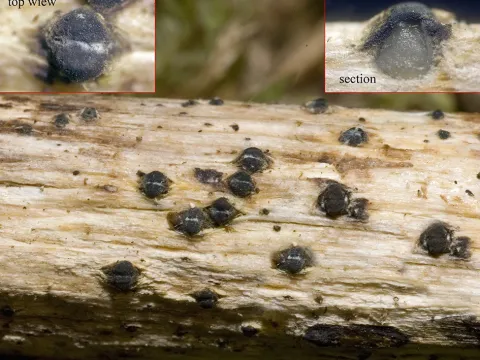
Ostropa barbara
Ostropa barbara
Ostropa barbara is an ascomycete fungus belonging to the order Ostropales. It primarily functions as a saprotrophic organism that colonizes the bark of various deciduous trees.
What the section contains
Ostropa barbara
The fungus develops small, elongated fruiting bodies known as apothecia. These structures are embedded in the host bark and release spores to facilitate the fungus's spread.
The biological cycle of Ostropa barbara is closely linked to its role in breaking down woody material, specifically the lignin and cellulose present in bark tissues.
As a fungal pathogen, it is most frequently found in temperate forest ecosystems, where it contributes to the natural turnover of forest organic matter.
While often classified as a secondary pathogen, its presence can indicate underlying issues in the physiological state of the host tree.
Visual identification of the disease is marked by the presence of small, dark, and often clustered fruiting bodies breaking through the surface of the bark.
The bark itself may show signs of discoloration or premature peeling in affected areas, signaling a degradation of the outer protective layer.
In humid conditions, the apothecia may become more visible and turgid, making them easier to spot during field inspections of the tree bark.
Affected bark areas tend to become brittle and lose their elasticity, which can lead to localized cracking and physical instability of the outer layers.
Microscopic examination often reveals the penetration of fungal mycelium into the periderm and cortex tissues of the host plant.
The development of Ostropa barbara is highly dependent on humidity. Sustained moisture on the bark surface is essential for spore germination and mycelial growth.
Warm and humid environments, typical of temperate spring and autumn, provide the most favorable conditions for the maturation of the fungus's fruiting bodies.
Dense canopies that restrict air movement and maintain high relative humidity around the trunk are ideal settings for the establishment of this infection.
Weakened trees, suffering from environmental stress or previous insect damage, are significantly more susceptible to colonization by this pathogen.
Lack of proper exposure to sunlight, leading to consistently damp bark, often correlates with the severity of the colonization on specific trees.
The primary harm caused by Ostropa barbara is the structural and protective degradation of the tree's bark, which compromises the plant's defense mechanisms.
Ongoing infection can lead to the localized death of bark tissues, creating entry points for more aggressive wood-decaying fungi and various insect pests.
In ornamental plants, the infection significantly impacts aesthetic value, causing unsightly blemishes and irregularities on the bark surface.
While not typically considered a primary killer of trees, its presence often accelerates the senescence of weaker branches, leading to dieback.
In forest management, high incidence of this fungus can be used as a biological marker for identifying stands that are under physiological stress.
Effective management begins with maintaining high standards of tree health, including regular removal of deadwood and infected branches to reduce spore load.
Pruning should be performed during dry weather to minimize the risk of spores settling in fresh wounds and initiating new infections.
Improving air circulation and light penetration within the canopy through proper thinning can significantly decrease the humidity required by the fungus.
For high-value trees, applying protective copper-based fungicides can offer a barrier against initial colonization if the risk of infection is high.
General tree vigor should be promoted through proper fertilization and watering practices to help the plant develop natural resistance to fungal pathogens.