
Ostropales
Ostropales
Ostropales is a significant order within the class Lecanoromycetes, belonging to the Ascomycota division and primarily composed of lichenized fungi.
What the section contains
Ostropales
These organisms are generally classified as epiphytes or saprotrophs rather than aggressive plant pathogens in the agricultural sense.
The biology of these fungi involves the production of distinct fruiting bodies known as apothecia, which are typically elongated or slit-like in shape.
They utilize the bark of trees and shrubs as a physical substrate for growth, drawing moisture and nutrients from the atmosphere and surface debris.
While they are rarely the primary cause of plant death, their presence indicates specific environmental conditions that may affect plant vitality.
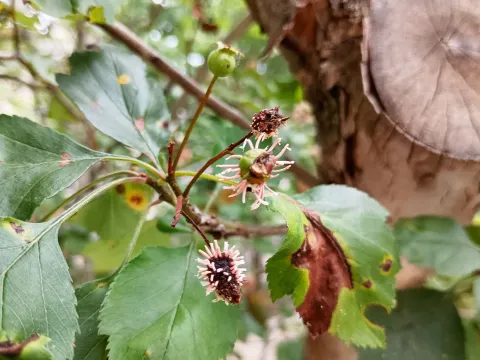
The primary visual sign of Ostropales presence is the formation of small, dark, slit-like structures embedded in the outer bark of trees.
Unlike many other fungal diseases, these do not typically produce fuzzy or powdery mycelium on the surface of the host plant.
Affected areas often appear as darkened or streaked patches on the trunk, which can become more prominent during periods of high humidity.
These growths are firmly attached to the bark surface and cannot be easily rubbed off without damaging the bark tissue itself.
Visual identification usually requires close inspection of the bark's surface texture to distinguish between these fungal apothecia and natural bark cracks.
The growth of Ostropales is favored by high relative humidity and a lack of proper air circulation within the plant canopy.
They are most commonly found in shaded environments where moisture persists on the bark for extended periods after rain.
Older trees with weathered, cracked, or rough bark provide the most suitable substrate for these fungal organisms to establish themselves.
Overcrowded orchards or gardens with dense foliage create a microclimate that supports the proliferation of these organisms.
Temperature fluctuations and specific moisture levels play a critical role in the timing of their reproductive cycles and spore dispersal.
The primary concern is the physical coverage of the tree's bark, which may impede the normal gas exchange through the lenticels.
Massive colonization can create damp microhabitats that favor the development of other, more harmful pathogens or pests.
While they don't consume the tree's internal tissues, they indicate that the plant is likely suffering from neglect or reduced vigor.
The aesthetic value of ornamental trees is significantly reduced when trunks and limbs become heavily covered with these fungal structures.
In weakened trees, the presence of these fungi can exacerbate the stress, potentially leading to further decline if left unaddressed.
Sanitation practices are essential, including the removal of dead wood and the thinning of the canopy to improve air circulation.
Mechanical cleaning of the bark using soft brushes can remove surface growths without harming the underlying tree layers.
Applying traditional white lime wash to the trunks acts as an effective deterrent, changing the surface chemistry to be unfavorable for fungal growth.
Maintaining balanced nutrition and proper watering schedules improves the tree's overall defense mechanisms against unwanted epiphytic colonization.
Routine monitoring of the trunk surface allows for early identification, ensuring that any fungal growth can be managed before it spreads extensively.