
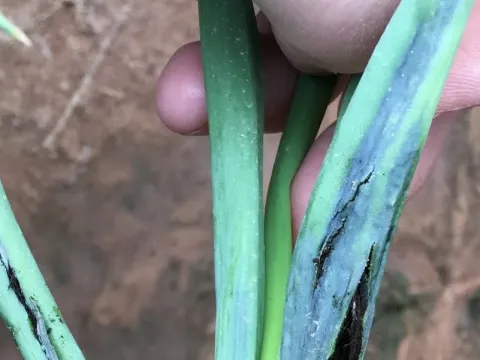
Onion smut
Ustilago allii
The causal agent of this disease is the specialized fungus Urocystis cepulae, which belongs to the smut fungi group. This pathogen is a strict obligate parasite that specifically targets members of the Allium genus, including onions and shallots.
What the section contains
Onion smut
The fungus survives in the soil in the form of chlamydospores. These resting spores are exceptionally resilient and can remain viable in the soil for over a decade, making this pathogen difficult to eradicate from affected fields.
Primary infection occurs when onion seeds germinate in contaminated soil. The fungal hyphae penetrate the delicate tissues of the emerging seedling. Once inside, the fungus colonizes the plant tissues throughout its early development.
The infection progresses as the fungus develops systemically within the plant, eventually breaking through the epidermis to release masses of black spores. This cycle is facilitated by soil moisture and the presence of susceptible host tissues.
Biological studies show that only young seedlings are susceptible to infection. Once the onion plant develops past the stage of the first true leaf, it becomes naturally resistant to new infections by this fungus.
The initial signs of onion smut appear on the seedlings as they emerge. Small, elongated blisters or lesions develop on the cotyledons and the first true leaves, initially appearing greyish in color.
As the disease progresses and the spores mature, the blistered epidermis of the onion leaf ruptures, exposing a characteristic dusty, black mass of teliospores. This black powdery appearance is the diagnostic hallmark of the infection.
Infected plants show severe growth retardation, curling, and distortion of the leaves. Many seedlings die during the initial stages, leading to significant gaps in the crop stands.
If an infected plant survives, it usually produces a deformed, stunted bulb with cracked skin. These bulbs are typically filled with black fungal spores rather than healthy white tissue, rendering them unmarketable.
In the field, smut-affected areas often appear in patches. These localized infections result in weakened, chlorotic, and deformed plants that stand out compared to the surrounding healthy crop.
Soil temperature is the most critical environmental factor for infection. The fungus thrives and causes disease most effectively when soil temperatures are between 13°C and 20°C (55°F–68°F) during the germination phase.
Temperatures above 25°C (77°F) significantly inhibit the pathogen's ability to infect, which is why the disease is less common in regions with very hot spring seasons.
Moist soil conditions are essential for the germination of chlamydospores. A wet, cool spring provides the ideal environment for the spores to move through the soil profile and infect the sensitive root and shoot systems of young seedlings.
The soil pH and structure also play a role, as the fungus tends to be more persistent in neutral to slightly alkaline, heavy, or poorly aerated soils where spore longevity is enhanced.
Agricultural practices, such as intensive cultivation of onions in the same field without adequate crop rotation, allow the concentration of spores in the soil to reach levels that make commercial production impossible.
The primary damage caused by onion smut is the significant reduction in plant stands due to seedling mortality. This often forces farmers to perform replanting, leading to increased costs and reduced yield potential.
Affected bulbs are of poor quality and prone to rotting in storage due to secondary bacterial infections. They cannot be sold as fresh market produce or stored for long periods.
In highly infested soils, the disease can cause yield losses ranging from 50% to over 80%. When combined with environmental stress, the impact on the total onion crop production can be devastating.
The long-term persistence of chlamydospores in the soil means that fields where smut has been diagnosed must be taken out of onion production for many years, limiting land-use options for the farm.
Secondary damage includes the inadvertent spread of the fungus to non-infested fields through contaminated soil on machinery, equipment, and footwear, or through infested bulb transplants.
- Implement a strict crop rotation cycle, avoiding onion production in infested fields for at least 5 to 7 years.
- Use certified, disease-free seed or sets to prevent introducing the pathogen to new areas.
- Treat seeds with effective fungicides, such as thiram or other systemic products, to provide protection during the critical early growth stage.
- Delay planting until soil temperatures are high enough to allow rapid seedling emergence, thus shortening the susceptible phase.
- Practice thorough sanitation, including the removal and destruction of crop debris and the control of wild Allium species that can harbor the fungus.