
Onion-shaped false puffball
Scleroderma cepa
Description
Pathogen
The onion-shaped false puffball (Scleroderma cepa) is a basidiomycetous fungus belonging to the Sclerodermataceae family. It is essentially a mycorrhizal fungus that lives in symbiosis with the roots of various trees and shrubs.
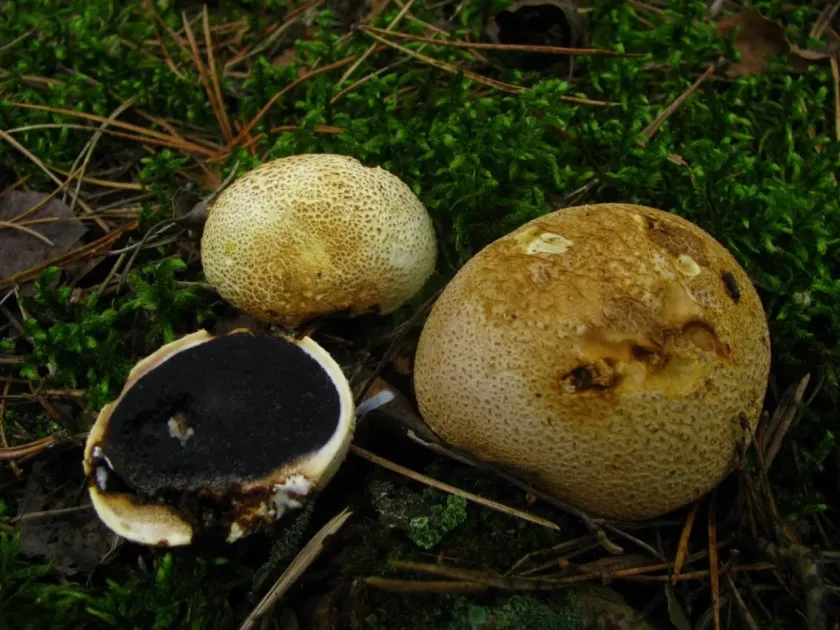
The fruiting bodies are typically globose or slightly flattened, appearing like an onion bulb, with a diameter ranging from 2 to 6 cm. The outer skin is tough, leathery, and varies in color from yellowish to brown.
Inside the mature mushroom, the gleba turns into a powdery, dark brown or black mass of spores. Young specimens have a solid, white interior, which distinguishes them from some other puffball species.
The fungus propagates via spores that are released when the skin of the fruiting body cracks. These spores are dispersed by rain, wind, or wildlife, allowing the fungus to colonize new areas with suitable hosts.
While often misidentified as a pathogen causing tree disease, it is primarily a saprotrophic and mycorrhizal organism that is generally beneficial or neutral in natural forest ecosystems.
Conditions for development
Scleroderma cepa thrives in moist, loose soils rich in organic matter. It is commonly found in deciduous and coniferous forests, as well as in well-mulched gardens and parks.
The development of fruiting bodies is favored by warm, humid weather, typically appearing from mid-summer through late autumn, especially following periods of heavy rainfall.
It maintains a mycorrhizal relationship with various tree species such as oaks, pines, and birches, which provide the carbon sources necessary for the fungus to complete its life cycle.
Over-irrigation and poor drainage in landscape management create micro-conditions that encourage the proliferation of the mycelium near the surface of the soil.
Excessive use of wood-based mulch can provide a persistent food source for the mycelium, leading to increased activity and more frequent appearance of fruiting bodies.
Why it matters
The onion-shaped false puffball is considered inedible and potentially toxic if ingested, posing a safety risk to small children and pets in residential garden settings.
The main concern for property owners is the aesthetic impact of the fungus, as it can grow in clusters or rings on manicured lawns, which may disrupt the visual quality of the turf.
In nursery settings, dense mycelial growth can theoretically compete with sensitive young plants for water and soil nutrients, although this is rarely the cause of plant mortality.
The presence of mass fruiting bodies may indicate an over-accumulation of decaying organic matter or moisture management issues that could indirectly favor other, more harmful soil-borne pathogens.
While not a disease-causing agent for healthy trees, its colonizing nature can be bothersome in areas intended for highly uniform plant cultivation or landscape design.
Protection
Effective management begins with improving the soil drainage and managing moisture levels to make the environment less hospitable for fungal fruiting.
Regularly remove any developing fruiting bodies from the lawn or flower beds to prevent spores from spreading across the area and causing further colonization.
Aerate the soil frequently to break up fungal mats and improve gas exchange, which helps dry out the soil surface and restricts mycelial expansion.
Reduce the thickness of organic mulch around ornamental trees and shrubs to limit the food supply available to the fungus.
- Manual removal of fruiting bodies before they release spores.
- Soil aeration to maintain proper moisture balance.
- Liming the soil to adjust pH levels if testing indicates acidity.
- Reducing excessive organic debris in garden areas.
Discussion
No discussions yet — be the first.