
Onion yellow dwarf
Onion yellow
Onion yellow dwarf is caused by the Onion yellow dwarf virus (OYDV), a member of the Potyviridae family of plant viruses.
What the section contains
Onion yellow dwarf
This virus is a significant pathogen that affects various Allium species, primarily targeting onions, garlic, shallots, and leeks.
The virus is transmitted in a non-persistent manner by numerous aphid species, which pick up the virus while feeding on infected plant tissues.
A primary pathway for disease transmission is the use of infected bulbs or cloves, which carry the virus systemically into the next growing season.
Mechanical transmission can also occur during agricultural practices like harvesting or trimming, though insect vectors are the most critical factor in field spread.
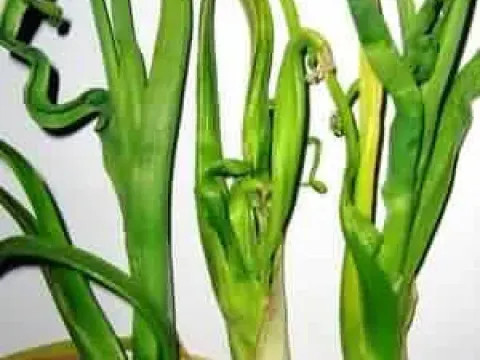
The earliest sign of infection is the development of yellowish streaks on the leaves, which eventually lead to general chlorosis of the foliage.
Infected leaves exhibit significant deformation, including crinkling, twisting, and drooping, which severely affects the plant's photosynthetic capacity.
Stunting is a diagnostic feature, where infected plants appear much smaller and less vigorous compared to healthy specimens in the same field.
Flower stalks are often shortened, twisted, and poorly developed, leading to a drastic reduction in seed production if the crop is grown for breeding.
- Yellow striping and chlorosis of leaf tissue.
- Severe leaf distortion and crinkling.
- General stunted growth and reduced plant size.
- Twisted and weakened flower stalks.
- Significant reduction in bulb weight and quality.
The spread of OYDV is heavily dependent on the activity of aphid populations, which are more prevalent during warm and dry spring conditions.
The risk of infection is highest when winged aphids migrate into young onion or garlic fields, spreading the virus from reservoirs to healthy plants.
Continuous cropping of Allium species on the same land creates an environment where the virus can persist and infect successive generations.
Proximity to old, infected onion fields or overwintering weeds serves as a consistent source of primary inoculum for new crops.
Environmental stress can exacerbate the visible symptoms of the virus, making it harder for the plant to recover or maintain normal growth patterns.
The primary economic impact of onion yellow dwarf is a substantial reduction in bulb size and overall yield, making the crop commercially non-viable.
Bulbs from infected plants have lower quality, reduced shelf life, and may be susceptible to internal decay or secondary storage rots.
In garlic production, the virus leads to poor clove formation and smaller bulb sizes, significantly impacting marketability and weight.
The systemic nature of the infection means that once a plant is infected, it cannot be cured, and its metabolic processes are permanently impaired.
Total crop losses can be severe, particularly when high-titer initial infections occur early in the growing season, necessitating complete field destruction.
The most effective management strategy is to ensure that only virus-free, certified planting material is used for establishing new fields.
Implement rigorous aphid control programs using suitable insecticides to minimize the chances of vector-mediated transmission during the vegetative phase.
Ensure adequate spatial isolation between new plantings and older Allium fields that may harbor the virus and aphid populations.
Routinely scout fields for symptomatic plants and perform rogueing by removing and destroying infected individuals immediately upon detection.
Practice good sanitation and weed management to eliminate host plants that could serve as alternative viral reservoirs throughout the season.