
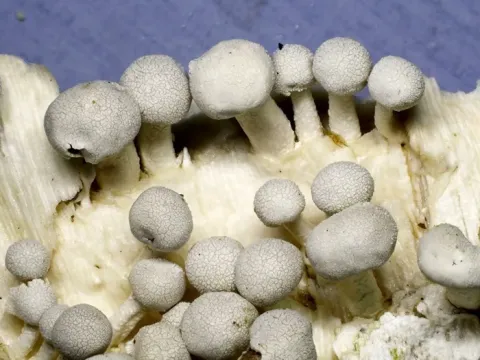
Onygena equina
Onygena equina
Onygena equina is a specialized species of fungus within the Ascomycota division, known for its ability to decompose keratin. It is not a plant pathogen and does not infect agricultural or garden crops.
What the section contains
Onygena equina
As a keratinophilic organism, this fungus secretes specific enzymes capable of breaking down complex proteins found in hooves, horns, and other keratin-rich substrates. This metabolic pathway is unique to a small group of fungi.
From an agronomic perspective, this fungus is classified as a saprotroph. It plays no role in plant disease development and is completely detached from the cycle of crop production.
The mycelium of the fungus develops within the substrate, gradually digesting the structural proteins. Once the nutrient supply is sufficient, it initiates the production of fruiting bodies.
Scientists identify this fungus as a crucial decomposer in natural ecosystems. It is frequently studied in the context of soil biology rather than plant pathology.
The most visible signs of Onygena equina are tiny, stalked fruiting bodies that emerge from keratinous debris. These structures are typically whitish or pale yellow in color.
The fruiting bodies reach a height of only a few millimeters. They are often found growing in clusters on old animal remains, such as hooves left on pastures or agricultural land.
The apical part of the structure forms a spherical head where spores are produced. Once mature, these spores are released into the environment to colonize new keratin sources.
The presence of the fungus is characterized by the softening and structural breakdown of the keratin substrate. The material loses its original hardness and becomes brittle.
Since the fungus does not grow on plant tissues, its presence can be easily distinguished from any viral, bacterial, or fungal diseases affecting crops.
Onygena equina requires specific environmental conditions to thrive, primarily the presence of a keratin source. Without decaying horns or hooves, the fungus cannot complete its life cycle.
High relative humidity is essential for the growth of the mycelium and the development of fruiting bodies. Dry conditions inhibit the fungus, often causing it to become dormant.
The species prefers stable temperatures found in temperate climates. It is typically found in shaded, undisturbed areas where moisture levels remain consistent over time.
Soil chemical composition influences the growth of the fungus. Excessive use of fungicides or other soil treatments can suppress local populations, as the organism is sensitive to many chemical inputs.
In general, the ecological niche of this fungus is strictly limited to locations where keratinous organic matter accumulates, making it an uncommon sight in fields.
Onygena equina poses absolutely no threat to agricultural crops. It lacks the ability to infect living plant tissues, such as roots, stems, leaves, or fruits.
In terms of economic damage, the fungus is considered harmless. Farmers and growers do not need to implement any protective measures, as the fungus does not affect crop yields.
The fungus is actually beneficial for soil health, as it contributes to the mineralization of complex proteins. It turns organic waste into simpler compounds that can eventually enrich the soil.
There is no reason for concern if this fungus is spotted near livestock facilities or fields. It does not cause infections in plants, animals, or humans.
Since it causes no damage to crops, the fungus is not listed as a pest or a disease-causing agent. No control measures are recommended by agronomists.