
Onnia subtriquetra
Onnia subtriquetra
Description
Symptoms
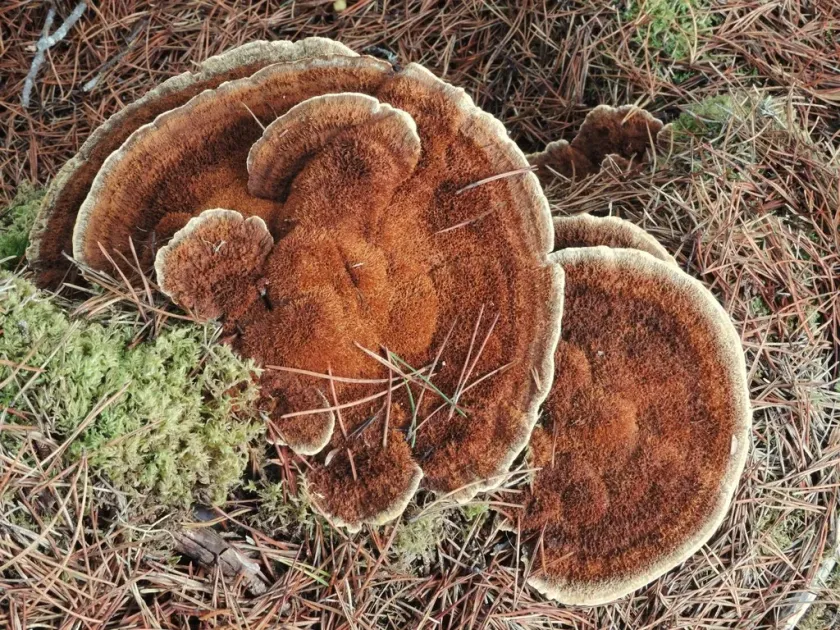
The most visible signs of infection are the presence of conks (fruiting bodies) located at the base of the trunk. These bodies are often tough, brown, and semi-circular, providing a clear indication of internal decay.
Upon inspecting the wood, researchers observe a reddish-brown decay pattern. In advanced stages, thin white mycelial threads can be seen throughout the rotting wood, indicating the active colonization of the tree tissues.
Infected trees often display signs of decline in their crown, such as yellowing of needles and a reduced annual growth rate. These symptoms are a direct result of the impaired ability of the roots to absorb water and nutrients.
Loss of structural integrity in the roots often causes trees to tilt or fall over during wind events. This phenomenon, known as windthrow, is a classic indication of extensive root system colonization by the pathogen.
Excessive resin flow on the lower trunk is another common symptom, as the tree attempts to defend itself against the fungal invasion through its natural healing mechanisms.
Pathogen
Onnia subtriquetra is a parasitic fungus belonging to the Hymenochaetaceae family, known primarily for its destructive impact on the roots and bases of coniferous trees. It acts as a primary agent of root and butt rot in various forest ecosystems.
The fungus produces distinctive fruiting bodies that usually emerge near the base of the tree or on the upper roots. These structures are the source of spores, which are disseminated by wind and water throughout the forest area.
Once spores land on wounded or stressed bark, the mycelium penetrates the wood. It utilizes a specific set of enzymes to degrade the wood's structural components, primarily cellulose and lignin, leading to loss of strength and eventually decay.
This pathogen is exceptionally resilient, capable of surviving for years in stumps, buried woody debris, and affected root tissues. This long-term persistence ensures that the fungus remains a constant threat in its habitat.
The biology of Onnia subtriquetra is closely linked to the physiological status of the host trees. While it can attack healthy individuals, it thrives most successfully in trees that are already suffering from environmental stressors.
Conditions for development
The development of Onnia subtriquetra is highly dependent on humidity levels. High moisture content in the soil or air creates an optimal environment for mycelial growth and successful spore germination.
Mechanical injuries are the primary gateway for infection. Wounds caused by logging machinery, falling timber, or wild animals allow the fungal spores to enter the healthy tissues of the tree.
Dense, poorly managed forest stands often provide stable microclimates with low air circulation, which facilitates the rapid accumulation and spread of fungal spores among neighboring trees.
Root contact between healthy and infected trees or stumps is a common mode of disease spread in dense plantations. This allows the fungus to move through the stand without relying solely on aerial spore dispersal.
Favorable temperatures for the fungus generally align with the growing season, allowing the pathogen to remain active and cause significant damage during the warmer months of the year.
Why it matters
The primary damage caused by Onnia subtriquetra is the progressive destruction of the tree's root system, which ultimately leads to the physiological death of the tree. This impact is critical for both forest stability and economic forestry.
Decayed wood loses all its structural value, rendering it useless for timber production. This causes substantial financial losses for the forest industry, especially when the disease reaches epidemic levels.
The formation of disease centers, or infection patches, leads to the continuous degradation of the forest stand. These gaps affect the micro-environment, altering the composition and structure of the entire forest community.
Trees weakened by the pathogen are highly vulnerable to secondary attacks by bark beetles and other wood-boring insects. This compounding damage often accelerates the mortality rate in infected areas.
Managing areas affected by the fungus is costly and requires significant efforts to mitigate damage, restore forest health, and prevent the spread of the pathogen to nearby unaffected zones.
Protection
Effective management begins with strict adherence to forestry best practices. Minimizing mechanical damage to tree roots and trunks during logging and thinning operations is the most crucial preventive measure.
Early identification of infection centers and the removal of severely affected trees, including the extraction of stumps, are essential to break the pathogen's life cycle in the forest.
- Monitoring stands for early detection of fruiting bodies.
- Promoting mixed-species forest stands to increase ecological resilience.
- Using bio-control agents, such as beneficial fungi, to treat stumps and prevent colonization.
- Maintaining optimal stand density to ensure adequate airflow and soil drainage.
Silvicultural practices that focus on overall tree health and vigor are the best long-term defense. A strong, well-nourished tree possesses superior natural resistance against most fungal pathogens.
Stricter quarantine protocols for moving nursery stock and forest materials help prevent the introduction of this destructive fungus into new, uninfested geographical regions.
Discussion
No discussions yet — be the first.