
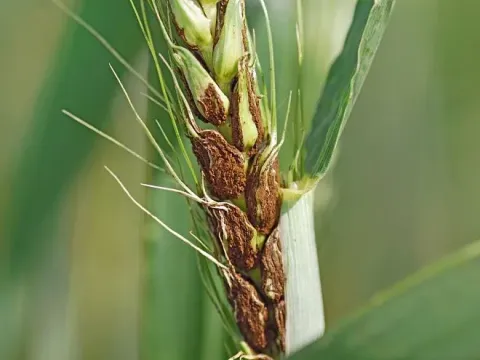
Smut fungi
Ustilaginomycotina
Smut fungi (Latin: Ustilaginomycotina) belong to a large group of basidiomycete fungi responsible for a variety of plant diseases known as smuts. These pathogens are highly specialized parasites that primarily affect cereal crops and grasses.
What the section contains
Smut fungi
The disease is caused by various species including those in the genera Ustilago, Tilletia, and Sphacelotheca. The life cycle involves the formation of teliospores, which act as dormant structures capable of surviving in the soil or on seeds for extended periods.
Infection typically occurs during the seedling stage or via the floral parts during flowering. The fungus grows systemically within the plant host, colonizing tissues throughout the growth cycle without causing premature death until it reaches the reproduction stage.
As the plant develops, the fungal mycelium absorbs nutrients, eventually converting the host's reproductive organs into masses of black spores. This biological mechanism ensures the effective dispersal of the pathogen during the harvest or blooming season.
Smut is classified as a systemic disease. The pathogen integrates into the plant's vascular system, slowly replacing internal tissues and preparing to release masses of spores that resemble soot or dust.
The most visible symptom of smut is the transformation of the ear, panicle, or entire stem into a black, dusty mass of spores, giving the plant a charred appearance. This stage is most obvious during the heading or flowering phase of cereal crops.
In the case of common bunt (stinking smut), the infected grains retain their shape but are filled with dark spore powder. These grains emit a distinctive, fishy odor caused by trimethylamine, which makes them easily recognizable when crushed.
With loose smut, the entire head of the plant is destroyed, leaving only a bare stalk as spores are dispersed by the wind. Plants affected by these fungi often show stunted growth, increased tillering, and distorted organ development.
Some types of smut, such as corn smut, cause the formation of galls—tumor-like swellings on stems, leaves, or ears. These galls are initially covered by a white membrane that eventually ruptures, releasing a black mass of spores into the air.
- Black, powdery spore masses replacing grains.
- Distorted and deformed seed heads.
- Unpleasant fishy odor in infected grains.
- Tumor-like galls on various plant parts.
- Weakened plant vigor and stunted development.
The development of smut fungi is highly dependent on soil moisture and temperature during the seed germination period. Cool and moist soil conditions provide the optimal environment for the fungus to infect the emerging cereal seedlings.
Infection is most aggressive when soil temperatures range between +10 and +15°C. Under these conditions, the host plant grows slowly, allowing the fungal mycelium to penetrate the young seedling before it gains sufficient resistance.
The quality of seed material is a critical factor in the disease cycle. Using untreated seeds that carry spores on their surface significantly increases the risk of spreading the pathogen throughout the entire field during the planting process.
Wind is the primary vector for the dispersal of loose smut spores. During the flowering stage, spores are carried by air currents onto the flowers, where they germinate and penetrate the ovary, remaining dormant until the next growing season.
Poor crop rotation and the cultivation of highly susceptible varieties allow the pathogen to build up an infectious load in the soil, creating a cycle that can persist for several years if proper sanitation and farming practices are not followed.
The primary harm caused by smut is a direct reduction in yield, as the fungus replaces the actual grain with non-nutritious spore masses. In heavy infestations, yield losses can reach 30–50% or more, resulting in significant economic impact.
Beyond yield loss, the quality of the remaining harvest is severely compromised. Grain contaminated with smut spores is often unsuitable for the food industry due to adverse changes in taste, color, and baking properties.
Infected grain can be toxic to livestock if consumed in large quantities, requiring expensive cleaning and decontamination processes before it can be used for animal feed. This adds an extra burden to agricultural operations.
Systemic infection weakens the overall health of the crops, making them more vulnerable to secondary diseases like root rot. This compounding effect further diminishes the productivity and profitability of the field.
Economic losses are cumulative, covering direct yield reduction, the costs of purchasing effective fungicides for seed treatment, and the expenses associated with disinfecting machinery and storage facilities to prevent further spread.
The most effective strategy for managing smut is the mandatory treatment of seeds with systemic fungicides before planting. This process eradicates both external and internal infections, protecting the plant during its most vulnerable stage.
Good agricultural practices, such as choosing optimal planting dates, are essential. Sowing seeds in properly warmed soil encourages rapid emergence, reducing the time the seedlings remain susceptible to soil-borne pathogens.
The use of resistant cultivars and hybrids is a cornerstone of long-term smut management. Breeding programs focus on creating varieties with genetic immunity, which significantly reduces the need for chemical intervention.
Strict adherence to crop rotation is vital for preventing the accumulation of spores in the soil. Delaying the return of cereal crops to the same field for at least 2–3 years effectively disrupts the pathogen's life cycle.
Mechanical cleaning of seeds using aspiration and grading systems helps remove light, infected, or deformed grains before they enter the soil, thereby lowering the initial infection pressure in the field.