
Snow fungus
Tremella fuciformis
Description
Symptoms
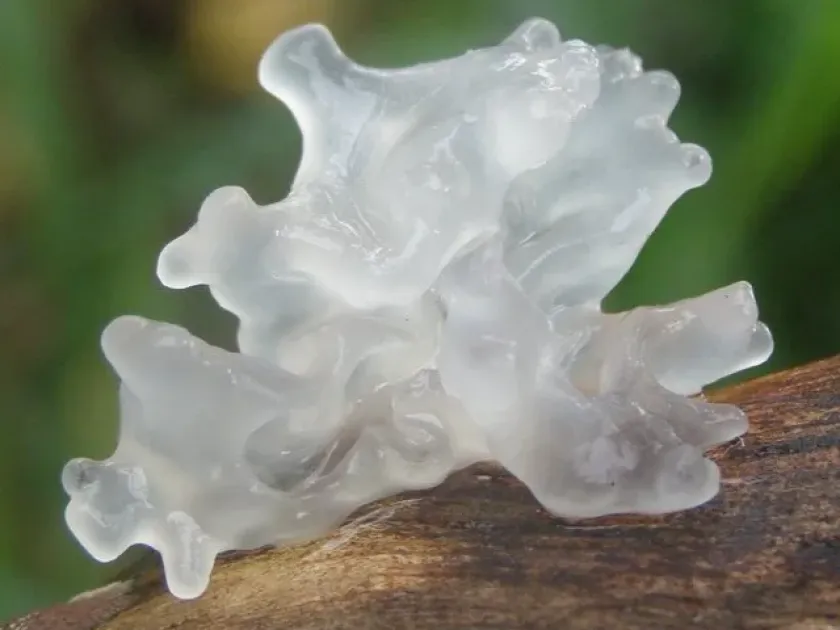
The most distinctive sign of Tremella fuciformis is the appearance of gelatinous, translucent fruiting bodies. These bodies are often folded or lobed, bearing a striking resemblance to seaweed or white, blooming flowers.
Under moist conditions, the fruiting bodies are soft, gelatinous, and elastic. Conversely, during periods of low humidity, they shrink and become hard, horn-like films that can be easily overlooked on the surface of the bark.
The color of the fungus ranges from pure white to pale yellow or slightly translucent pink. They frequently grow in clusters, covering significant portions of affected branches, especially following heavy rainfall or in high-humidity microclimates.
While the fungus does not cause immediate mortality, local discoloration of the affected wood often occurs. The growth of these gelatinous masses on a tree is a clear indicator that the wood's protective layers have been compromised.
Identification is relatively straightforward due to the unique texture of the fruit bodies, which are distinctly different from the woody, shelf-like fruiting structures of typical tree-decaying polypores.
Pathogen
Snow fungus (Tremella fuciformis) is a species of fungus in the Tremellaceae family. It is classified as a wood-decaying fungus that primarily colonizes the dead or weakened wood of broadleaf trees.
A fascinating aspect of its biology is that Tremella fuciformis is a mycoparasite. To grow and produce its characteristic fruiting bodies, it must be in the presence of a host fungus, typically from the genus Annulohypoxylon.
The dispersal of the fungus occurs mainly through basidiospores. These spores are carried by wind, rain splashes, or insects to vulnerable spots on tree bark or decaying wood fragments, where they initiate colonization.
In forest pathology, this organism is not considered a primary pathogen of healthy, living trees. Instead, it functions as a saprotroph or a secondary parasite that thrives on wood already weakened by other environmental or biological factors.
The mycelium of the fungus penetrates deep into the wooden substrate, utilizing complex enzymes to break down cellulose and lignin, thus playing an active role in the natural decomposition of woody debris.
Conditions for development
The development of Tremella fuciformis is heavily reliant on environmental moisture. As a hygrophilous organism, it requires consistently high humidity levels for its fruiting bodies to emerge and mature successfully.
Optimal temperatures for mycelial growth range from 20°C to 25°C. In temperate climates, the most vigorous growth is observed during periods of prolonged wet weather, fog, and overcast days.
The availability of a suitable substrate, such as oak, beech, or other broadleaf species, is essential. Because the fungus depends on a host fungus, it is most commonly found in habitats with significant amounts of coarse woody debris.
Shaded areas with poor air circulation are preferred by the snow fungus, as these microclimates retain moisture longer, preventing the premature desiccation of the delicate gelatinous structures.
Poor site management, including the accumulation of forest litter and standing deadwood, creates the ideal conditions for the buildup of the fungal inoculum and its subsequent spread across the canopy or forest floor.
Why it matters
The primary harm caused by the snow fungus is the acceleration of wood decay in already compromised trees. While not directly lethal to vigorous plants, it contributes to the breakdown of woody structure.
In terms of forest management, the presence of such fungi is often a symptom of underlying health issues within a stand. It serves as an indicator that the trees are failing to defend themselves against secondary colonizers.
For timber production, colonization by Tremella fuciformis is detrimental as it reduces the mechanical strength and market quality of the wood, rendering it less suitable for construction or industrial applications.
In ornamental settings, the presence of the fungus on garden trees or shrubs can diminish their aesthetic value. Excessive growth may necessitate the removal of affected branches to maintain the appearance of the garden.
Although it does not pose a direct threat to human health, its widespread presence indicates a site that may be prone to higher humidity-related issues and secondary fungal infections.
Protection
The most effective strategy for managing the snow fungus is maintaining good sanitary conditions in forest and garden areas. Removing fallen logs and diseased branches reduces the habitat available for the fungus.
Providing optimal growing conditions for trees—including proper irrigation and fertilization—strengthens their natural defenses, making the bark more resistant to the initial stages of fungal colonization.
Pruning should be performed carefully, and all major wounds should be sealed with appropriate protective dressings or copper-based fungicides to prevent spores from entering the inner layers of the tree.
In cases where ornamental plants are infested, mechanical removal of the fruiting bodies is the first step, followed by the application of fungicidal agents to the affected bark surfaces.
- Regular monitoring of tree health to detect early signs of decay.
- Thinning of dense canopy areas to improve airflow and reduce moisture.
- Prompt disposal of deadwood to eliminate the host fungus environment.
Discussion
No discussions yet — be the first.