
Smut fungi
Ustilaginales
Smut diseases are caused by specialized basidiomycete fungi belonging to the order Ustilaginales, which function as obligate parasites of various cereal crops, including wheat, barley, oats, and maize.
What the section contains
Smut fungi
The life cycle of these fungi revolves around teliospores, which act as resting structures capable of surviving in the soil or on the surface of seeds until favorable conditions emerge.
Infection is usually systemic; the fungal mycelium penetrates the seedling and develops internally throughout the plant's growth, eventually replacing reproductive tissues with masses of black spores.
The transformation of the plant's ovaries or inflorescences into a soot-like mass of spores represents the final stage of the pathogen's lifecycle, intended to facilitate dispersal.
Depending on the species, the transmission occurs via airborne spores during flowering (loose smut) or through soil contamination and seed-surface infection (covered/stinking smut).
The most distinctive symptom is the replacement of grain heads, panicles, or ears with dark, powdery spore masses that often resemble soot or charcoal dust.
Infected plants typically show significant stunting, chlorosis, or deformation of the seed head, resulting in a total absence of healthy grain in the affected area.
With loose smut, the spores are disseminated by wind, leaving behind a bare rachis of the inflorescence shortly after the crop enters the heading stage.
Covered smut is characterized by the spore mass remaining encased within the seed coat until harvest, at which point the grains rupture and release their contents.
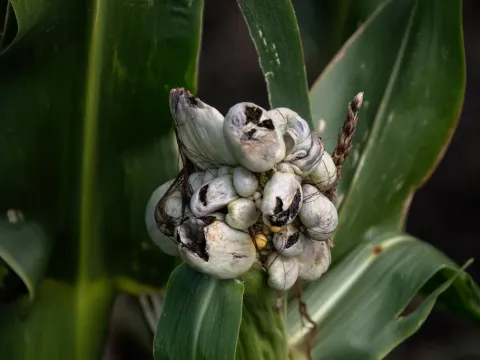
Maize smut manifests as large, white-to-gray galls that swell and eventually burst to release dark spores, appearing on leaves, stalks, or the ears of the corn plant.
Disease development is highly dependent on environmental conditions, specifically soil moisture and temperature during the critical window of seed germination and emergence.
Loose smut is favored by moderate temperatures and high humidity during the flowering phase, allowing spores to successfully infect the open flowers of the host plant.
Covered smut thrives when soil temperatures are relatively cool during planting, enabling the fungus to infect the seedling before it reaches a stage of resistance.
Agronomic factors such as deep planting or delayed germination due to cold weather increase the plant's exposure time to soil-borne inoculum, raising infection rates.
The repeated use of untreated seeds harvested from infected fields serves as the primary driver for widespread annual outbreaks of smut diseases across commercial farms.
The primary economic impact of smut fungi is the direct loss of grain yield, as infected heads produce no usable product and essentially occupy space meant for healthy crop.
Significant infestations can lead to yield reductions ranging from 5% to over 30%, depending on the pathogen species and the degree of susceptibility of the cultivar used.
The marketability of grain is severely compromised by contamination, as the presence of smut spores leads to the rejection of batches due to unpleasant odors and dark coloration.
Livestock safety is also a concern, as smut-contaminated forage or feed grain can potentially cause digestive issues or allergic reactions in farm animals.
Furthermore, the accumulation of spores in the soil creates a long-term management challenge, necessitating extended crop rotations to reduce the future infection risk.
The fundamental strategy for smut control is the use of high-quality, certified seeds combined with systematic seed treatment using appropriate fungicides before sowing.
Breeding and utilizing resistant or tolerant crop cultivars are essential long-term measures to mitigate the damage caused by evolving races of smut fungi.
Effective crop rotation practices help in breaking the life cycle of the pathogen by depriving it of a suitable host for several consecutive seasons.
Adjusting planting dates to ensure rapid germination can significantly decrease the risk of seedling infection, as the plants pass through the susceptible stage more quickly.
Deep tillage helps bury infected plant residues, promoting their decomposition and reducing the overall inoculum density in the upper soil profile before the next crop is established.