
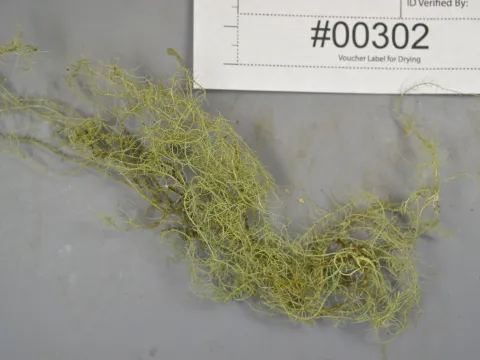
Usnea filipendula
Usnea filipendula
Usnea filipendula is a fruticose lichen that is often mistaken for a parasitic fungal disease. Biologically, it is a symbiotic organism consisting of a fungus and algae that uses tree bark solely as a substrate for attachment.
What the section contains
Usnea filipendula
It is crucial to understand that Usnea is not a pathogen in the traditional sense, as it does not penetrate plant tissues or feed on its sap. However, the mass development of this epiphyte often indicates underlying issues with the tree's physiological state or the orchard's microclimate.
The life cycle of Usnea is intrinsically linked to high atmospheric humidity. This organism is highly sensitive to air pollution; therefore, its active growth is often an indicator of a good ecological environment rather than a harmful infection.
The interaction between Usnea and the tree is classified as phoresy, where the plant merely acts as a support. Unlike pathogenic fungi that destroy wood structure, Usnea interacts with the bark only at the surface level.
Agronomic diagnosis requires distinguishing Usnea from true diseases like black rot or cytospora canker, which have fundamentally different mechanisms of impacting the culture.
The primary sign of Usnea filipendula is long, hanging, beard-like structures in gray-green or yellowish-green colors. These thread-like thalli can grow significantly, covering skeletal branches and the trunk.
In areas where Usnea clusters, the bark remains constantly moist as the lichen effectively retains water after precipitation. This creates a "humid chamber" on the surface, which promotes bark softening and the development of secondary infections.
Visually, an affected tree looks neglected. Often, the lichen masks actual wounds, cracks, or necrosis sites that develop under the dense epiphyte layer.
- Presence of hanging thread-like formations on branches.
- Color change of the bark under the lichen due to constant humidity.
- Delayed bud development in areas with dense thallus coverage.
- Softening of the superficial bark layers.
Upon careful inspection, one can see that Usnea detaches easily from the bark surface without leaving the necrotic spots typical of fungal diseases.
The development of Usnea filipendula is possible only under conditions of high atmospheric humidity. This high humidity allows the organism to actively absorb water from the air, which is a critical condition for its survival.
The lichen prefers dense plantings with poor air circulation. The lack of regular canopy pruning creates an ideal microclimate where moisture is trapped for long periods without evaporating.
Weakened and old trees are most susceptible to colonization. Their bark is often covered in cracks, which facilitates the attachment of spores (soredia) and the retention of moisture.
Low light intensity within the canopy also promotes colonization. In these zones, the plant cannot sustain enough evaporation, which benefits epiphytes.
General suppression of the plant's immune system due to poor agricultural practices, nutrient deficiency, or pests creates a favorable background for the expansion of any epiphyte species.
Although Usnea is not a parasite, it causes indirect harm. Constant wetting of the bark by the lichen triggers rotting and decay, opening pathways for the entry of harmful bacteria and fungi.
Lichen cover serves as a refuge for overwintering stages of pests, such as scale insects and mites, which successfully survive adverse conditions under the protection of Usnea thalli.
Massive canopy coverage by Usnea limits light access to branches and leaves, reducing photosynthetic efficiency. This leads to gradual tree exhaustion and reduced yield.
Dense Usnea thickets impede normal gas exchange through the bark lenticels. In the long run, this suppresses tissue respiration and accelerates the tree's aging process.
For young orchards, the presence of Usnea is a red flag indicating systemic management failures that require immediate correction to restore productivity.
The first step in management is regular sanitary and formative pruning. Removing excess branches improves canopy aeration, making environmental conditions unsuitable for Usnea.
Mechanical cleaning of trunks and skeletal branches is the most effective control measure. Cleaning should be performed during periods of high humidity using wooden or plastic scrapers to avoid damaging the live cambium.
After mechanical cleaning, it is recommended to disinfect trunks with a solution of ferrous sulfate (3-5%). This not only destroys lichen remnants but also provides a powerful antiseptic effect on the bark.
Whitewashing the trunks after cleaning is mandatory. Lime wash creates an alkaline environment that is lethal to lichen spores and prevents them from re-attaching.
A comprehensive set of agricultural practices, aimed at improving the tree's overall vigor—balanced nutrition and pest management—is the best prevention against epiphyte infestation in the orchard.