
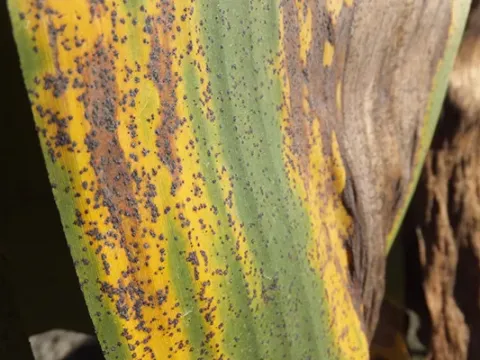
Banana rust
Uredo musae
Banana rust is caused by the fungal pathogen scientifically known as Uredo musae. This fungus is a specialized parasite that primarily targets banana plants within tropical environments.
What the section contains
Banana rust
As an obligate pathogen, Uredo musae requires living plant tissue to complete its lifecycle. It survives and reproduces by producing spores that serve as the primary source of inoculum for new infections.
The fungus invades the leaf tissue, penetrating the epidermis and establishing a mycelial network. This network consumes nutrients from the plant cells, leading to visible damage on the surface.
Reproduction involves the formation of rust-colored pustules, which break through the leaf surface. These pustules release spores into the environment, which are then carried by air currents or water splashes.
The taxonomic classification of this pathogen is crucial for diagnostic purposes, allowing specialists to distinguish it from other banana pathogens and implement precise control measures.
The initial symptoms of banana rust appear as small, chlorotic spots on the underside of the leaves. These spots gradually develop into characteristic rust-colored pustules.
As the infection progresses, these pustules can coalesce, resulting in larger necrotic lesions on the leaves. This leads to the yellowing and eventual death of the entire leaf tissue.
Severely infected leaves become brittle and lose their ability to conduct photosynthesis effectively. The plant canopy may appear discolored and ragged due to the extensive damage.
The presence of a dusty, rust-colored powder on the leaf surface is a hallmark sign of this disease. This powder consists of millions of microscopic spores ready for dispersal.
Infection typically moves upwards from the lower, older leaves to the younger ones, provided that environmental conditions remain favorable for the fungus to spread.
Banana rust thrives in environments with high relative humidity and consistent moisture on leaf surfaces. Rainy seasons are particularly conducive to the rapid development of the pathogen.
The optimal temperature range for the development of Uredo musae is between +22°C and +28°C. These temperatures are characteristic of major banana-producing regions worldwide.
Poor ventilation within the plantation, often caused by excessive planting density, prevents the leaves from drying after rain, thereby extending the period of vulnerability for the plants.
Morning dew and fog provide sufficient moisture to allow spores to germinate and penetrate the host tissue. Without these periods of moisture, the infection process is significantly slowed.
Wind is the primary vector for long-distance dispersal of spores, while splashing rain drops facilitate the transmission of the fungus between adjacent plants in the same field.
The primary impact of banana rust is a significant reduction in photosynthetic capacity. This loss of vitality directly limits the plant's ability to produce high-quality, full-sized banana bunches.
Economic losses arise from both reduced fruit weight and poor aesthetic quality. Fruit from heavily infected plants often fails to meet market standards for export, leading to financial damage.
Constant infection weakens the banana plant over time, making it less resilient to environmental stresses and other secondary pathogens that may attack the weakened host.
Managing the disease requires frequent application of fungicides, which significantly increases the production costs for banana farmers and impacts the farm's total profitability.
If not contained, the disease can spread throughout the entire plantation, leading to a substantial decrease in yield that may affect the plantation's viability over several seasons.
The most effective approach to banana rust involves integrated pest management. Maintaining appropriate plant density is critical to ensure airflow and reduce moisture retention on the leaves.
Sanitation is a vital component of control. Removing and properly destroying infected leaves helps to reduce the overall spore load and limit the spread of the pathogen.
Chemical control using systemic and contact fungicides is standard practice in industrial banana cultivation. Preventive spraying before the peak of the rainy season is essential for effectiveness.
- Utilizing cultivars with natural resistance to rust and other fungal diseases.
- Ensuring balanced soil fertility to promote overall plant vigor and immunity.
- Conducting regular inspections to identify and treat early infection sites immediately.
Combined with careful crop management, these strategies help maintain plantation health and ensure the continued production of high-quality bananas despite the presence of Uredo musae.