
Bankera violascens
Bankera violascens
Description
Symptoms
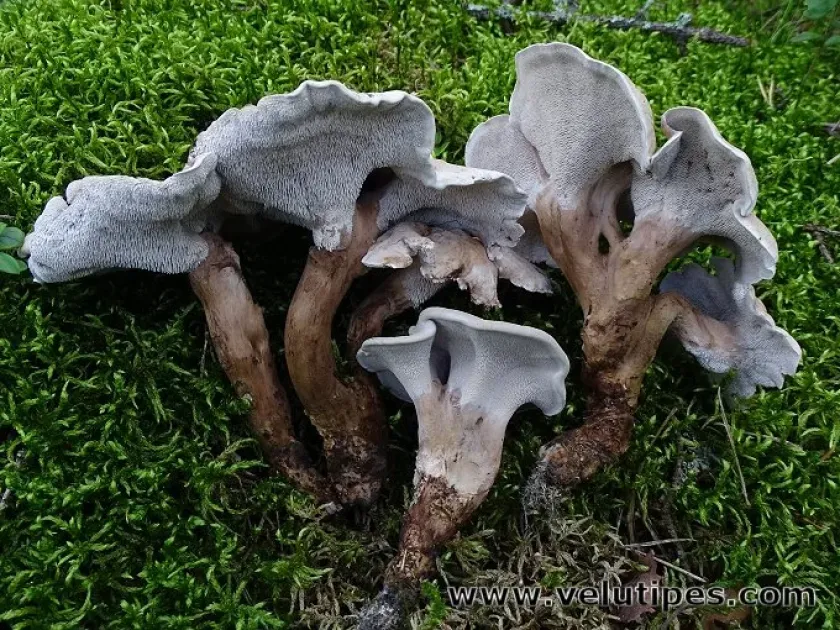
Bankera violascens is a terrestrial fungus belonging to the tooth fungus group, characterized by the unique structure of its hymenium.
The underside of the cap is covered with numerous downward-pointing spines, which distinguish it from typical gilled or pored mushrooms.
The cap often exhibits an irregular, lobed, or wavy margin and ranges in color from grayish-brown to a distinct violet or lilac hue.
Its flesh is remarkably firm and fibrous, becoming quite leathery and hard upon drying, which makes it unsuitable for culinary purposes.
The fruit body maintains a pleasant, slightly spicy or floury aroma, which is a key diagnostic feature for mycologists identifying the species in the field.
Pathogen
It is critical to clarify that Bankera violascens is not a plant pathogen and does not cause diseases in crops, trees, or horticultural plants.
It functions as a beneficial mycorrhizal fungus, forming symbiotic relationships with the root systems of coniferous trees, such as pines and spruces.
This fungus contributes to the tree's health by enhancing nutrient uptake from the soil, particularly in nutrient-poor forest environments.
It belongs to the order Thelephorales and plays a constructive ecological role rather than a destructive one within its habitat.
There are no recorded instances of this fungus attacking or harming vascular plants, making it a completely safe and natural component of forest flora.
Conditions for development
Bankera violascens thrives in undisturbed, mature coniferous forests that feature deep, natural leaf litter and minimal human intervention.
It prefers acidic soil environments and is highly sensitive to changes in soil chemistry, including pollution and the application of fertilizers.
The development of its fruit bodies is strictly seasonal, occurring primarily in late summer and autumn when moisture levels are consistently high.
High humidity and cool temperatures are essential for the proper maturation of the basidiocarps, which emerge from the mossy or leaf-covered ground.
Any disruption to the forest floor, such as trampling, logging, or clearing of undergrowth, can lead to the immediate collapse of its local population.
Why it matters
This fungus poses absolutely no threat to agriculture, forestry, or ornamental plant management, as it lacks any pathogenic capabilities.
It does not compete with crops for resources, nor does it cause decay in living timber or structural damage to forest ecosystems.
The species is considered ecologically valuable rather than harmful, serving as an indicator of a healthy and diverse forest ecosystem.
There is no economic damage associated with this organism, and it should not be categorized alongside pests or crop-destroying fungi.
In fact, its presence indicates a high level of ecological integrity, which is beneficial for the long-term sustainability of forest lands.
Protection
As Bankera violascens is not a disease-causing agent, there are no control, prevention, or eradication measures required for this species.
In many regions where it is found, it is actually a subject of conservation efforts due to its rarity and sensitivity to environmental change.
Protection of its natural habitat is the only management strategy, which involves restricting industrial activity in known growth areas.
Foresters and agronomists should protect these sites by avoiding soil compaction and maintaining the natural state of the forest undergrowth.
No fungicides or pesticides should ever be applied in areas where this species is identified, as it would cause irreversible damage to its sensitive mycelium.
Discussion
No discussions yet — be the first.