
Bankera cinerea
Bankera cinerea
Description
Symptoms
Bankera cinerea is a unique mushroom species belonging to the Bankeraceae family. It is typically found in mature coniferous forests, where it produces distinct, mushroom-shaped fruiting bodies.
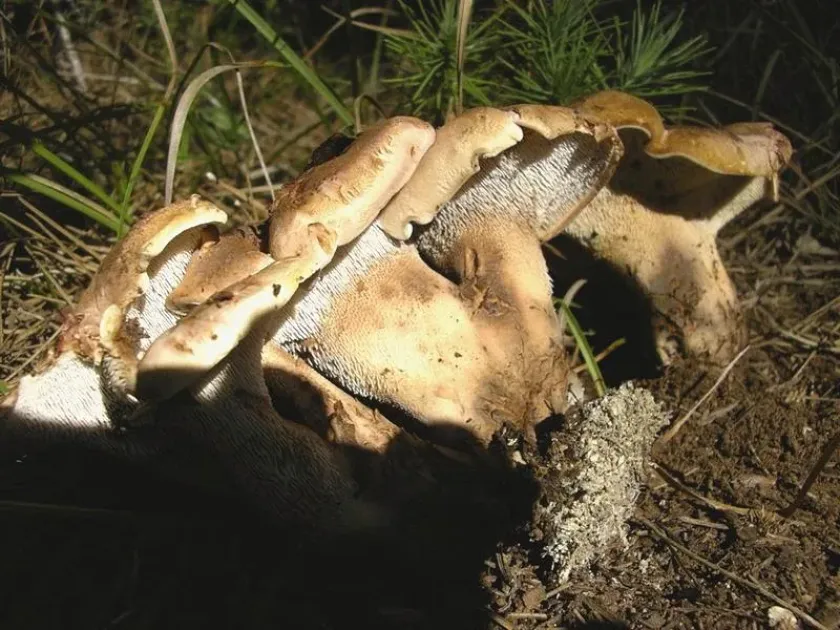
The cap of the mushroom is generally gray to grayish-brown, often featuring a depressed center. The surface has a leathery or felt-like texture, which is a key diagnostic feature for mycologists.
The underside of the cap is covered in numerous small, dense spines rather than gills. These spines are responsible for spore production and are a hallmark of this particular genus.
These mushrooms often grow in dense clusters, sometimes with the bases of their stalks fused together. This grouping helps them cover more ground and interact effectively with the underlying soil layers.
As the mushroom ages, its tissue becomes tougher and more fibrous. Fresh specimens often possess a pleasant, slightly floury scent, which distinguishes them from other wood-decay fungi found in similar habitats.
Pathogen
Bankera cinerea is not a disease-causing agent for agricultural crops; rather, it is a beneficial basidiomycete fungus that plays a vital role in forest ecosystems by decomposing organic matter.
Biologically, the fungus maintains a close relationship with the roots of coniferous trees, such as pine and spruce. This mycorrhizal symbiosis provides trees with improved access to minerals and water.
The life cycle involves spore dispersal, followed by the development of a complex mycelial network in the soil. This mycelium is capable of persisting in forest litter for many years under stable conditions.
It prefers ancient or undisturbed forests, where it acts as a saprotroph and symbiont. Its presence is often considered a sign of high soil quality and ecological health within the forest stand.
Due to its rarity and sensitivity to environmental changes, many countries classify Bankera cinerea as a species of conservation concern, highlighting the importance of protecting old-growth forests.
Conditions for development
The development of Bankera cinerea requires specific environmental conditions, including acidic soils rich in organic matter. It is most commonly found in mossy pine forests with a deep leaf litter layer.
Moisture is a critical factor for the growth of fruiting bodies. High levels of soil and air humidity during the late summer and autumn are essential for the mushroom to emerge from the mycelium.
Temperature range is another significant factor, with the fungus thriving in temperate climates, generally between 12 and 18 degrees Celsius. Extreme heat or prolonged frost inhibits its reproductive cycle.
Human impact, such as nitrogen pollution or heavy logging, negatively affects its growth. The fungus is highly sensitive to the chemistry of the soil and the presence of associated tree roots.
Maintaining a stable, undisturbed soil structure is crucial for the survival of the mycelium. Any disruption to the natural drainage or soil compaction can lead to the disappearance of the population.
Why it matters
Bankera cinerea poses no threat to agricultural crops or horticultural plants. It does not infect or damage living plant tissues, making it harmless to gardens and commercial fields.
In forestry, it is considered beneficial rather than harmful. By participating in nutrient cycling, it helps maintain the fertility of forest soils, indirectly supporting tree health and productivity.
There are no recorded economic losses associated with this species. Its biological activity is confined to the forest floor, where it processes debris that would otherwise accumulate excessively.
The fungus does not compete with crops for resources, nor does it harbor pathogens that could be transmitted to food plants. It remains a strictly forest-dwelling organism.
Its role as a bioindicator makes it a valuable asset for environmental monitoring, providing insights into the long-term health and stability of the forest ecosystem.
Protection
There are no chemical or biological control methods for Bankera cinerea, as there is no necessity to suppress this fungus in any forest or agricultural setting.
If the presence of this fungus is noted, it should be viewed as a positive indicator of ecological balance. No interventions, such as fungicides or soil treatments, are required or recommended.
Preventive measures in forestry should focus on avoiding drastic soil disturbances. Keeping the soil moisture levels stable and protecting the root zones of trees ensures the fungus continues its natural cycle.
Management practices should prioritize the conservation of natural soil properties to protect the biodiversity of the forest, including such rare and beneficial fungal species.
In the event of finding Bankera cinerea, the best practice is to observe and document it, as it contributes to the resilience and overall health of the forest habitat.
Discussion
No discussions yet — be the first.