
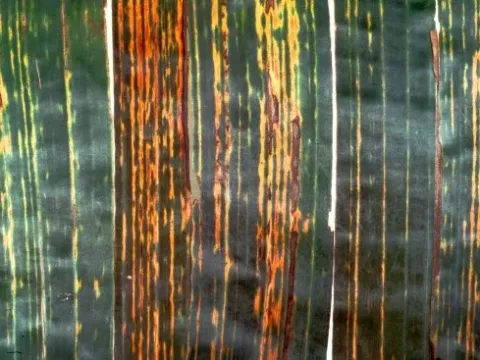
Banana streak
Banana streak
The causative agent of this disease is the Banana streak virus (BSV), which belongs to the genus Badnavirus. It is a DNA virus known for its high level of genetic diversity.
What the section contains
Banana streak
A unique aspect of this pathogen is that certain strains can integrate into the banana genome. This allows the virus to remain latent and undetectable until triggered by environmental stress.
Natural transmission occurs primarily through mealybugs (family Pseudococcidae), which act as insect vectors, transferring the virus from infected to healthy plants.
The most common way for the virus to spread over long distances is through the distribution of infected vegetative propagation material (suckers or tissue-cultured plants).
Related streak viruses affect various botanical families, including clover (Trifolium), where similar symptoms of foliage streaking and chlorosis can be observed.
The primary symptom is the appearance of chlorotic or yellow streaks on the leaves. Over time, these streaks become necrotic and turn dark brown or black.
Symptoms are typically most visible on the younger leaves. The necrosis often follows the vein patterns, severely impairing the plant's ability to conduct photosynthesis.
Infected plants frequently exhibit stunted growth, shortened internodes, and general foliage deformation, which significantly reduces the overall vigor of the plantation.
Fruit production is heavily affected; bananas from infected plants often display reduced size, irregular shapes, and unsightly skin blemishes, rendering them unsellable.
Symptom expression is highly variable and can be episodic, often reappearing during periods of climatic stress, even in plants that seemed to have recovered.
Environmental stress is the primary trigger for the activation of the virus. Rapid fluctuations in temperature, especially between day and night, act as a catalyst for symptom development.
High humidity and warm temperatures create an ideal environment for the multiplication and movement of mealybugs, which facilitates the rapid spread of the virus.
Inadequate agronomic practices, such as irregular irrigation and nutrient deficiencies, weaken the banana plant, making it more susceptible to virus-induced decline.
Poor orchard sanitation, including the failure to remove weeds that may harbor insect vectors, contributes significantly to the maintenance of the disease in the area.
International trade of infected banana germplasm without proper quarantine screening is the leading cause of the global spread of various BSV strains.
Banana streak can cause severe economic losses, with yield reductions ranging from 10% to over 50% depending on the severity of the infection and the cultivar.
The systemic nature of the infection leads to the exhaustion of the banana mat, often resulting in early plantation decline and the need for premature replanting.
Fruit quality is drastically compromised, making it difficult for producers to meet international export standards, leading to substantial financial losses in the market.
The disease burdens farmers with extra operational costs, including the continuous monitoring for symptoms and the aggressive control of insect vector populations.
Additionally, the difficulty in detecting latent infections often leads to the unintended spread of the virus to new, previously disease-free agricultural regions.
The most effective strategy for managing Banana streak is the use of healthy, virus-indexed propagation material, preferably produced through reliable tissue culture.
Strict plantation monitoring is crucial; any plants showing clear signs of the disease should be rogue-d (removed) and destroyed to reduce the primary inoculum source.
Integrated Pest Management (IPM) focusing on the control of mealybug populations is essential to preventing the secondary spread of the virus within the field.
Maintaining optimal plant health through balanced fertilization and consistent watering helps plants resist the physiological stress that triggers viral symptoms.
- Use of quarantine measures for all imported germplasm.
- Sterilization of pruning tools to prevent mechanical transmission.
- Establishment of buffer zones between new and older plantations.
- Regular inspections of border rows for signs of insect infestation.