
Bankera
Bankera
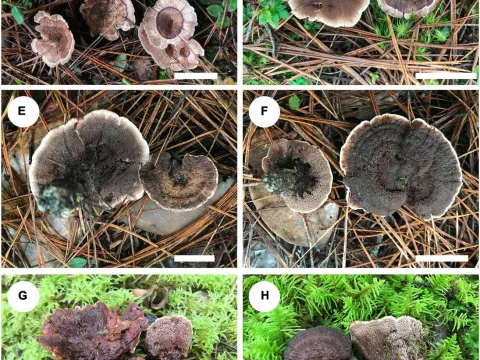
Bankera is a genus of fungi belonging to the family Bankeraceae. It is important to clarify that this organism is not a plant pathogen or a disease; rather, it represents a group of beneficial ectomycorrhizal fungi that form symbiotic relationships with tree roots.
What the section contains
Bankera
Unlike parasitic fungi that cause plant diseases, Bankera contributes to the health of its host trees. Through the formation of specialized structures on root tips, the fungus enhances nutrient and water uptake from the soil, supporting the tree's vigor.
The morphology of Bankera is characterized by hydnoid (tooth-like) hymenophores. These teeth-like structures hang under the cap and are responsible for the production and release of spores, which are essential for the fungus's reproductive cycle.
In biological research, Bankera is studied as a member of forest mycoflora. There is no agricultural significance regarding plant protection, as it does not infect or damage field crops, vegetables, or ornamental plants.
Because they rely strictly on a symbiotic partnership with live trees, they cannot thrive in artificial agricultural environments. Their presence is an indicator of healthy, undisturbed forest conditions rather than an infection site.
These fungi require specific environmental parameters to survive, primarily found in old-growth coniferous forests. They thrive in soil characterized by stable moisture levels and low disturbance rates.
They are extremely sensitive to soil pH and organic matter composition. Even minor changes in the forest floor integrity can lead to the disappearance of the mycelium, making them fragile components of the ecosystem.
Environmental factors such as excessive nitrogen levels from external sources can inhibit the growth of Bankera. This sensitivity highlights their role as indicators of atmospheric and soil health.
Reproduction and mycelial spread are highly dependent on the host tree's physiology. The fungi receive carbohydrates from the tree, and in exchange, they provide mineral nutrients, maintaining a balance that is essential for both organisms.
There are no known methods for cultivation of Bankera in a laboratory or agricultural setting, which further confirms their status as purely wild forest fungi rather than crops or controllable pathogens.