
Rhizoctonia
Thanatephorus
The causative agent of the disease is the soil-borne fungus Rhizoctonia solani (teleomorph: Thanatephorus cucumeris). This basidiomycetous fungus is known for its ability to persist in soil for extended periods as sclerotia or mycelium on plant debris.
What the section contains
Rhizoctonia
It is a non-specialized pathogen with a very broad host range, affecting a wide variety of crops including vegetables, potatoes, and field crops. This lack of specificity makes it highly persistent in diverse agricultural systems.
The disease is classified as a root, stem, or damping-off rot. The fungus infects plants by producing hyphae that colonize the root system and stem base, secreting enzymes that macerate plant tissues.
The life cycle involves the formation of sclerotia, which are hard, melanized structures capable of surviving extreme environmental conditions. These structures serve as the primary inoculum for future infections in the field.
The fungus can also reproduce sexually, producing basidiospores that may be wind-dispersed, although the mycelial and sclerotial stages are the most critical factors for the rapid spread of the disease within a field environment.
The most common symptoms include necrotic lesions and brown rot on the roots and the base of stems. In seedlings, it often causes "damping-off," where the stems collapse and rot before the plant can establish properly.
In humid conditions, a white, spiderweb-like mycelium may be visible on the surface of infected stems or the soil surface. This mycelium is a diagnostic indicator of active fungal growth.
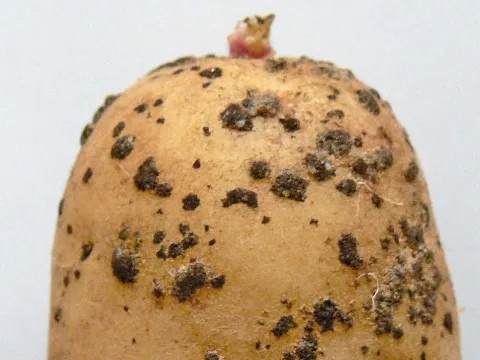
In potatoes, the disease is characterized by the presence of black, dirt-like sclerotia on the surface of tubers. These structures are firmly attached to the potato skin and do not wash off, significantly impacting market quality.
Infected plants typically show stunted growth, leaf chlorosis, and wilting during periods of high demand for moisture. The damage to the root system prevents proper uptake of water and nutrients from the soil.
Patches of dead or weak plants in the field are a classic sign of the disease. These areas represent infection centers where the fungus has reached a critical density to overcome plant defense mechanisms.
The disease thrives in cool and moist soil conditions, with optimal temperatures for infection ranging from 15 to 20 degrees Celsius. High soil moisture is particularly critical for the initial stages of fungal growth.
Poor soil drainage and compaction create environments where water accumulates, facilitating the spread of hyphae and stressing the roots of plants, which makes them more susceptible to fungal invasion.
Monocropping or frequent rotation with host crops leads to a massive accumulation of sclerotia in the soil. This elevated inoculum pressure ensures that successive crops face a higher risk of severe infection.
Deep planting of seeds in cold soil can prolong the emergence phase. This delay keeps seedlings in a vulnerable state for a longer period, providing the fungus with ample opportunity to attack and penetrate the tissue.
Soil pH also influences the pathogen, with neutral to slightly acidic conditions generally favoring the activity of Rhizoctonia solani and its ability to outcompete beneficial soil microorganisms.
The primary harm is the reduction in plant stand density due to seed or seedling mortality. This often forces growers to replant, which increases production costs and reduces potential yields.
Root damage leads to impaired nutrient transport, which reduces plant vigor, delays maturity, and lowers the quality of the harvested produce. For many crops, this translates into direct economic losses.
The presence of sclerotia on harvested tubers, such as potatoes, ruins their aesthetic and market value. Such produce is often rejected by retailers or consumers, leading to significant financial waste.
In sugar beets and other root crops, the disease causes crown rot and root degradation, which interferes with the development of the root and negatively affects the sugar content and overall yield quality.
Once established in a field, the pathogen is extremely difficult to eradicate because it can survive on organic matter in the soil for several years, imposing a long-term management challenge.
A sound crop rotation strategy is the foundation of management. Avoiding host crops for at least 3-4 years helps reduce the soil inoculum density to manageable levels, as the fungus eventually dies off without a host.
Improving soil structure, drainage, and aeration is crucial. Reducing soil compaction helps plants grow more vigorously and minimizes the conditions that favor fungal development.
Using high-quality, disease-free seed and treating it with appropriate chemical fungicides is essential to protect young seedlings during the initial germination phase in the soil.
- Utilizing disease-resistant or tolerant crop cultivars.
- Applying biological control agents, such as Trichoderma species, to suppress fungal growth.
- Removing and destroying infected plant debris to minimize inoculum sources.
- Ensuring balanced fertilization to promote strong root system development.
Chemical applications of fungicides may be necessary in severe cases to manage the spread of the pathogen, though these are most effective when used as a preventive measure during the planting season.