

Arbalet
Хімічні заводи «Органіка-Сажина»С.А., Нова Сажина, Польща
Fungicides
0
0
·
1.4K
2 offers
15.65 €per 1 l
Buy
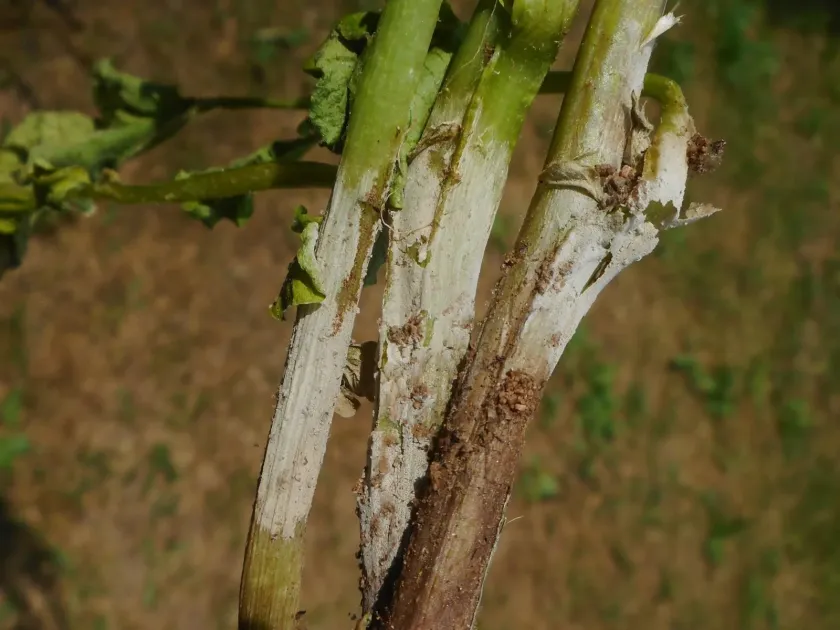
Initial symptoms include the appearance of reddish-brown or dark lesions on the roots and the hypocotyl of seedlings. These lesions quickly expand, leading to tissue softening and plant wilting.
Seedlings affected by the pathogen often collapse (damping-off) before emergence or immediately after, resulting in uneven stand establishment in the field.
In mature plants like alfalfa, the disease causes severe crown rot, where the base of the plant turns dark brown and necrotic, eventually leading to the death of the entire plant.
During periods of high humidity, a fine, cobweb-like mycelial growth may be visible on the surface of infected roots or at the crown of the plant.
Visual mapping of the field often reveals patches of stunted, yellowing plants, which eventually wither and die, leaving bare areas in the crop canopy.
The causative agent of the disease is the soil-borne fungus Thanatephorus cucumeris (anamorph Rhizoctonia solani). This pathogen is highly adaptable and maintains itself in the soil as mycelium or sclerotia for long periods.
It possesses a broad host range, infecting various field crops, vegetables, and forage grasses. Alfalfa (Medicago sativa) is particularly susceptible, suffering from crown and root rot infections.
The fungus is characterized by the presence of anastomosis groups, which dictate host specialization and hinder the development of fully resistant crop varieties.
Dissemination occurs through infested soil, contaminated seeds, irrigation water, and the movement of agricultural machinery between fields.
The pathogen utilizes organic matter in the soil to survive, switching to a parasitic lifestyle when a suitable host plant becomes available within its reach.
Rhizoctonia root rot thrives in moist soil conditions, particularly in areas with poor drainage and compacted soil that prevents proper aeration of the root zone.
The optimal temperature range for the pathogen's growth is between +15°C and +25°C, which frequently aligns with the early developmental stages of many crops.
High planting densities create a humid microclimate near the soil surface, facilitating the rapid spread of the fungus from infected plants to neighboring healthy ones.
Nutrient imbalances, particularly excessive nitrogen application, can weaken plant defense mechanisms and promote excessive foliage growth, leaving roots vulnerable to infection.
Soil pH plays a significant role in pathogen activity, with neutral to slightly acidic conditions generally favoring the aggressive colonization of host roots by the fungus.
The disease causes significant economic loss primarily through stand thinning and seedling mortality, which often necessitates replanting portions of the field.
In mature stands, the infection reduces the overall vigor of the plants, leading to lower biomass production, poorer quality of fodder, and reduced longevity of the crop.
Compromised root systems are unable to efficiently absorb water and essential nutrients, making the plants highly susceptible to secondary drought stress and other environmental pressures.
The accumulation of sclerotia in the soil creates a long-term reservoir of infection, restricting the use of the affected land for sensitive crops in future rotations.
Direct yield losses can be substantial, as the root decay limits the plant's ability to support vegetative growth and seed development throughout the season.
The most effective strategy is the implementation of a diverse crop rotation, avoiding susceptible crops like alfalfa on fields with a history of Rhizoctonia infection.
Proper soil management, including deep tillage and ensuring adequate drainage, is crucial for creating an environment that is unfavorable for fungal colonization.
Seed treatment with professional fungicides is the primary defense against early-season infection, protecting the vulnerable germinating seeds and young seedlings.
In some cases, chemical soil disinfection may be considered, but its high cost and ecological impact generally limit its use to high-value horticultural crops.


No discussions yet — be the first.