
Rhizoctonia root rot of strawberry
Rhizoctonia fragariae
Description
Symptoms
The first symptoms include overall plant stunting and gradual wilting. Leaves may develop a reddish or bronze cast, often mistaken for nutrient deficiencies.
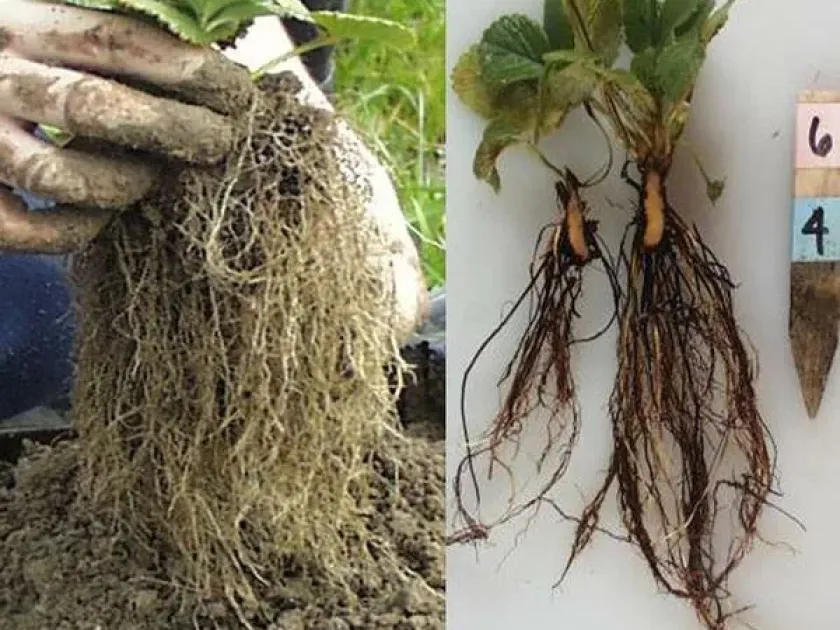
Inspection of the root system reveals blackened, brittle roots. In the early stages, small dark-brown lesions appear on younger roots.
Over time, affected roots appear as "rat tails" due to the degradation of the root cortex, leaving only the central cylinder intact.
The disease often shows a patchy distribution within the field, indicating areas where the soil pathogen population is high.
- Reddening of leaf blades.
- Blackening and rotting of roots.
- Severe plant stunting.
- Patchy death of strawberry crowns.
- Reduced yield and poor fruit quality.
Pathogen
The disease is caused by the soil-borne fungus Rhizoctonia fragariae, which can survive in the soil for long periods as sclerotia or mycelium on plant debris.
The pathogen primarily attacks the strawberry root system, causing the death of fine root hairs. Complex infection involving other Rhizoctonia species often occurs, complicating field diagnostics.
The fungus is highly active under moderate soil temperatures and colonizes the rhizosphere of weakened plants very efficiently.
Infection spreads through infested planting material, contaminated agricultural tools, and runoff water during irrigation or heavy rain.
The biology of the fungus involves the production of specialized infection structures that degrade plant cell walls, allowing the pathogen to penetrate deeply into roots.
Conditions for development
Disease development is favored by high soil moisture combined with fluctuating temperatures. A cold, wet spring provides optimal conditions for primary infection.
High soil acidity and compaction increase the risk of an outbreak. Poor drainage leading to standing water significantly promotes mycelial growth.
Lack of crop rotation and growing strawberries on the same site for over 4 years allows the pathogen population to build up to dangerous levels.
Nutrient imbalance, especially excessive nitrogen fertilization, makes strawberry plants more susceptible to infection.
The use of infected nursery stock is a frequent factor in introducing the pathogen to new commercial plantations.
Why it matters
The disease causes a sharp decline in productivity, as infected plants have a compromised root system and cannot support proper flower or fruit development.
Early plant death leads to the need for field replanting, causing significant financial loss and additional labor requirements.
Weakened root systems reduce the cold tolerance of the plants, leading to higher winter kill rates even in moderate climates.
Rhizoctonia makes the strawberry plants vulnerable to secondary infections, such as Phytophthora or Verticillium wilt.
Economic damage includes lower fruit quality, as berries become smaller, deformed, and unmarketable due to the lack of nutrients.
Protection
Strict crop rotation is the primary management strategy; avoid replanting strawberries on the same land for at least 5 years.
Always use certified, disease-free planting material and treat roots with biological fungicides like Trichoderma species before planting.
Maintain good soil aeration through regular cultivation and ensure proper drainage to prevent waterlogging.
If disease patches are identified, remove and destroy infected plants immediately, including the root zone soil.
Chemical fungicides should be used as a preventative measure or at early onset of symptoms according to local regulatory guidelines.
Discussion
No discussions yet — be the first.