
Rhizoctonia rot
Calocybe civilis
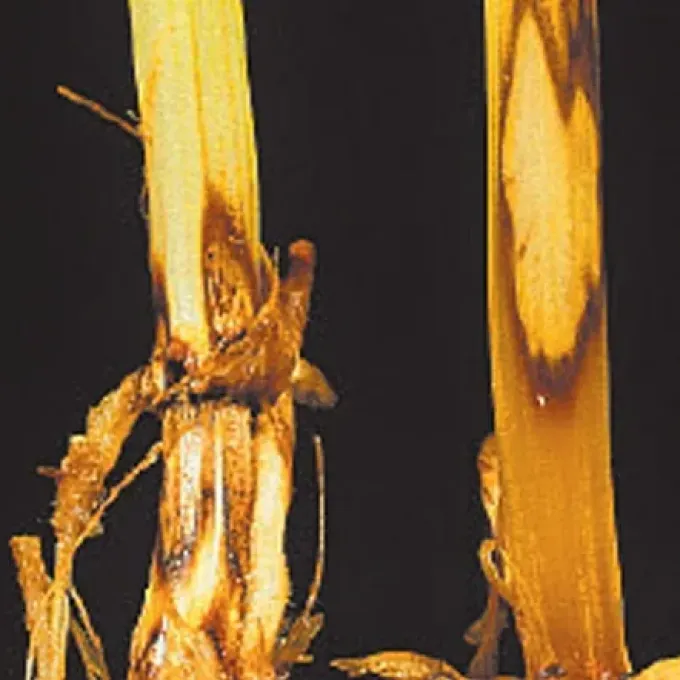
Description
Symptoms
The most distinctive sign of Rhizoctonia rot is the appearance of "black scurf," which looks like dark brown to black irregular patches on the surfaces of tubers or roots. These sclerotia can be scraped off but often indicate that the plant is carrying the pathogen.
In seedlings, the infection causes deep brown ulcers on the hypocotyl and roots. This frequently leads to severe damping-off, where the plant collapses and dies before or shortly after emerging from the soil, resulting in patchy, uneven plant stands.
In mature plants, especially under high humidity, a white, moldy mycelium layer may appear at the base of the stem. This is often referred to as "white foot" and is a symptom of advanced infection that hinders nutrient transport.
Infected plants typically appear stunted and chlorotic, with lower leaves turning yellow and wilting during the hottest parts of the day. The root system usually shows signs of browning, decay, and the loss of fine, nutrient-absorbing root hairs.
If the disease reaches a severe stage, plants may exhibit distorted or curled leaves. Because the structural integrity of the base of the stem is compromised, plants may easily lodge or break off at the ground level, leading to significant yield reduction.
Pathogen
The disease is caused by the soil-borne fungus Rhizoctonia solani, which is a facultative parasite known for attacking the root systems, stems, and tubers of numerous agricultural crops. It thrives by living in the soil and feeding on both living and dead plant tissues.
The fungus survives during unfavorable conditions by forming sclerotia, which are dense, dark structures that act as long-term survival units. These sclerotia reside in the soil and serve as the primary source of infection for the next generation of crops.
Rhizoctonia solani releases specific enzymes that degrade plant cell walls, leading to the necrosis of tissues. It penetrates the host through roots or stem bases, often exploiting wounds or natural openings in the plant's surface during the early stages of plant growth.
The pathogen spreads through infested soil, contaminated planting stock, irrigation water, and the movement of agricultural machinery. A high concentration of the fungus in the soil significantly increases the risk of damping-off and severe root decay.
In addition to the mycelial growth, the pathogen can produce basidiospores on the surface of infected stems when conditions are humid. While less common than soil-borne spread, these spores contribute to the rapid dissemination of the disease across fields.
Conditions for development
Rhizoctonia rot thrives in cool to moderate soil temperatures ranging from 15 to 20 degrees Celsius. These conditions often coincide with the timing of early planting, making young, germinating seeds particularly vulnerable to the infection.
Poorly drained, heavy clay soils that retain excess moisture are high-risk environments for the pathogen. In these soils, the lack of aeration and the presence of standing water favor the germination and spread of fungal sclerotia.
High plant density and limited air movement near the ground create a stagnant microclimate that is ideal for the fungus. This humidity allows the mycelium to rapidly colonize the base of the plant stems and extend its reach throughout the crop.
Soil pH plays a role, with neutral to slightly acidic soils being the most favorable for the pathogen's development. While it can exist in a range of environments, these conditions maximize its competitive advantage over beneficial soil microorganisms.
Plant stress, often caused by sudden temperature fluctuations or poor mineral nutrition, reduces the plant's ability to defend itself against the infection. Fast germination and vigorous early growth are the best natural defenses against early-stage attacks.
Why it matters
The primary harm occurs at the seedling stage, where the infection results in significant plant loss and poor emergence. This often forces farmers to perform replanting, which increases labor and material costs while delaying the growing cycle.
In mature crops, the decay of roots limits the uptake of water and nutrients, leading to small, stunted yields. Plants that survive the initial infection often fail to reach their full potential, resulting in lower total production and harvest quality.
The infection of tubers and storage roots reduces their market value and shelf life. Once inside storage facilities, the presence of Rhizoctonia tissues can serve as a vector for secondary bacterial soft rots, causing entire batches to spoil.
The disease weakens the overall vitality of the crop, making it more susceptible to drought, heat stress, and other environmental factors. This cumulative stress leads to unpredictable losses that vary based on local weather patterns and soil health.
Economic losses are compounded by the need for expensive chemical interventions and the implementation of restrictive crop rotation schedules. This limits the farmer's options for land management and forces a reliance on more intensive agricultural practices.
Protection
Using high-quality, certified, and disease-free seeds or tubers is the cornerstone of effective disease management. Ensuring that planting material is inspected for signs of black scurf helps to prevent the introduction of the pathogen into clean fields.
Implementing a balanced crop rotation is critical, as it starves the pathogen by alternating susceptible hosts with resistant or non-host crops, such as cereals or grasses. A 3-to-4-year rotation cycle is generally recommended to reduce soil inoculum levels.
Seed treatment with systemic and contact fungicides provides a protective barrier for young plants. This preventive measure is highly effective in protecting the seeds during the critical period between sowing and emergence.
Improving soil structure through adequate drainage and deep tillage helps reduce humidity near the plant base. Ensuring that the soil is properly warmed before planting encourages faster growth, which helps the crop outgrow the most susceptible period.
During the growing season, if necessary, targeted fungicide applications can be used to manage the spread of the fungus. Always consult regional agricultural guidelines to select the most effective chemistry and timing for the specific crop variety being grown.
Discussion
No discussions yet — be the first.