
Teratosphaeria leaf disease
Teratosphaeriaceae
The disease is caused by fungi belonging to the Teratosphaeriaceae family. This is a diverse group of ascomycetes, including highly pathogenic species such as Teratosphaeria nubilosa and Teratosphaeria destructiva, known for causing severe leaf blight.
What the section contains
Teratosphaeria leaf disease
The disease is classified as a fungal leaf spot that primarily affects woody plants. The fungal mycelium penetrates leaf tissues, damaging chloroplasts and disrupting the host plant's photosynthesis process.
The life cycle of the pathogen is closely tied to the production of conidia and ascospores, which are dispersed by wind and rain splashes. The pathogen can survive for long periods in leaf litter and on infected branches.
These fungi exhibit high variability and specialization, making laboratory identification via microscopic analysis necessary for accurate diagnosis. In favorable humidity, the fungus rapidly colonizes young plant tissues.
The biology of these microorganisms is well-studied in the field of forest pathology, where they are recognized as some of the most aggressive leaf pathogens in regions with temperate climates.
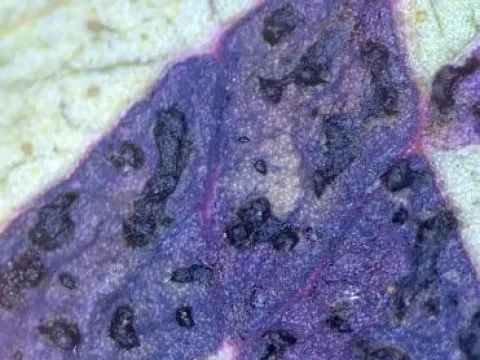
The first symptoms of the disease are small chlorotic spots on the surface of young leaves, which eventually darken to brown or grey as the infection matures.
As the infection progresses, the spots increase in size and may coalesce, creating large necrotic zones on the leaf blade. The center of these spots often appears lighter in color, surrounded by a dark, distinct margin.
The lower surface of the leaf or the necrotic areas often develop fungal fruiting bodies, visible as tiny black dots under magnification.
Severe infestation leads to premature leaf drop, which significantly weakens the tree and suppresses growth. Young shoots often become distorted or die back completely.
In specific cases, lesions may appear on the bark of young twigs, accompanied by gum exudation, which serves as a secondary symptom of the plant's stressed condition.
Fungal spore germination requires high relative humidity and moderate temperatures, typically within the range of 15 to 22 degrees Celsius.
Prolonged rainfall and fog facilitate the mass spread of the infection, providing an ideal environment for conidial sporulation and the infection of new leaves.
Overcrowded plantations and poor air circulation within the tree canopy significantly accelerate the rate of an epiphytotic outbreak within a specific site or forest area.
Stressed plants suffering from nutrient deficiencies or pest damage become the most susceptible to colonization by pathogens of the Teratosphaeriaceae family.
The seasonal pattern of the disease generally coincides with the spring and summer periods, when intensive growth of young, susceptible leaves occurs.
The primary harm is extensive defoliation, leading to a sharp decrease in photosynthetic intensity and the depletion of carbohydrate reserves in the tree tissues.
Systemic infection over several years causes trees to lose their vitality, making them extremely susceptible to other diseases and stem-boring insect infestations.
In commercial forest nurseries, Teratosphaeria leaf disease can destroy a significant portion of seedlings, causing substantial economic losses to the agribusiness sector.
Reduced wood quality and suppressed growth rates lead to longer production cycles for plantation crops and increased operational expenses.
Uncontrolled disease development over large areas can result in the degradation of forest stands and a loss of productivity across entire hectares of susceptible eucalyptus or other tree forests.
The primary control measure is sanitary cleanup, which includes the collection and burning of infected leaf litter where the fungus overwinters.
Preventive fungicide applications, specifically copper-based or systemic treatments, are recommended at the first sign of leaf spotting on young foliage.
Selecting resistant genotypes and plant species during the establishment of new plantations is a critical aspect of minimizing future risks.
Good silvicultural practices should include thinning the plantations to ensure high-quality air circulation and to reduce humidity within the lower canopy zone.
- Use of certified pathogen-free planting material
- Maintaining proper spacing for adequate aeration
- Regular canopy monitoring during active growth periods
- Application of balanced fertilizers to strengthen tree immunity