
Terfezia arenaria
Terfezia arenaria
Description
Symptoms
Since Terfezia arenaria is a hypogeous fungus, its presence is rarely obvious to the casual observer on the surface.
The most common indicator of a fruiting body's location is a slight mounding or cracking of the soil surface directly above the developing fungus.
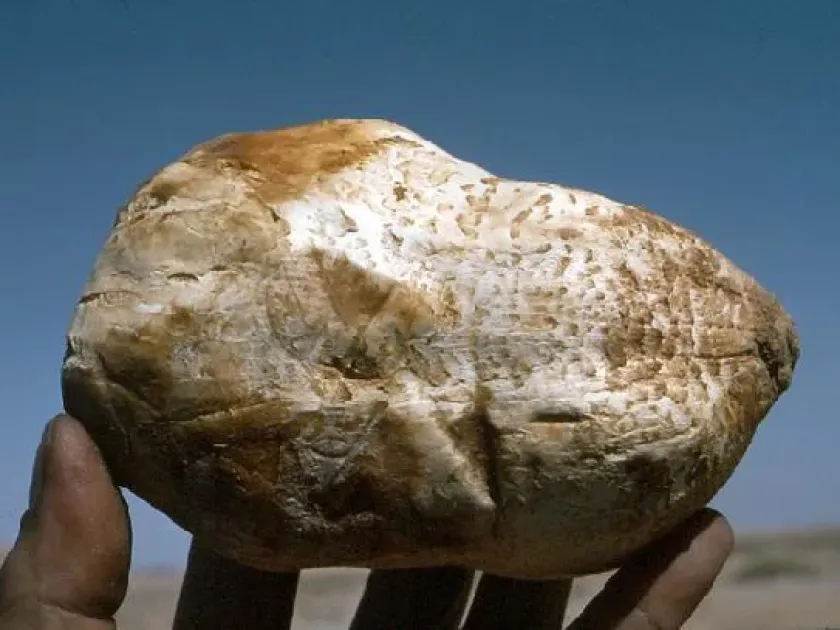
The fruiting bodies themselves are tuber-like, typically spherical or slightly irregular in shape, and possess a light-colored, smooth exterior.
Internally, a mature specimen displays a distinct marbled appearance, with dark and light zones representing the fertile and sterile areas of the gleba.
Detection is often facilitated by specialized knowledge of the host plant's range and soil moisture patterns during the specific fruiting window.
Pathogen
Terfezia arenaria is a species of hypogeous fungus belonging to the Terfeziaceae family, commonly referred to as a type of desert truffle.
It is important to clarify that this fungus is not a plant pathogen or a disease-causing agent; rather, it exists as a symbiotic mycorrhizal partner.
The fungus forms a mutualistic relationship with the roots of specific host plants, primarily within the Helianthemum genus.
Through the formation of specialized arbuscular structures, the fungus facilitates the exchange of nutrients, specifically helping the host plant thrive in arid, nutrient-poor soils.
Because it provides metabolic support to the plant rather than destroying tissues, it is not classified as a disease in modern agricultural science.
Conditions for development
The development of Terfezia arenaria is restricted to specific environmental niches, predominantly found in sandy and well-aerated soil types.
A sufficient amount of moisture following a dry spell is the primary trigger for the fungus to develop its underground fruit bodies.
The presence of a suitable host plant is a biological necessity, as the fungus relies on the host's carbon supply to complete its life cycle.
Temperature plays a crucial role; moderate climates with mild soil temperatures during the growing season support optimal sporocarp formation.
The fungus thrives in undisturbed desert or semi-arid environments where high soil organic matter levels are absent and competition with saprophytic fungi is low.
Why it matters
Terfezia arenaria is completely harmless to commercial crops and does not cause agricultural damage.
It does not produce toxins, nor does it weaken the host plant to a degree that would impact crop yield or quality in a farming system.
In many ecosystems, the mycorrhizal association provided by this fungus is considered beneficial, increasing the host plant's resilience to water stress.
There is no evidence of the fungus acting as a vector for plant diseases or inhibiting the growth of neighboring crops.
From an agronomical standpoint, this organism does not require any mitigation, as its presence is biologically benign and ecologically localized.
Protection
There are no control measures required for Terfezia arenaria, as it is not a threat to agricultural productivity or plant health.
If its presence is undesirable in a managed field, simple soil cultivation and the adjustment of soil fertility levels will naturally discourage its growth.
The application of fungicides specifically for this fungus is strongly discouraged, as it is an unnecessary use of chemicals that could disrupt the beneficial soil microbiome.
Prevention of its spread is largely irrelevant due to the specific, narrow host requirements the fungus has for successful colonization.
Good agricultural practices, such as crop rotation and proper soil management, remain the standard for maintaining field health, without regard for this harmless mycorrhizal fungus.
Discussion
No discussions yet — be the first.