
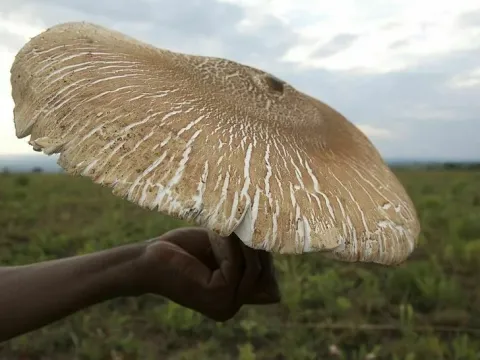
Termitomyces
Termitomyces
Termitomyces is a genus of basidiomycetous fungi known for its obligate symbiotic relationship with termites of the subfamily Macrotermitinae.
What the section contains
Termitomyces
These fungi are not primary plant pathogens, but they are critical components of the ecosystem within termite mounds.
The fungus develops within structures known as "fungal gardens," constructed by termites from masticated plant debris and fungal spores.
Through enzymatic activity, the fungus breaks down complex lignocellulose material, enhancing its nutritional value for the termites.
The relationship is highly specialized, and both the termite and the fungus depend on each other for survival and reproduction.
Development of Termitomyces requires the highly regulated microclimate provided by the termite mound structure.
Termites actively regulate temperature and humidity to ensure the optimal growth conditions for the mycelial mats.
The fungus spreads via spores that are transported by the termites during the establishment of new colonies.
Without the active management of the termite colony, the fungus would fail to thrive in the harsh external environment.
Nutrient supply is continuous, as termites constantly gather fresh plant material to replenish the fungal gardens.
The agricultural significance of Termitomyces is linked to the destructive foraging habits of the termites that cultivate it.
Termite colonies associated with this fungus can cause significant damage to young trees, agricultural crops, and wooden structures.
The relentless search for cellulose to feed the fungus leads to the girdling and destruction of root systems in plantations.
While the fungus itself does not infect plants, its presence signifies a mature, well-established colony that poses a threat to crops.
The socioeconomic impact is particularly noted in sub-Saharan Africa and Asia where these termites are prevalent.
Managing the impact of the Termitomyces-termite complex involves targeting the termite colony directly.
Mechanical destruction of the termite mound disrupts the fungal gardens, leading to the collapse of the symbiotic unit.
Chemical control measures are often used to suppress termite populations in regions where they threaten commercial crops.
Sanitation practices, such as clearing debris from fields, help reduce the substrate available for termites, thereby limiting their activity.
Ongoing research focuses on finding eco-friendly ways to disrupt this symbiosis without negatively impacting the surrounding environment.