
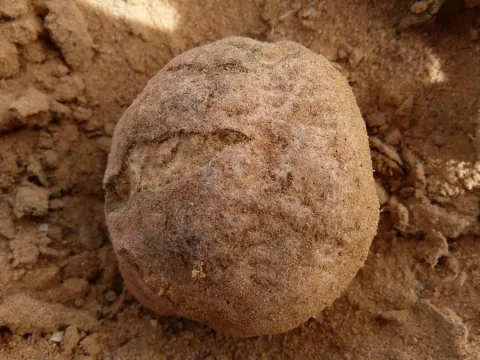
Terfezia boudieri
Terfezia boudieri
It is important to clarify that Terfezia boudieri is not a plant pathogen or a disease-causing agent. It is a species of edible fungus belonging to the Terfeziaceae family.
What the section contains
Terfezia boudieri
Biologically, it is classified as a hypogeous fungus, meaning its fruiting bodies develop underground, which is characteristic of the so-called desert truffles.
The fungus relies on a symbiotic relationship known as mycorrhiza. It connects to the root systems of specific host plants, primarily within the Helianthemum genus.
The mycelium colonizes the rhizosphere, creating a mutually beneficial interaction where the fungus assists in water and nutrient uptake for the host plant.
Since this interaction is purely symbiotic, the fungus does not damage plant tissues, nor does it cause wilting, necrosis, or any form of plant disease.
Terfezia boudieri requires specific ecological conditions typical of arid and semi-arid landscapes to thrive and produce its fruiting bodies.
Sufficient moisture following seasonal rains is the most critical environmental trigger for the development of the fungal fruiting bodies in desert soil.
The species prefers alkaline, sandy, or well-drained soils that allow for proper gas exchange, which is essential for the underground mycelium.
The presence of host plants (sunroses of the genus Helianthemum) is mandatory, as the fungus is an obligate associate and depends on the plant for carbohydrates.
Changes in local climate or intense soil disturbance can negatively impact the delicate underground mycelial networks necessary for the fungus to persist.
This fungus is not considered a pest or a disease agent. It poses no threat to crops, forests, or ornamental plant health, and no protective measures are needed against it.
In the context of agriculture, Terfezia boudieri is recognized as a beneficial organism that supports ecosystem stability and aids plant growth in extreme environments.
There is no "control" or "prevention" program for this species because it does not cause any harm. The application of fungicides in areas where this fungus occurs is counterproductive.
Ecological preservation of desert habitats is the only recommended approach to ensure the continued existence of these mycorrhizal fungal populations.
The species is economically valued for human consumption. It is a traditional and highly sought-after wild-harvested food source in North Africa and the Middle East.