
Teratosphaeria leaf spot
Teratosphaeria macowanii
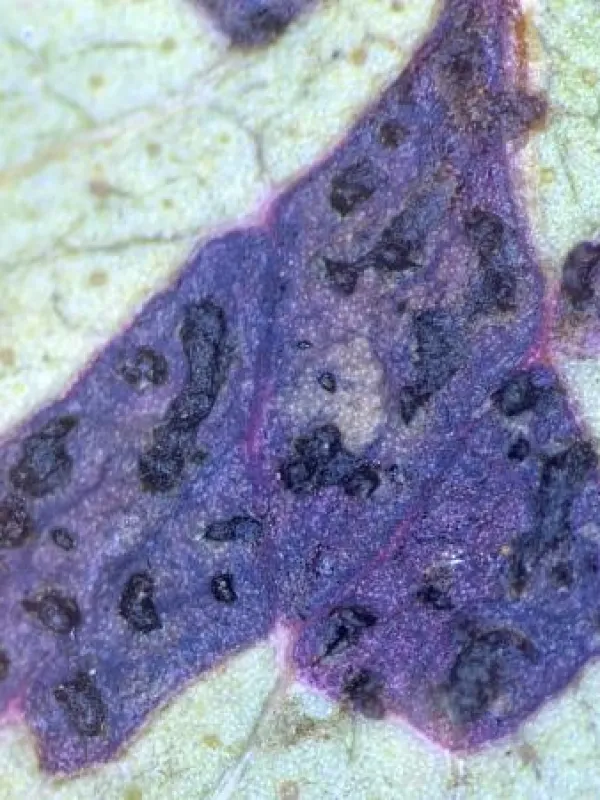
Description
Symptoms
Symptoms typically manifest as small, chlorotic spots on the leaf surface that gradually enlarge, forming circular or irregular necrotic lesions.
Dark, pinpoint fruiting structures (ascomata) often appear within the necrotic areas, a key feature for identifying Teratosphaeria infections.
Premature leaf drop is a common consequence of severe infection, leading to visible thinning of the tree canopy and reduced growth rates.
Young sprouts and seedlings may exhibit severe distortion or dieback, often compromising the overall development of the young tree.
In highly susceptible eucalyptus stands, the lesions can coalesce, covering large parts of the leaf area and severely impacting the plant's health.
Pathogen
The disease is caused by the fungus Teratosphaeria macowanii, a member of the Ascomycota phylum. It is a well-known pathogen that primarily affects various species of the Eucalyptus genus.
The pathogen completes its life cycle by producing fruiting bodies on infected leaf tissue, releasing spores that serve as primary and secondary inoculum.
As a biotroph or hemibiotroph, the fungus colonizes the leaf tissue, disrupting the host's physiological processes and eventually leading to tissue necrosis.
Genetic analysis shows that Teratosphaeria species are highly variable, often developing new strains that can bypass the natural resistance of host trees.
The fungus is capable of surviving for long periods on fallen debris, which provides a continuous source of infection for new growth cycles.
Conditions for development
The development of the disease is heavily favored by cool to moderate temperatures and high humidity, which are essential for spore germination.
Extended periods of rainfall or persistent fog provide the ideal moist microclimate required for the pathogen to spread within the canopy.
Dense plantations with poor airflow retain moisture on leaf surfaces longer, facilitating the infection process and accelerating the epidemic.
Trees already stressed by nutrient deficiencies, pest damage, or environmental factors are significantly more susceptible to infection by Teratosphaeria.
Wind currents and water splashes act as the primary mechanisms for the dispersal of spores from infected trees to healthy ones nearby.
Why it matters
The primary damage is caused by the loss of functional leaf area, which reduces the photosynthetic capacity and limits the tree's biomass accumulation.
Significant economic losses occur in commercial eucalyptus forestry due to reduced timber yields and the high cost of managing disease outbreaks.
Nursery operations can be devastated by the pathogen, where high seedling mortality rates hinder large-scale reforestation and planting efforts.
Weakened trees are often prone to opportunistic pests and secondary infections, which can lead to the accelerated decline of entire forest stands.
The long-term impact includes decreased tree longevity and potential negative effects on local eucalyptus ecosystem dynamics.
Protection
Silvicultural management, such as thinning stands to increase air circulation, is a primary strategy for reducing the humidity levels around the trees.
Sanitation practices, including the removal and destruction of infected leaf litter, are crucial to reducing the primary inoculum pool in the plantation.
Fungicide applications, specifically using copper-based or systemic compounds, are recommended for high-value nursery stock or severe localized infections.
Breeding for resistance is the most sustainable approach, as selecting eucalyptus genotypes with natural immunity is key to long-term disease management.
Regular forest monitoring programs are essential to detect early symptoms, allowing for immediate interventions and preventing the spread to healthy areas.
Discussion
No discussions yet — be the first.