
Schismatomma
Schismatomma
Description
Symptoms
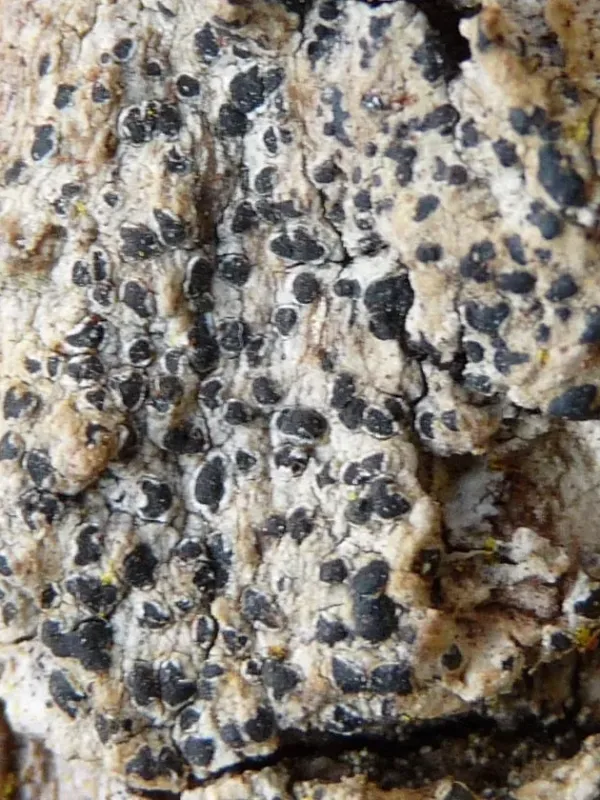
The primary symptom is the appearance of gray, white, or yellowish crusty patches on the stems and main scaffold branches of the trees.
These patches are often characterized by flat, map-like thalli that adhere tightly to the bark surface, sometimes showing intricate patterns.
Upon close inspection, small fruiting bodies called apothecia can be seen as tiny dark lines or dots scattered across the surface of the lichen.
They typically colonize the north side of the tree or shaded areas where moisture persists for extended periods after rainfall.
The underlying bark is usually intact, but the visual change in the texture and color of the trunk is the most obvious sign for gardeners.
Pathogen
Schismatomma is a genus of crustose lichens belonging to the family Roccellaceae, which thrives on the bark of various trees and woody plants.
From an agronomic perspective, this organism is not a parasite, but rather an epiphyte that utilizes the bark as a structural anchor rather than a food source.
Lichens are complex symbiotic entities formed by fungi and algae, which require specific levels of moisture and light to maintain their metabolic processes.
While they do not actively infect the plant tissue, their presence is often an indicator that the tree environment is overly humid or that the bark surface is aging.
The biology of Schismatomma involves the gradual colonization of surfaces, which can be managed effectively with proper orchard hygiene and maintenance.
Conditions for development
The development of Schismatomma is heavily favored by high ambient humidity and low levels of sunlight reaching the tree trunk.
Dense canopies that block air circulation prevent the bark from drying out, which creates the optimal environment for lichen spore attachment and growth.
Older trees with rough, cracked bark are more susceptible to colonization than young trees with smooth, healthy bark surfaces.
Long periods of overcast weather and lack of orchard management (pruning) provide a stable environment for these epiphytes to flourish.
Poor tree vigor, often resulting from nutrient deficiencies or stressed soil, can also contribute to a less responsive bark surface, making it easier for lichens to establish.
Why it matters
While Schismatomma itself does not kill the tree, it is considered harmful due to its role in the ecosystem of the orchard.
The lichen crust creates a physical shelter for various tree pests, such as scales and mites, which overwinter beneath the lichen layer.
By covering the bark, the lichen can interfere with gas exchange, though this effect is usually minimal compared to the potential for harboring other pathogens.
The presence of large colonies can be unsightly and may hinder the early detection of more serious bark conditions like cankers or rots.
- Providing a protective habitat for overwintering pests
- Obstructing bark respiration and transpiration
- Masking early symptoms of other serious diseases
- Indication of neglected or stressed orchard conditions
Protection
Mechanical removal using soft wire brushes or scrapers is the most direct and eco-friendly way to manage lichen growth on fruit trees.
Pruning is the most effective long-term strategy, as it improves airflow and light penetration, making the trunk and branches less hospitable to lichen.
Whitewashing the trunk with a mixture of lime and copper sulfate serves as both a disinfectant and a barrier against re-colonization.
Applying copper-based fungicides during the dormant season helps to eliminate remaining spores and prevents the spread of epiphytic growth.
Improving overall tree health through balanced fertilization and correct irrigation practices helps the tree maintain a more vigorous bark surface.
Discussion
No discussions yet — be the first.