
Stigmatomycosis
Nematospora coryli
The causative agent of this disease is the fungus Nematospora coryli, which is a yeast-like organism known to cause internal damage to various fruit and nut crops.
What the section contains
Stigmatomycosis
This pathogen is an obligate parasite that relies on specific insect vectors, primarily stink bugs (Pentatomidae), to facilitate its entry into the host plant.
The transmission mechanism involves the insect feeding on the developing fruit and injecting its saliva, which carries the fungal spores, directly into the nut kernel.
Nematospora coryli has a wide host range, frequently infecting pistachios, hazelnuts, soybeans, and citrus, making it a significant challenge for diverse agricultural sectors.
Once inside, the yeast cells proliferate rapidly within the kernel, disrupting metabolic processes and consuming nutrient reserves, which leads to tissue necrosis.
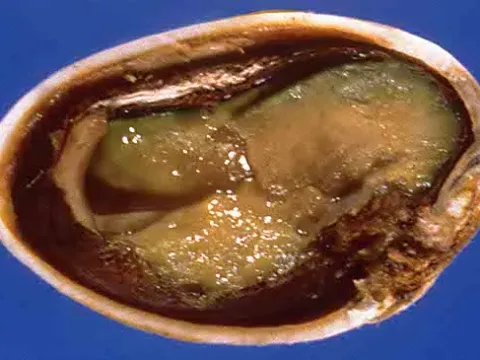
The primary symptom of Stigmatomycosis is hidden within the shell of the nut, making it difficult to detect without opening the pistachio fruit.
Once cracked, the kernel shows dark brown or black lesions, often described as a necrotic rot that affects parts or the entire surface of the nut meat.
Symptoms often coincide with the puncture marks made by the insect vector, appearing as small, darkened spots on the exterior of the shell.
Affected nuts frequently exhibit a distinct, unpleasant, musty or rancid odor that is a clear indicator of the fungal fermentation process occurring within.
- Dark necrotic spots on the kernel
- Puncture marks on the shell surface
- Unpleasant rancid odor of the nut
- Stunted kernel development
- Loss of commercial viability
The disease development is heavily dependent on the population density of sucking insects in the orchard during the fruit-set and nut-filling stages.
Warm and humid climatic conditions favor the rapid reproduction of the yeast inside the nut tissue following the initial infection by the insect.
Surrounding vegetation and weeds act as reservoirs for the insect vectors, ensuring a persistent pressure of the pathogen throughout the growing season.
Poor orchard sanitation, including the presence of fallen nuts and debris, provides a shelter for overwintering pests, increasing the risk of early-season infection.
High canopy density and lack of proper pruning prevent adequate airflow and light penetration, creating a microenvironment suitable for pest proliferation.
Stigmatomycosis causes significant economic impact by rendering the product completely unfit for the premium consumer market.
The disease drastically reduces seed viability, making infected nuts useless for nursery propagation and long-term orchard development.
Producers face high costs associated with advanced electronic sorting equipment required to detect and remove infected nuts from bulk shipments.
Market reputation can be severely damaged if infected product reaches consumers, as the bitter taste and rancid quality are highly detectable.
Yield reduction is not only quantitative but also qualitative, leading to drastic drops in net revenue for the agricultural enterprise.
Effective management requires a rigorous insecticide spray program focused on controlling the stink bug population during critical fruit development periods.
Orchard hygiene, including the removal of alternate weed hosts and fallen plant material, is essential to minimize the source of both pests and inoculum.
Implementation of pheromone-based monitoring programs helps determine the optimal timing for interventions, ensuring maximum efficacy of chemical treatments.
Proper pruning and thinning of the tree canopy improve the penetration of protective sprays and reduce the favorable conditions for pest colonization.
Using state-of-the-art optical sorters during the processing stage allows for the efficient removal of infected nuts, protecting the brand's quality standards.