
Stigmina leaf spot
Stigmina sapii
Description
Symptoms
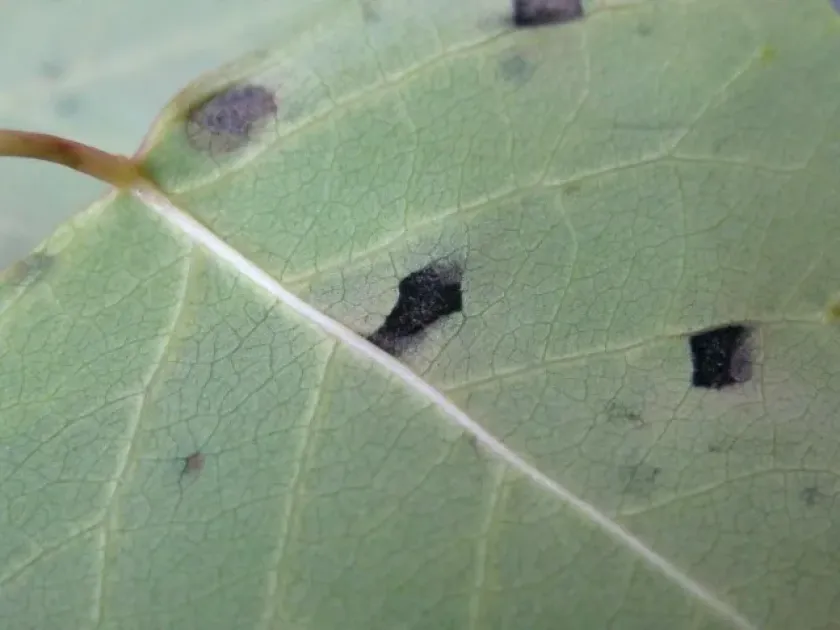
The initial manifestation of Stigmina leaf spot is the appearance of small, circular or irregular spots on the leaf blades. These spots typically range in color from light brown to deep dark brown.
As the disease progresses, the central region of the spot may become bleached or necrotic. A distinct dark border often develops, marking the boundary of the infection.
Severe infections frequently cause premature leaf yellowing and abscission. This significantly disrupts the tree's photosynthetic capability during the peak growing months.
Twig lesions are also a common symptom, appearing as sunken, darkened areas. These lesions can cause girdling, leading to the dieback of shoots and branch tips.
- Circular necrotic spots with dark margins.
- Velvety fungal sporulation on leaf surfaces.
- Premature leaf drop affecting crown density.
- Shoot dieback and twig necrosis.
- Cracking of the bark in localized areas of infection.
Pathogen
The disease is caused by the fungus Stigmina sapii (syn. Thyrostroma sapii). This pathogen belongs to the Hyphomycetes group and is a specialized agent that affects various woody species.
The fungus persists in fallen leaves and infected woody tissues throughout the winter. During the growing season, it produces conidia that serve as the primary source of infection.
The pathogen thrives in the intercellular spaces of host tissue. It utilizes enzymes to degrade cell walls, which allows the hyphae to expand and colonize healthy plant areas rapidly.
Environmental dispersal of the fungus occurs through rain splash and wind, which carry conidia to new leaves and twigs. Stigmina sapii is highly adaptable to moist environments.
Recent mycological research highlights the pathogen's ability to survive in a latent state before manifesting clear symptoms under favorable moisture conditions.
Conditions for development
The development of Stigmina leaf spot is heavily dependent on moisture levels. Prolonged periods of high humidity and rainfall are critical for spore germination and infection.
Temperatures ranging from 18 to 25 degrees Celsius are optimal for the pathogen. In this range, the incubation period is minimized, allowing for rapid colonization.
Poor aeration in dense plantings creates a microclimate with stagnant moist air, which significantly enhances the spread of the fungus between adjacent plants.
Plants under environmental or nutritional stress are significantly more susceptible to infection. Mechanical wounds caused by insects or pruning also provide easy entry points.
Persistent leaf wetness lasting several hours is required for the conidia to successfully penetrate the epidermal layer of the host plant.
Why it matters
Stigmina leaf spot causes substantial weakening of the host plant due to the loss of photosynthetic leaf area. This reduces the energy reserves needed for overall plant health.
The reduction in vigor makes infected plants more susceptible to secondary stressors, such as harsh winter conditions, drought, or attacks by opportunistic pests.
In nursery settings, the disease causes significant economic loss by rendering ornamental stock unsightly and unsellable, failing to meet quality standards.
Long-term infections can lead to severe twig dieback, causing structural damage to the tree's form and appearance. This eventually necessitates extensive corrective pruning.
The buildup of fungal inoculum in the garden serves as a reservoir for infection, ensuring that the disease returns in successive years if not properly managed.
Protection
Sanitation is the cornerstone of control. Removing and destroying fallen leaves and pruning dead or infected branches effectively reduces the primary source of the fungus.
Fungicidal treatments with copper-based compounds applied in early spring can help suppress initial spore development and protect vulnerable new growth.
During the active growing season, the application of systemic fungicides, such as strobilurins or triazoles, is recommended to manage active infections and prevent spread.
Improving air circulation through proper pruning techniques helps to reduce the localized humidity that the fungus requires to propagate effectively.
Maintaining optimal plant health through balanced fertilization and proper irrigation helps bolster the plant's natural defenses, leading to increased resistance to Stigmina sapii.
Discussion
No discussions yet — be the first.