
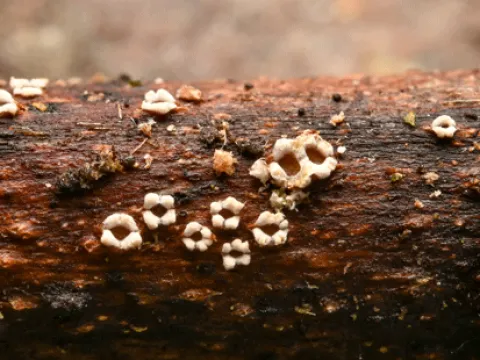
Stictis stellata
Stictis stellata
The disease is caused by the fungus Stictis stellata, a member of the order Ostropales. It primarily functions as a saprotrophic or weakly pathogenic fungus, inhabiting the bark of various woody plants.
What the section contains
Stictis stellata
The fungus is characterized by the formation of small, star-shaped apothecia. These are the fruiting bodies that break through the epidermis, allowing the fungus to release its spores into the surrounding environment.
The mycelium colonizes the outer layers of the bark, slowly decomposing organic matter. While it is rarely the primary killer of healthy trees, it thrives in tissues where the tree's natural defense mechanisms are weakened.
Spore production is a continuous process that intensifies under favorable moisture conditions. These spores are wind-dispersed, allowing the fungus to colonize new susceptible hosts over significant distances.
The pathogen prefers stable, cool, and damp environments. It remains active throughout most of the growing season and can survive harsh winter months in the dormant mycelium form within the bark.
The most visible symptom is the presence of distinctive white or cream-colored, star-shaped fruiting bodies protruding from the bark. These are often clustered on the surface of branches and trunks.
Affected areas of the bark exhibit localized necrotic spots. These spots may appear sunken or discolored, often changing from brown to gray as the infection progresses and the tissues die.
Cracking and peeling of the bark around the infection site are common observations. This physical damage compromises the structural integrity of the branch and exposes the underlying wood to dehydration.
On younger twigs, the presence of the fungus can lead to wilting and premature leaf drop. The growth of the branch is frequently stunted, leading to an overall thinning of the foliage in the affected crown area.
In humid conditions, a fine powdery substance may surround the fruiting bodies, representing the mass release of spores. This is a clear indicator that the fungus is actively expanding its range.
High humidity and poor air circulation are the primary drivers of Stictis stellata spread. Trees in dense forest stands or poorly maintained landscapes are particularly susceptible to infection.
Physical injuries, such as broken branches from storms or damage caused by insects, provide the perfect entry points for fungal spores. Without these wounds, it is much harder for the fungus to establish itself.
Lack of direct sunlight on the lower branches creates a damp microclimate that supports fungal growth. Areas of the tree that remain wet for long periods after rainfall are the most likely targets.
Trees under physiological stress, due to nutrient deficiencies, drought, or soil compaction, are significantly more vulnerable. Their inability to mount a strong defense allows the fungus to flourish.
The accumulation of debris, such as fallen branches and leaf litter, serves as a reservoir for the pathogen. Failure to clean up these materials ensures that the fungus will persist in the area season after season.
The primary harm caused by Stictis stellata is the steady decline of the plant's aesthetic and physiological health. Chronic infections can lead to the loss of large branches and a reduction in photosynthetic capacity.
In ornamental and orchard settings, the disease significantly reduces the value of the specimen. Persistent infections can turn a healthy tree into a liability that requires removal or constant intervention.
The infection creates a pathway for more aggressive pathogens and wood-boring insects. This secondary infection risk often causes far more severe damage than the initial fungus itself.
Young trees, especially in nursery conditions, can be severely stunted or killed if left untreated. The cumulative effect of bark tissue death results in overall tree weakness and susceptibility to environmental extremes.
Economic costs associated with the disease include the price of fungicides, the labor for sanitary pruning, and the potential total loss of valuable landscape or fruit-bearing trees.
Sanitary pruning is the most effective way to manage the disease. Removing and destroying all infected branches reduces the inoculum load significantly, preventing the spread to healthy parts of the plant.
Improving the environment around the tree is essential. This includes thinning the canopy to increase airflow and sunlight penetration, which helps keep the bark dry and less hospitable to fungal spores.
All pruning cuts should be treated with appropriate wound dressings to prevent new infections. Ensuring clean tools when moving between different trees is crucial to avoid spreading the fungus.
If the infection is widespread, the application of copper-based or systemic fungicides during the dormant season can help control the pathogen. Always follow the guidelines for the specific host plant.
Rigorous hygiene, including the removal and disposal of all fallen branch material and forest floor litter, is a mandatory preventive practice for long-term health and disease suppression in the garden.