
Stigmatomyces entomophilus
Stigmatomyces entomophilus
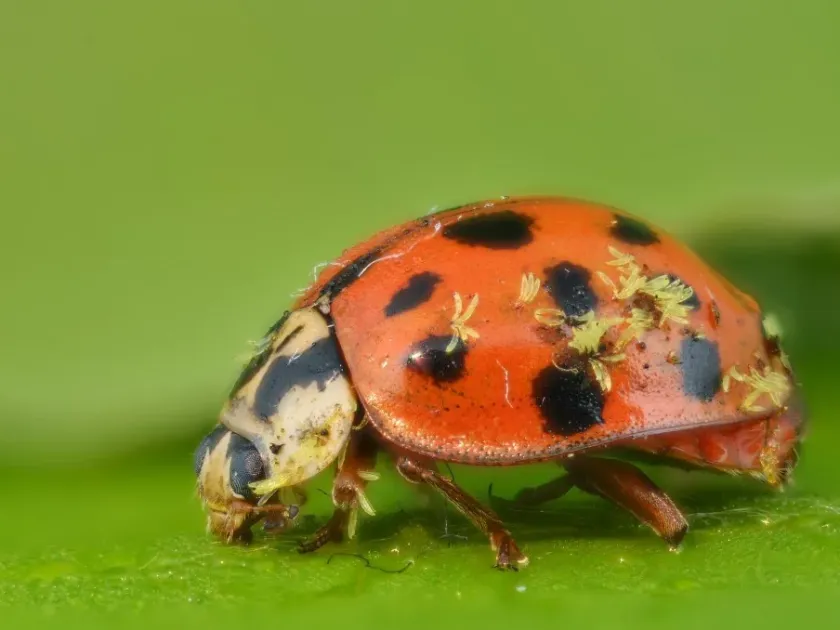
Description
Pathogen
Stigmatomyces entomophilus is a microscopic fungus belonging to the order Laboulbeniales. It is an obligate ectoparasite that develops exclusively on the cuticle of certain insects, primarily flies.
The fungus structure consists of a thallus that anchors to the host using a haustorium. This structure facilitates the absorption of nutrients from the insect's hemolymph, though it typically does not kill the host immediately.
This organism does not cause plant diseases. It is strictly an insect parasite and has no biological mechanism to infect, colonize, or damage any tissues of agricultural crops.
Its lifecycle is entirely dependent on host density and social interactions between insects. Transmission occurs through physical contact, allowing the fungus to spread efficiently in crowded populations.
Biologically, it is distinct from common agricultural pathogens. It lacks the ability to thrive as a saprotroph in soil or on plant debris, remaining strictly tied to the presence of living insect hosts.
Conditions for development
Successful development of Stigmatomyces entomophilus requires high insect host density, which facilitates the horizontal transmission of spores between individuals during contact.
Humidity is a critical factor, as fungal spores require sufficient moisture on the insect's cuticle to germinate and successfully penetrate the exoskeleton of the host.
The fungus thrives under temperatures that are also optimal for the host insects, allowing the parasite to synchronize its lifecycle with the activity periods of the insects it targets.
The chemical microenvironment on the insect's body surface plays a role; residues of pesticides or environmental pollutants can sometimes inhibit the fungal development process.
Stable microhabitats on the host's body, where the fungus can anchor securely without being groomed off by the insect, are essential for the survival and maturation of the fungal thallus.
Why it matters
Stigmatomyces entomophilus causes no harm to crops. It is not a phytopathogen and does not produce toxins or enzymes capable of degrading plant cell walls or causing necrosis in leaves or stems.
In terms of agricultural protection, it poses no threat to yields. Its presence in fields is completely independent of plant health status and represents a natural interaction between fungi and insects.
While it is a parasite, its impact on pest populations is generally negligible. It does not exert enough pressure on insect numbers to be considered a viable biological control agent.
Potential concerns might arise if the fungus significantly affects populations of beneficial insects or pollinators; however, there is no evidence of widespread negative impact from this species.
Because it is not a threat to crops, there is no need for specific control measures or fungicide applications directed against this fungal organism in agricultural practice.
Protection
There are no control measures or preventive strategies required for Stigmatomyces entomophilus, as it is not a plant disease and does not threaten agricultural production.
Standard agricultural practices focused on crop health, such as balanced fertilization and proper irrigation, have no direct effect on this insect-specific fungus.
If insect management is necessary for economic reasons, regular insecticide use will likely indirectly reduce the prevalence of this fungus by decreasing the host population.
Integrated Pest Management (IPM) strategies do not need to account for this organism, as it is considered a naturally occurring component of the insect-associated mycobiota.
No specific monitoring or quarantine actions are warranted, as the fungus is benign regarding its interaction with plants and agronomic systems.
Discussion
No discussions yet — be the first.